
Last Updated on October 7, 2026 by David
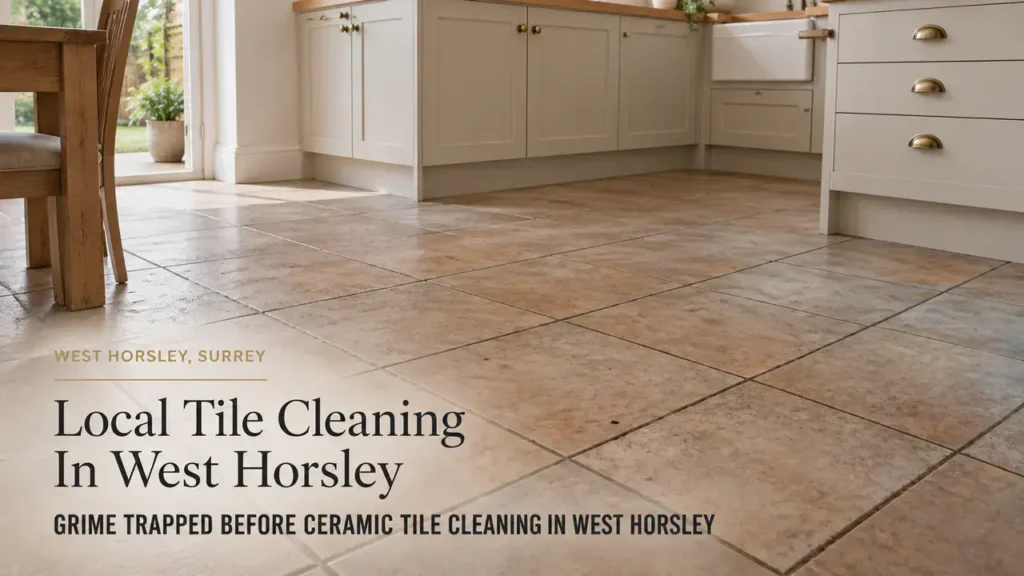
Homeowners in West Horsley seeking expert ceramic tile floor cleaning services should first identify issues such as dark grout, dirt embedded in textured surfaces, and dullness caused by residue, as these factors significantly affect the effectiveness of cleaning.
The following sections outline what to expect during ceramic tile cleaning visits in West Horsley and provide insights into the services offered.
Comprehensive Ceramic Tile Cleaning Services in West Horsley
When grout lines appear darker than the surrounding ceramic tiles, the issue usually lies within the joints rather than on the glazed surface. Homes in West Horsley often feature tiled areas such as entrance halls, kitchens, utility rooms, boot rooms, bathrooms, and conservatories, where regular foot traffic gradually alters the floor’s appearance.
Common signs of wear include dull patches near cookers and sinks, darker grout along frequent walking paths, or a sticky residue that quickly returns after mopping. Dust and grit from gardens, patios, and driveways can easily infiltrate these areas. damp environments like bathrooms and wet rooms can leave grout looking uneven. Even when the tile surfaces remain largely unblemished, these issues can detract from the overall cleanliness of the room.
Abbey Floor Care offers professional ceramic tile cleaning for West Horsley and surrounding Surrey homes where regular domestic cleaning fails to achieve a uniform result. This service encompasses smooth, matte, patterned, and anti-slip floors, with tile surfaces, grout joints, and primary walking areas evaluated individually.

Properties in West Horsley vary from charming cottages and elegant period homes to post-war residences and modern extensions. Homeowners can assist local technicians by identifying whether their primary concern is joint discolouration, dirt within textured surfaces, or a residue-related film.
Safe and Effective Deep Cleaning Process for Tile Floors
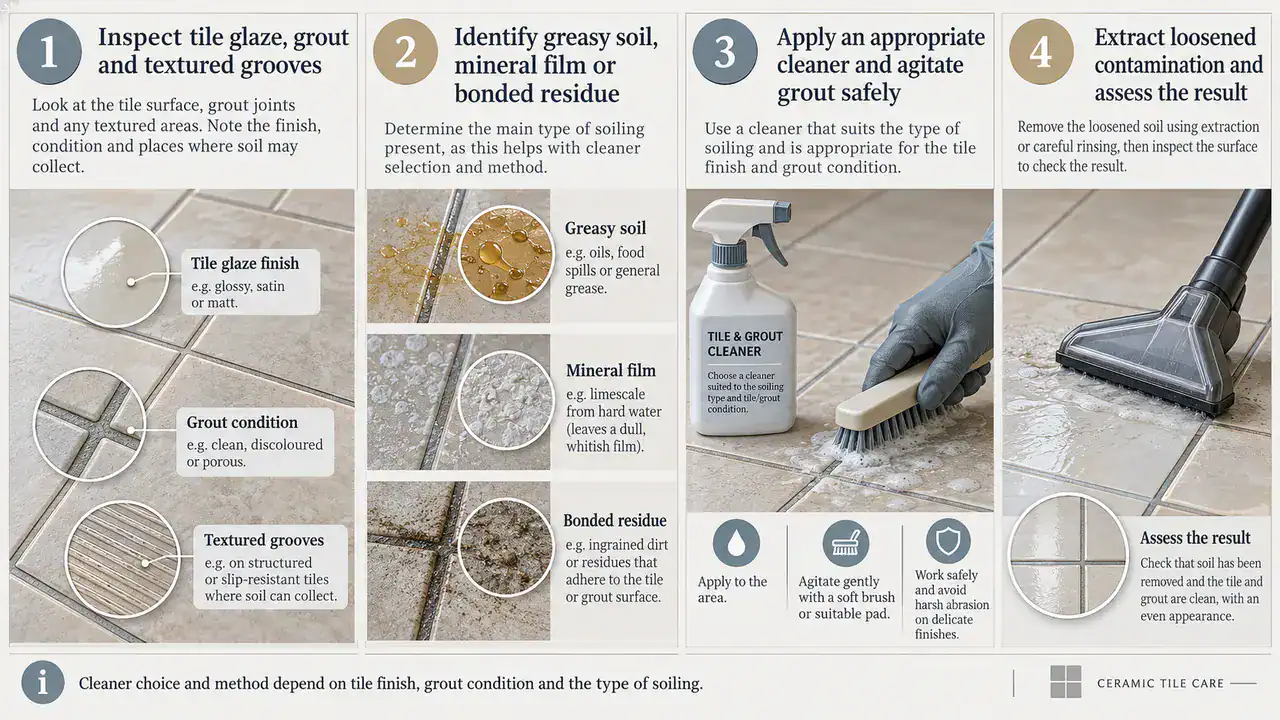
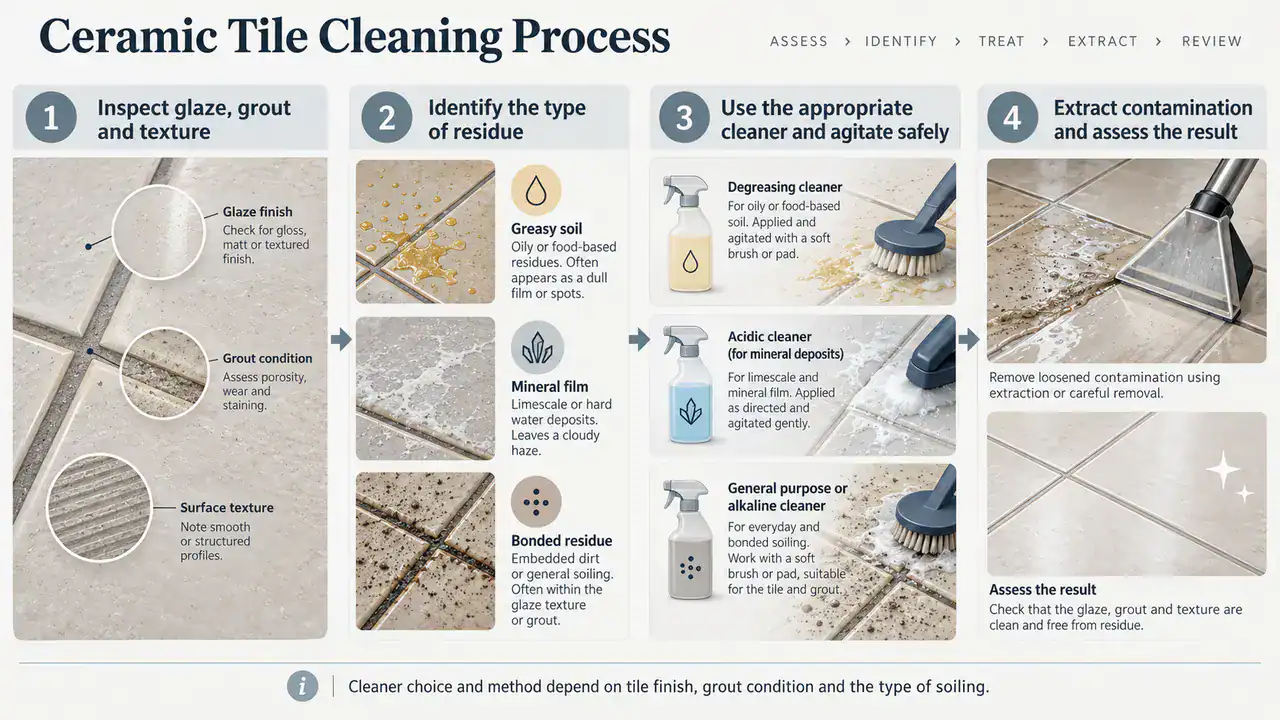
A professional ceramic tile cleaning process commences with a thorough examination of the floor to identify visible contaminants. Technicians can differentiate between greasy deposits, mineral films, and bonded residues before starting the cleaning treatment. They consider factors such as the factory-fired glaze, the porosity of cementitious grout, and the texture of tile grooves, as each retains contaminants differently.
Organic soil and polymer build-up respond well to alkaline cleaning solutions, as degreasing agents and surfactants effectively break down oils, biological contaminants, and adhesive-type films. A high-alkaline cleaner facilitates the emulsification and dissolution of polymers without damaging the non-porous glazed surface. Allowing sufficient dwell time enables the chemistry to loosen residues before agitation.
For cases involving polymer grout haze, a two-stage cleaning protocol is necessary instead of relying solely on acidic solutions. Polymer bonding can create a stubborn residue on the tile surface. Technicians first apply an alkaline treatment to dissolve the polymer, followed by a controlled acidic stage to remove any remaining cementitious materials. Conducting a test patch is essential, as the condition of the grout and surrounding finishes dictate the safest cleaning sequence.

Mineral contamination necessitates a different treatment approach. Hard-water deposits, limescale, and mineral films cannot be dissolved with degreasing agents alone. When compatibility is verified, a mild acidic cleaner can assist in dissolving minerals and removing grout haze, but its pH must be controlled to prevent unnecessary damage to cementitious joints.
Mechanical agitation is employed to lift the loosened material from grout joints and textured tile grooves without treating the glaze as if it requires refinishing. A nylon bristle pad offers gentle agitation, protecting the glaze without marking suitable smooth areas. For recessed joints needing extra attention, a polypropylene brush allows for controlled penetration into the grout.
Rinsing and wet extraction are crucial to complete the cleaning process, as dissolved soil must be removed from the installation rather than allowed to settle back into the joints. Using a wet vacuum or slurry extractor ensures effective residue removal and prevents redeposition. This distinguishes professional deep cleaning from routine mopping, which merely redistributes dirty water.

Kitchens in West Horsley may require degreasing around cookers and splashbacks, while bathrooms may need assessment for mineral film and soap scum. Technicians select cleaning chemistry and equipment based on the observed soil, finish, and grout condition, avoiding a one-size-fits-all domestic cleaning approach.
Achieve a Clearer and More Uniform Appearance After Professional Cleaning
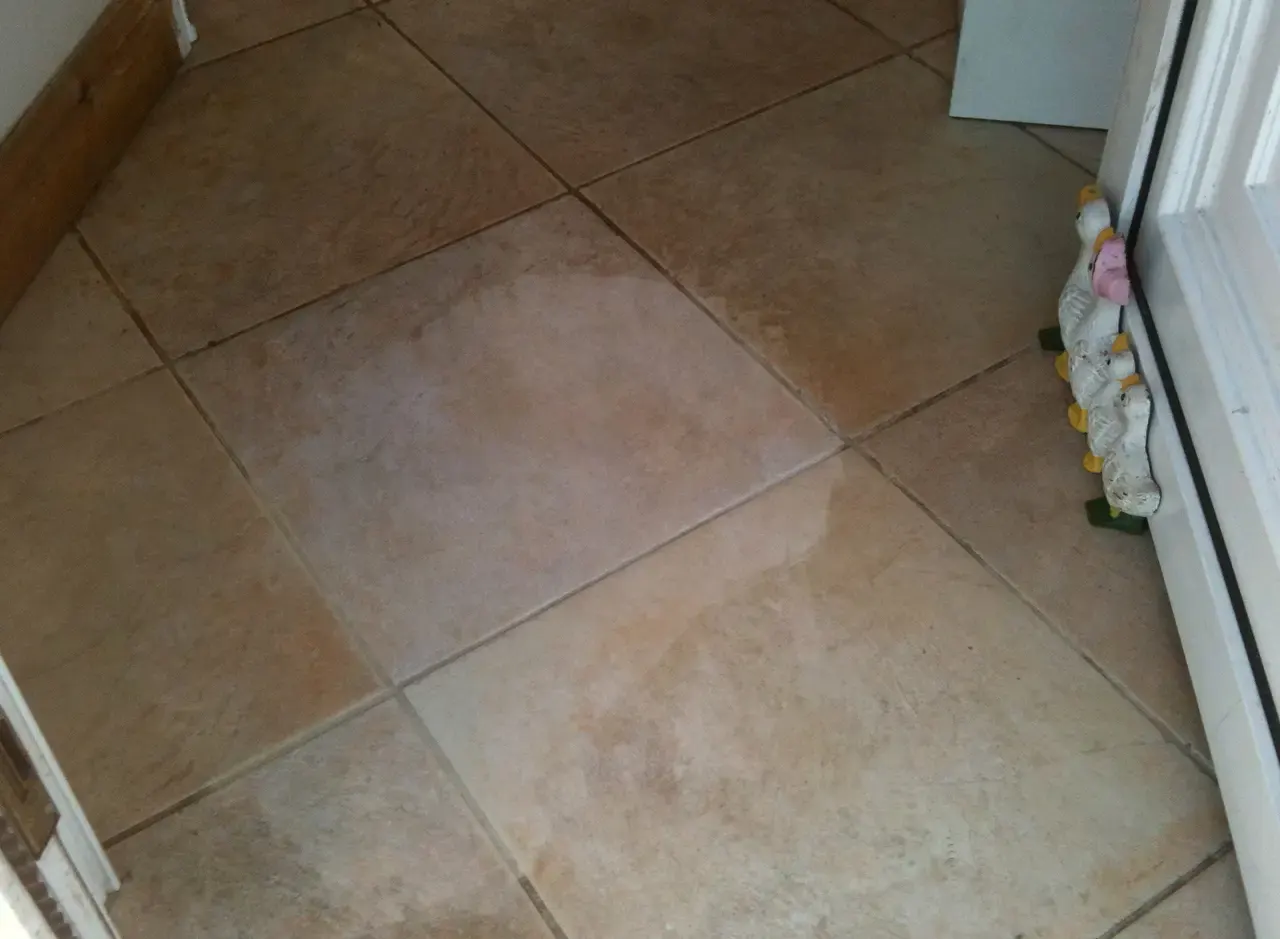
Areas that consistently appear dull or uneven can look significantly different when viewed from a lower angle. This visual change does not necessarily indicate permanent damage to the ceramic glaze. A clean comparison area within the same floor can help determine whether the discrepancy is due to removable residue, ingrained joint soil, or a permanent scratch.
A residue lock-in cycle occurs when detergent film remains after mopping, attracting new soil and encouraging redeposition into grout joints and textured grooves. Professional extraction breaks this cycle by suspending contaminants and removing them from the floor. The factory-fired glaze remains a durable, vitreous, and non-porous surface, eliminating the need for mechanical polishing.
Cooking grease, mineral films, soap scum, and typical grout staining are likely to improve significantly when technicians can fully remove contaminants and rinse away remaining residues.
Permanent wear, scratches, chipped glaze, and chemically altered grout may persist. Cleaning cannot restore a damaged surface or bring back colour lost due to harsh chemicals. Technicians clarify this boundary before commencing work to avoid using abrasive pads, polishing compounds, or unsuitable tile coatings that could inflict further surface damage.
When removable soil is the cause of the uneven appearance, a professionally cleaned floor can look markedly improved compared to its condition prior to cleaning. Grout may return to a more uniform colour, tile faces can regain their clarity, and the overall installation can become easier to maintain than a floor burdened with detergent film and entrenched contamination.
Proper ongoing maintenance is key to preserving that improvement. Remove loose grit before wet mopping, and use a residue-free pH-neutral tile cleaner for routine upkeep. Avoid bleach, vinegar, abrasive powders, and strong supermarket acids, as these can deteriorate grout, leave films, or cause unnecessary chemical damage.
Local Experts for Ceramic Tile Cleaning Visits in West Horsley
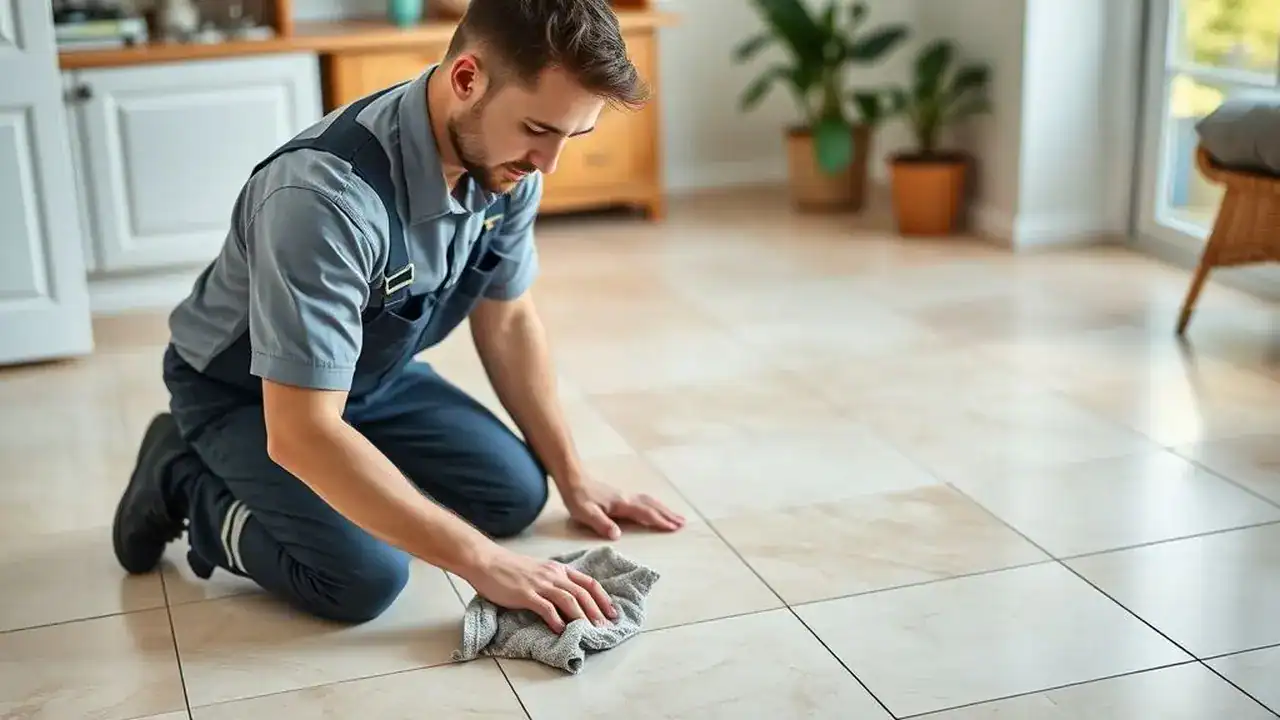
Abbey Floor Care has over 30 years of experience working with various ceramic tile types in homes, hotels, and heritage buildings across the country. A reliable local visit is best achieved when the contractor assesses the tile finish and grout condition together, rather than treating every floor as a uniform domestic cleaning task.
Cleaning visits in West Horsley are conducted through a vetted contractor network that serves Surrey properties, ensuring clear communication prior to attendance.
Surface-aware decisions are crucial in kitchens, utility rooms, and entrance halls. Loose grit can increase the risk of abrasion during inappropriate cleaning, while textured anti-slip finishes can trap soil within their grooves. Bathrooms and wet rooms may involve hard-water films, mould-infested grout, or silicone-related issues, so technicians evaluate the tiled system instead of promising uniform results for every room.
The layout of local properties can also affect visible patterns. For instance, in a period property in West Horsley, a hallway connecting the front entrance to a kitchen or garden-facing extension may carry dirt and moisture along a single path, resulting in heavier joint contamination precisely where foot traffic is most concentrated.
Professional equipment may include controlled mechanical agitation, soft brushes, and deep extraction tools, but each is selected based on the observed surface rather than merely availability. This approach protects the original glaze while effectively addressing soil, film, and grout contamination, often resulting in a more uniform finish than incomplete domestic cleaning methods.
The local visit is tailored to the property’s rooms, access requirements, and cleaning concerns. Clear communication before the appointment helps homeowners understand the intended scope and whether cleaning alone can resolve the observed condition.
Access Comprehensive Ceramic Tile Cleaning Advice
After assessing the floor’s tile surfaces, joints, and frequently trafficked areas, the next consideration may relate to routine care, persistent residue, or the differences between ceramic and porcelain finishes. The extensive ceramic and porcelain floor-care resource offers valuable insights for those broader queries.
This resource explains why certain installations darken in high-traffic areas and how maintenance products can affect the speed at which soil returns. Homeowners can then assess whether their concerns in West Horsley require simple adjustments in care or a professional evaluation of the floor.
Schedule a Ceramic Tile Cleaning Visit in West Horsley with Abbey Floor Care
Before requesting a cleaning visit in West Horsley, take the time to examine the tiled areas and note any visible concerns, access details, and other factors that could influence the assessment upon arrival. Providing a brief overview gives Abbey Floor Care useful context before discussing a suitable ceramic tile cleaning appointment.
Which areas and rooms require attention? Are the issues related to the tile surfaces, grout joints, textured grooves, or residue films? Factors such as the age of the installation, recent grouting, exposure to hard water, grease accumulation in kitchens, and previous cleaning products used can all help the service understand the reported condition.
Access considerations are essential, especially if tiled rooms connect through narrow hallways, garden entrances, or busy family areas. Homeowners should mention parking or loading restrictions, steps, the need to move furniture, and whether water or electrical access could affect equipment placement. This ensures the visit can be organised around the property rather than treated as a standard domestic clean.
Abbey Floor Care can discuss symptoms, potential contamination, and suitable options before arranging a visit through its vetted contractor network. The conversation does not assume that every dull patch requires the same treatment. Instead, it aims to determine whether controlled cleaning, grout-focused attention, or further assessment is most appropriate for the floor.
A professionally restored and properly maintained ceramic tile floor is easier to clean and care for than one burdened with persistent residue and soiled grout. Homeowners can also receive practical advice on maintaining cleanliness for longer periods.
West Horsley residents can share property details, tiled areas, observable concerns, and access requirements to facilitate a discussion about the floor before scheduling a suitable cleaning visit.

David Allen — Abbey Floor Care
David Allen possesses over 30 years of expertise in ceramic tile cleaning through Abbey Floor Care, delivering professional services for West Horsley and Surrey homes. His focus is on differentiating glazed tile surfaces from soiled grout, textured residues, and installation films, ensuring each floor receives the appropriate cleaning assessment.
The Article Grime Trapped Before Ceramic Tile Cleaning In West Horsley first found on https://abbeyfloorcare.co.uk