Last Updated on November 24, 2026 by David
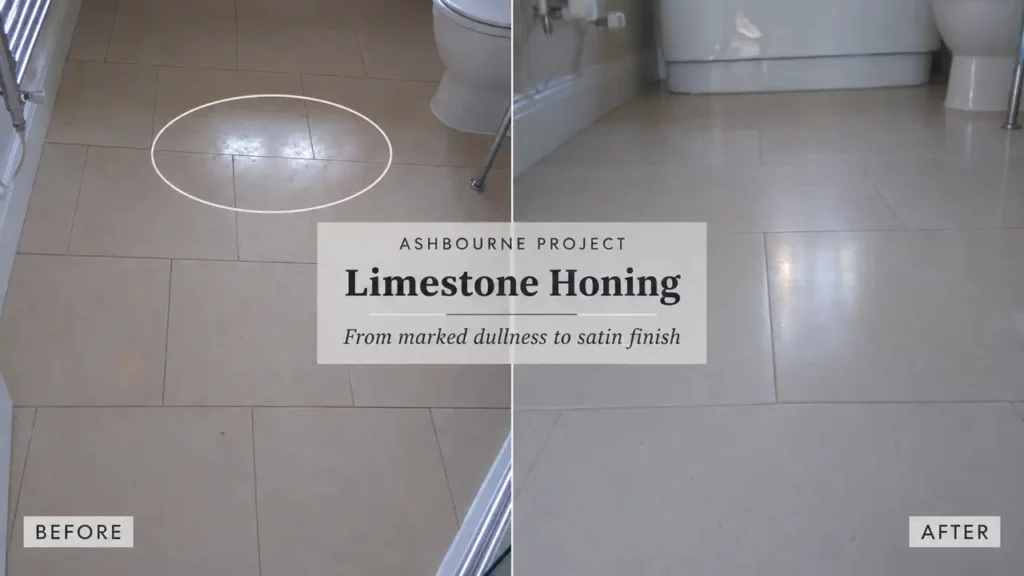
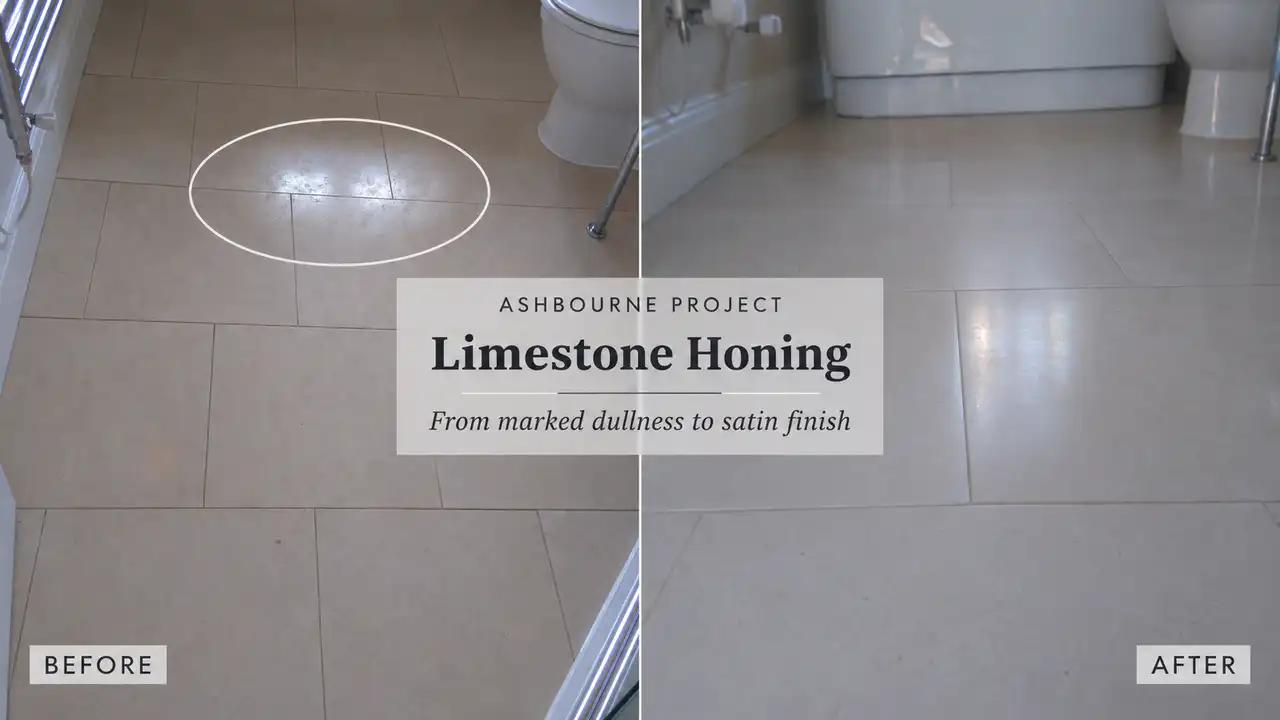
When dealing with a dirty limestone floor, it’s a common misconception that polishing is the only solution. cleaning alone often falls short, especially when etching is involved. In our recent project near Ashbourne, Derbyshire, we effectively combined thorough cleaning with progressive honing techniques to eliminate surface damage and achieve a smooth, soft sheen.
Identifying the Issues: Grimy Grout and Etch Marks
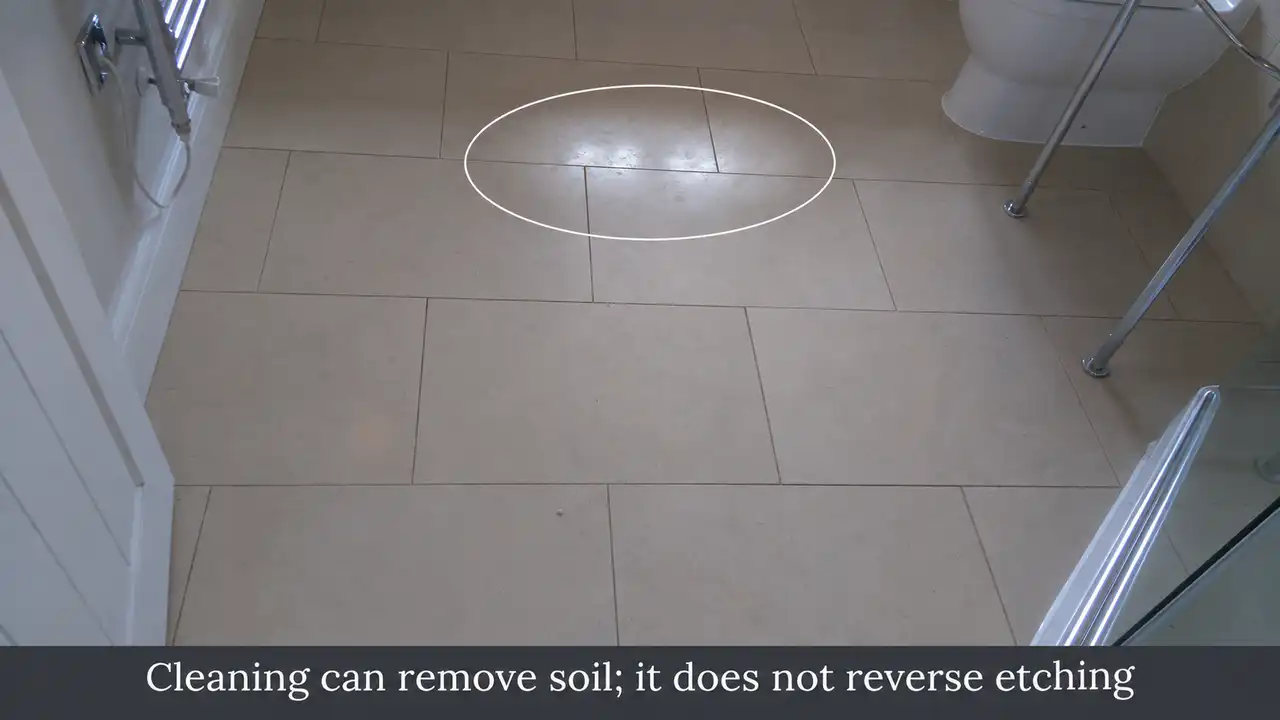
The white limestone tiles and grout had become noticeably dirty, with several etch marks marring their appearance. a ledge next to the wash basin exhibited an etched area that demanded our attention.
These issues required different solutions. While cleaning could eliminate the grime, etching constituted actual damage to the limestone surface rather than just a removable substance. restoring the floor necessitated both effective cleaning and mechanical refinement of the surface.
To start, we laid down protective plastic sheeting along the pathway from the entrance to the work area. This precaution ensured that the floor remained clean as we moved back and forth during the job.
Thorough Cleaning of the Limestone and Grout
We employed rotary cleaning machines, specialised cleaning chemicals, and 800-grit honing powder to deep clean the floor. This particular powder offered sufficient abrasion to dislodge dirt from the tiles and grout lines while being gentle enough to avoid damaging the tile surface.
After the cleaning process, we meticulously rinsed the floor before proceeding to the resurfacing stages. The cleaning tackled the visible soiling, while the subsequent phase focused on addressing the etch marks, scuffs, and scratches that persisted within the stone itself.
Eliminating Damage Through Honing and Refining the Finish
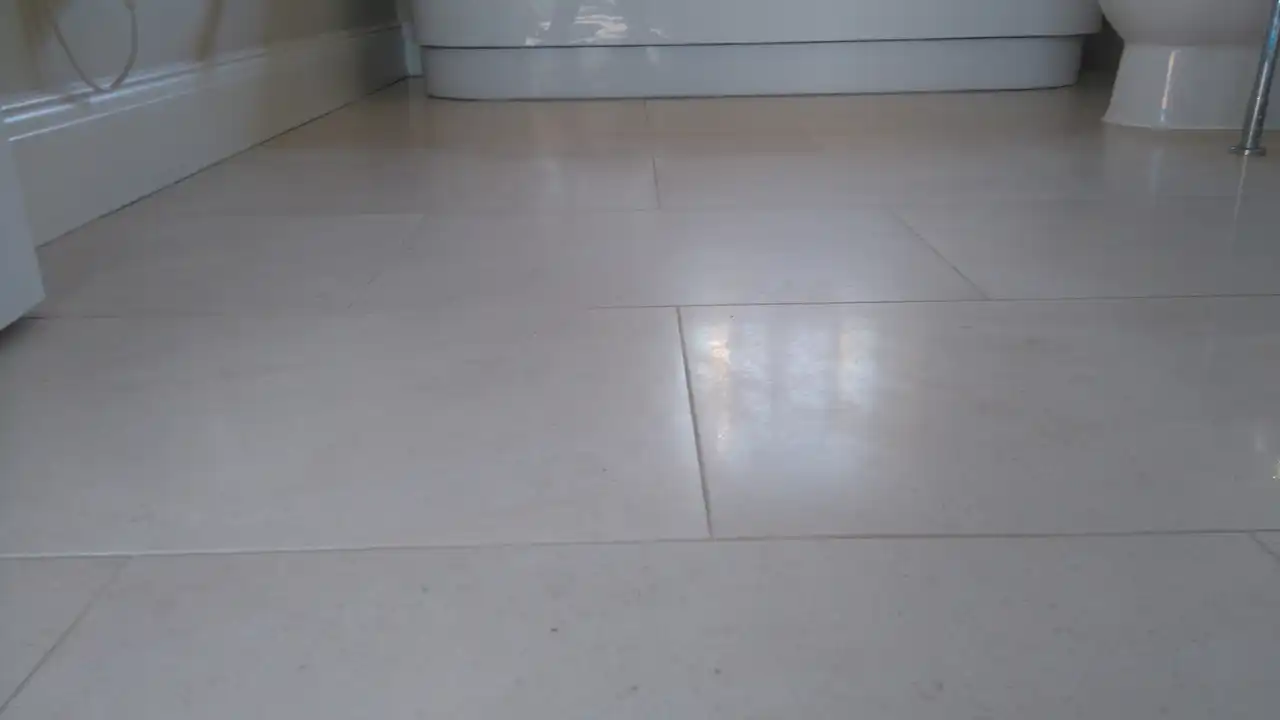
We initiated the honing process using a 100-grit abrasive, which effectively smoothed the tile surfaces while removing etch marks, scuffs, and scratches.
Following this, we continued honing at 200, 400, and 800 grit, before transitioning to a softer honing stage at 1500 grit. Each progressively finer honing stage refined the surface, resulting in a smooth finish with a soft sheen, rather than a high-gloss appearance.
Honing involves removing a thin layer of stone; it is more than just a rigorous cleaning process. This method of restoration was tailored to the specific needs of this limestone floor, as the suitable starting grit and desired finish may vary based on the type and condition of the stone.
After completing the honing process, we allowed the floor to dry for a couple of hours.
Refurbishing the Area Above the Wash Basin
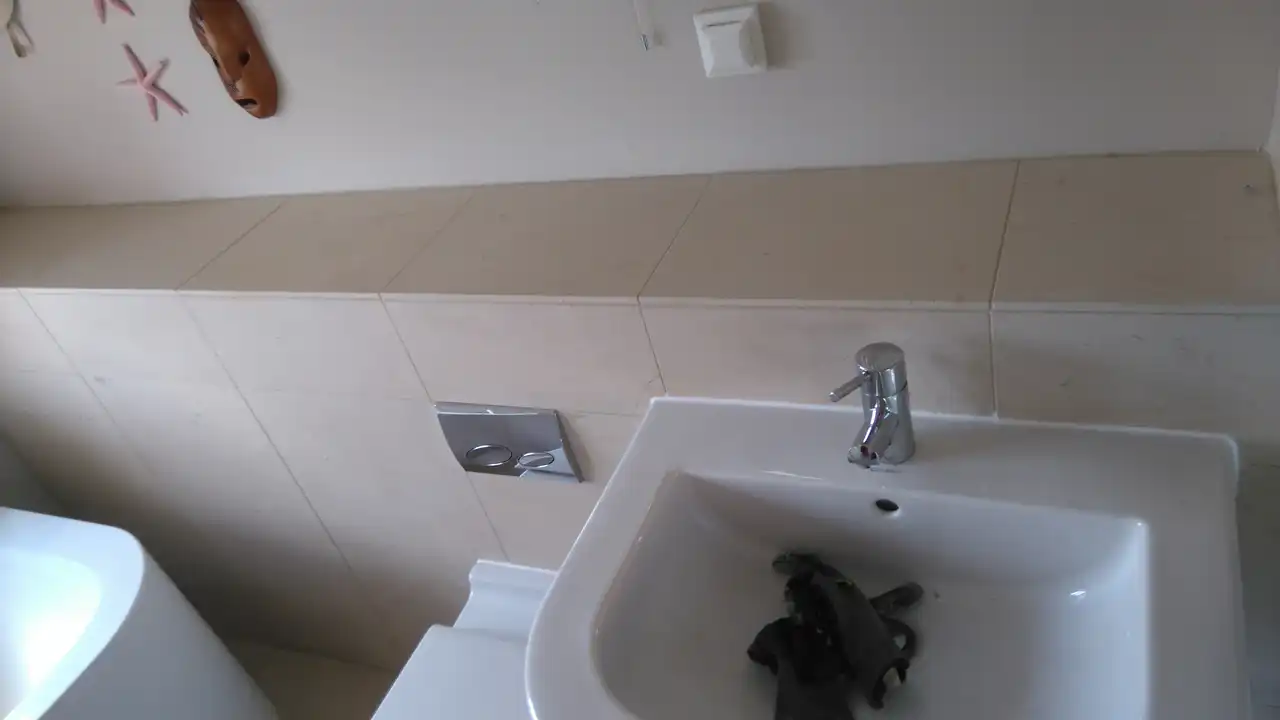
For the ledge, we required a more targeted approach. Using diamond hand honing pads, we carefully removed the visible etching, refining the treated area to 1200 grit to ensure it matched the finish of the rest of the ledge.
After allowing it to dry for an hour, we applied two coats of a water-based impregnating sealer.
Applying the Sealant and Presenting the Final Result
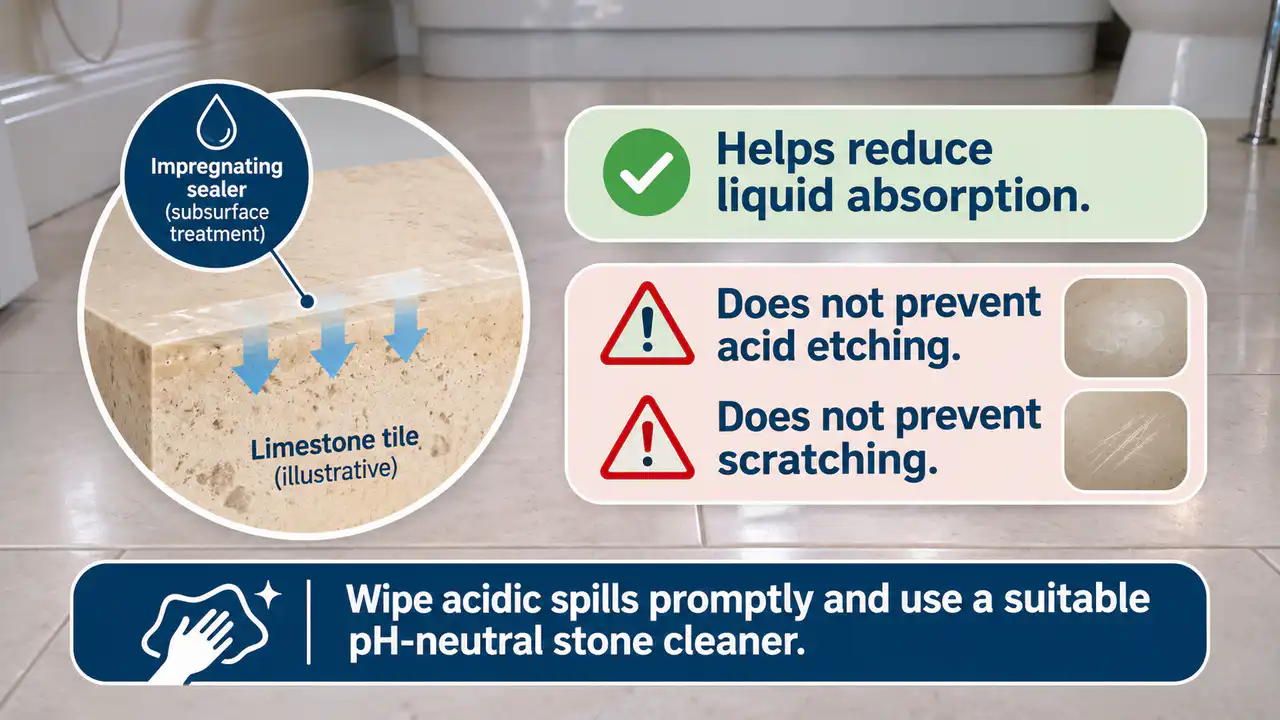
After the floor had adequately dried, we proceeded to apply a water-based impregnating sealer. The result was a smooth floor with a soft sheen that revitalised the appearance of the white limestone.
It is crucial to understand the difference between dirt removal and damage correction. The deep cleaning effectively addressed the soiled tiles and grout, while honing rectified the etching, scuffs, and scratches, ultimately establishing the floor’s finish.
For ongoing maintenance, utilise a suitable pH-neutral stone cleaner, regularly remove grit, and promptly wipe up spills. Although an impregnating sealer aids in reducing absorption, it does not safeguard against acid etching or scratching. It is essential to keep vinegar, acidic descalers, and other acidic cleaners away from limestone surfaces, including the ledge by the wash basin.
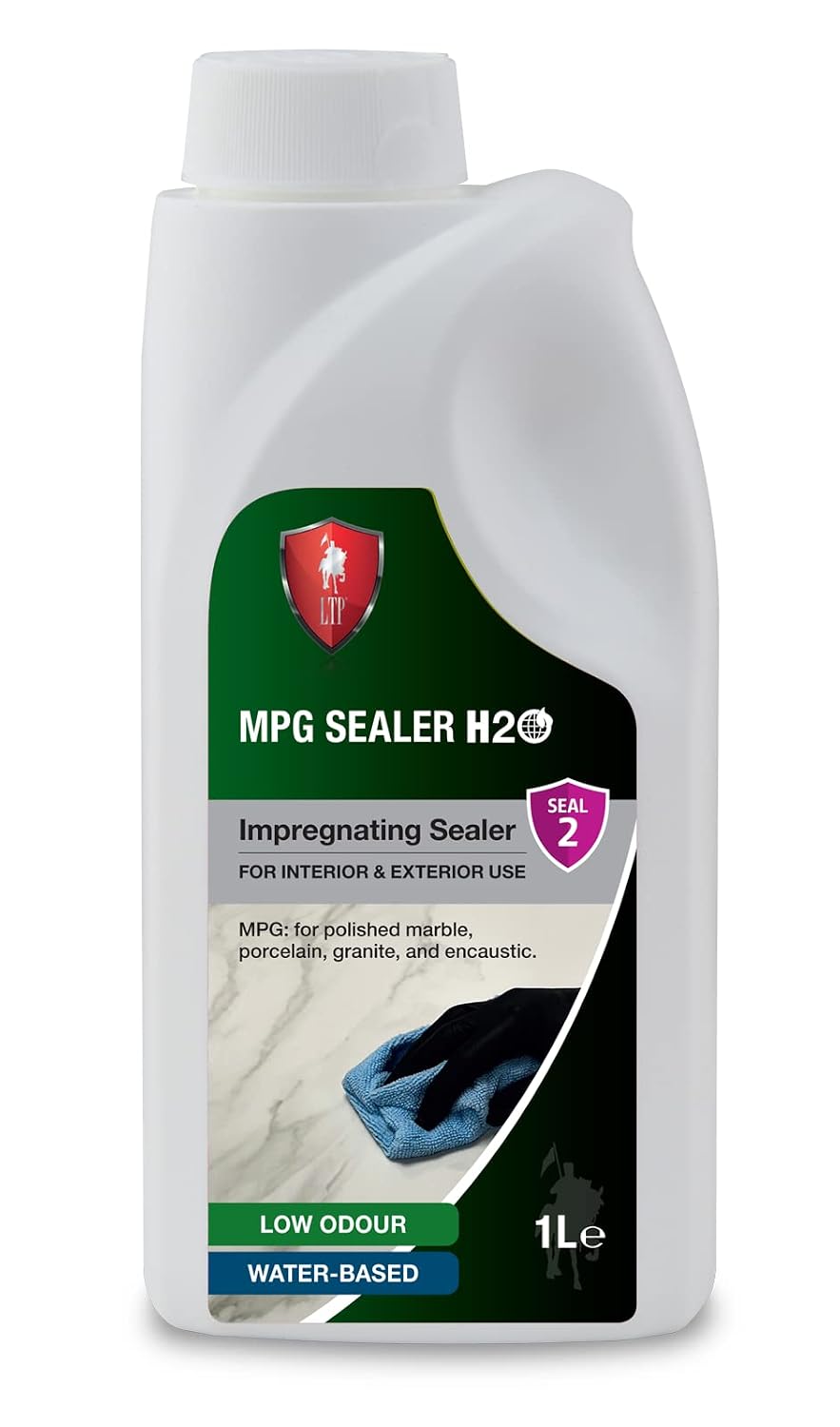
Pro Tip: We recommend these products for the daily cleaning and interim sealing of limestone.
Disclosure: As an Amazon Associate, Abbey Floor Care earns from qualifying purchases at no extra cost to you.

David Allen — Abbey Floor Care
David Allen of Abbey Floor Care brings over 30 years of hands-on restoration expertise. His professional background encompasses limestone cleaning, honing, and sealing, with a keen focus on addressing surface damage and achieving optimal finishes.
The Article Etch Marks Need Limestone Floor Polishing In Ashbourne first appeared on https://abbeyfloorcare.co.uk