Last Updated on 26 November 2026 by David
Removing a dirty sealer does not always uncover pristine stone underneath. At a residence in Grendon, Atherstone, we stripped away rough, stained limestone that required grinding and honing before resealing. What initially appeared to be a two-day stripping and sealing project extended to three days of comprehensive restoration, achieving a smooth finish that matched the adjacent limestone.
Client’s Request: Eliminate the Dirty Sealer and Start Anew
Our client had recently settled into a property featuring a limestone floor that was two decades old. The existing sealer was heavily soiled and discoloured in several areas. They engaged Abbey Floor Care to remove the old sealer and apply a fresh seal to the tiles.
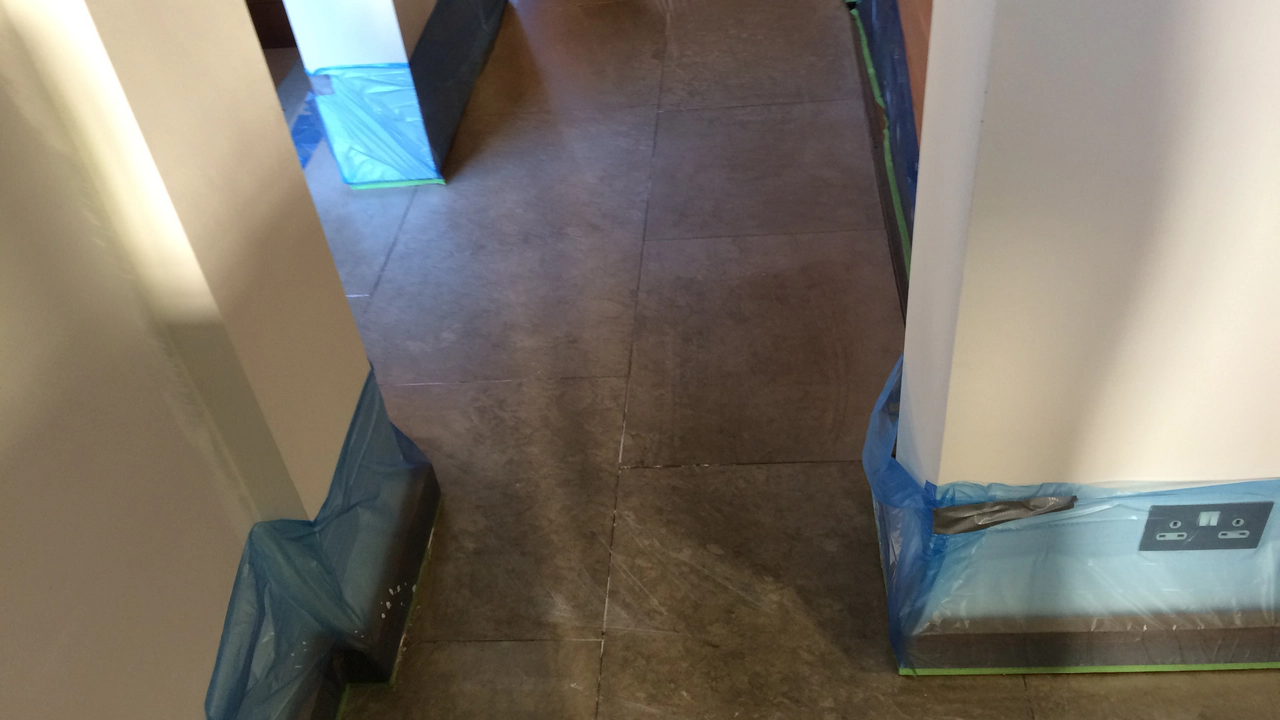
The floor exhibited significant soiling, with numerous scratches and surface pits. Initially, we believed that stripping and resealing would suffice, estimating the task could be completed in two days. Our plan was to remove the coating to determine if the stone beneath was suitable for a new finish.
Assessing and Stripping the Old Coating
Testing indicated that the existing coating was likely a film-forming sealer rather than a conventional water-based acrylic. We applied a specialised gel-based stripper, allowing it to sit for one hour to soften the coating prior to removal.
Subsequently, we employed a combination of rotary brush scrubbing and pad scrubbing to dislodge the softened sealer from the stone. We vacuumed away the slurry containing the residues, effectively cleaning the floor.
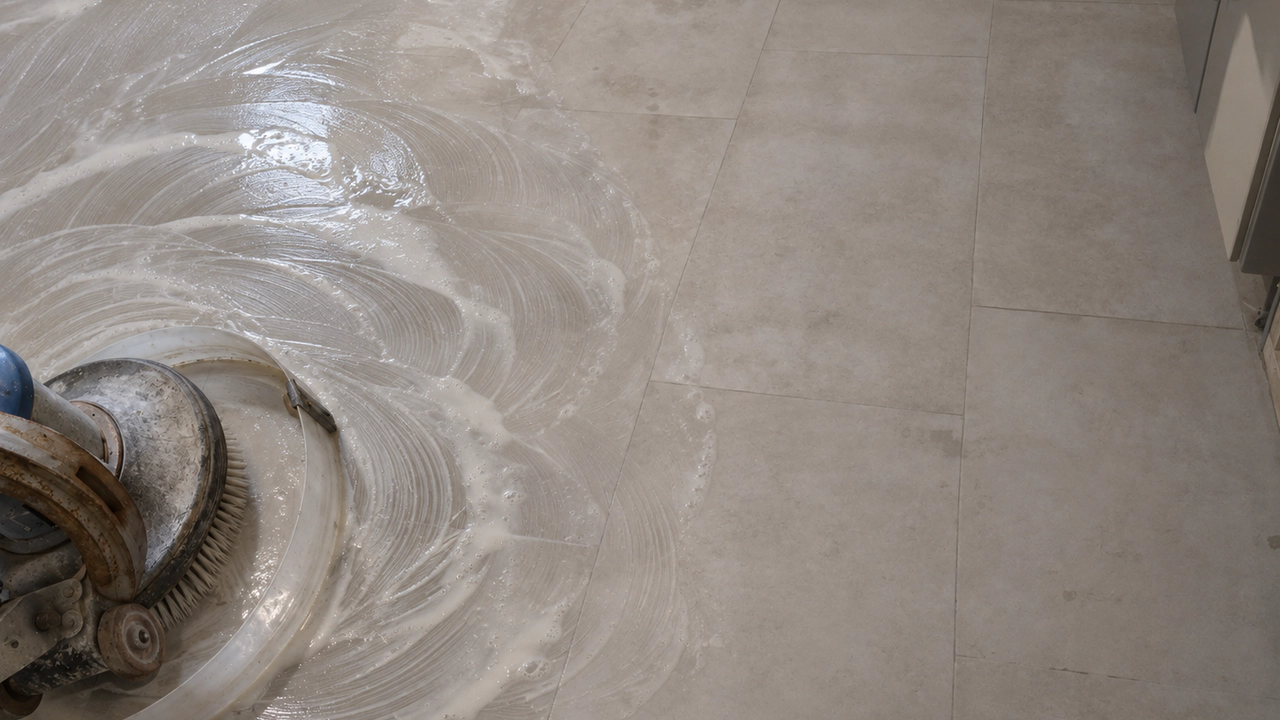
The edges required special attention. They were extremely dirty and had a thick accumulation of old sealer, which we meticulously removed by hand using abrasive pads.
Why Stripping Alone Was Insufficient
As the floor began to dry, the underlying issues became apparent. The limestone felt rough to the touch, akin to sandpaper, and still retained ingrained soil and marks. Dirt and stains had penetrated the surface, rather than being confined to the old coating.
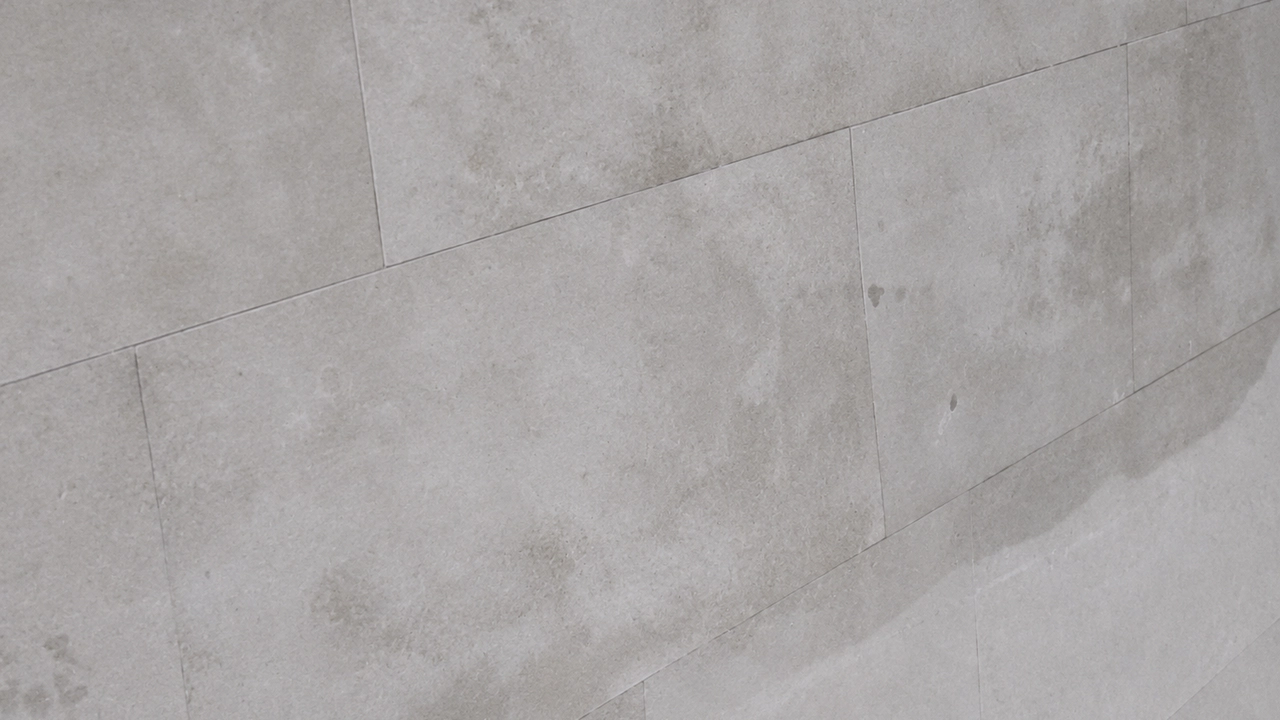
The old sealer had concealed a dirty, stained surface. Applying another coating at this stage would not have rectified the roughness or the embedded marks. We explained the situation to the client and recommended grinding away the rough, stained surface to create a clean base.
The necessity for resurfacing stemmed from the condition revealed after stripping—not merely the floor’s age or its previous appearance. Limestone does not automatically require honing due to age or perceived difficulty in cleaning. In this case, the rough surface and persistent ingrained contamination warranted an extension of the work.
Grinding and Honing to Achieve a Consistent Finish
The tiles were reasonably level, with minimal lippage—the variation in height between adjacent tile edges. we did not need to utilise metal diamonds to correct uneven edges.
We ground the tiles with 50-grit diamonds, effectively removing the damaged surface and revealing a pristine finish. This process constituted mechanical resurfacing, involving the removal of stone rather than an additional cleaning pass.
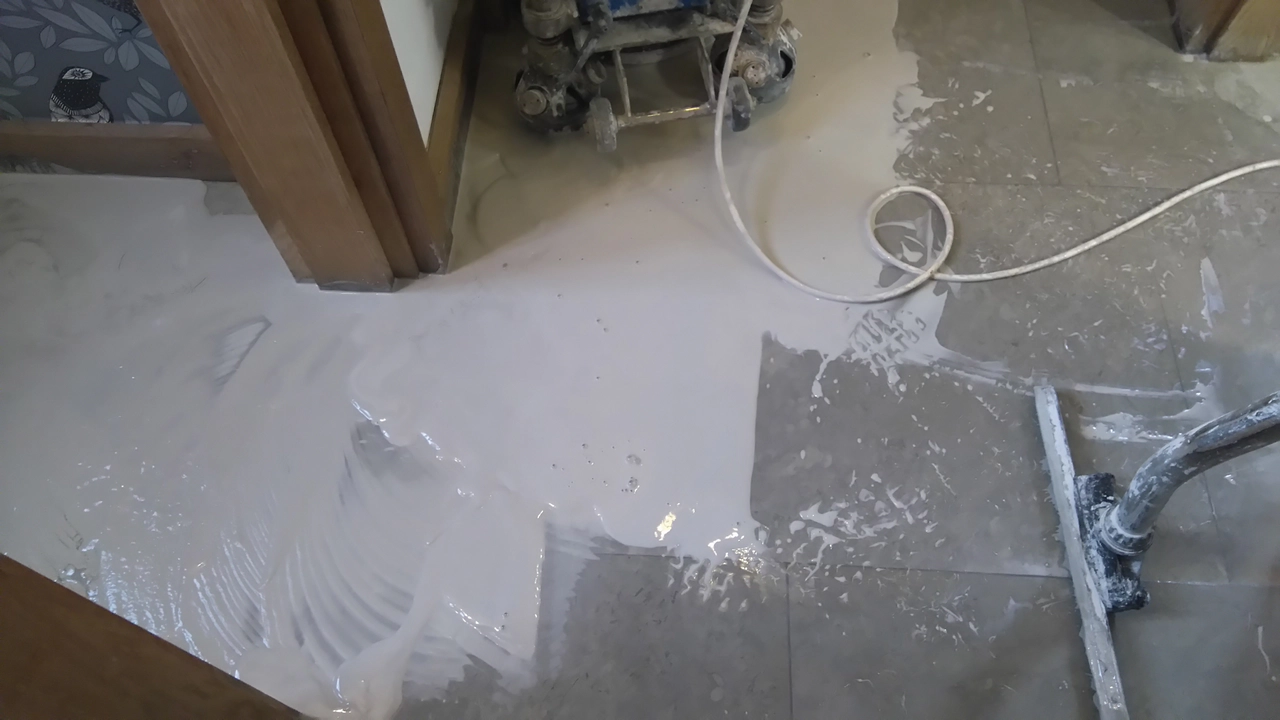
Next, we honed the floor to a smooth 200-grit finish, ensuring it matched the finish of other areas of the limestone floor that did not require restoration. The goal was to achieve a consistent appearance, avoiding the introduction of a different level of polish.
Our main grinding and honing equipment could not access the edges completely, so we honed those areas using electric hand tools. The sequence of 50-grit grinding followed by 200-grit honing was specific to this floor and not a universal standard for limestone.
Applying an Impregnating Primer and Multiple Finishing Coats
We first applied a layer of impregnating sealer to prep the porous limestone, followed by six thin coats of water-based acrylic mid-sheen surface sealer.
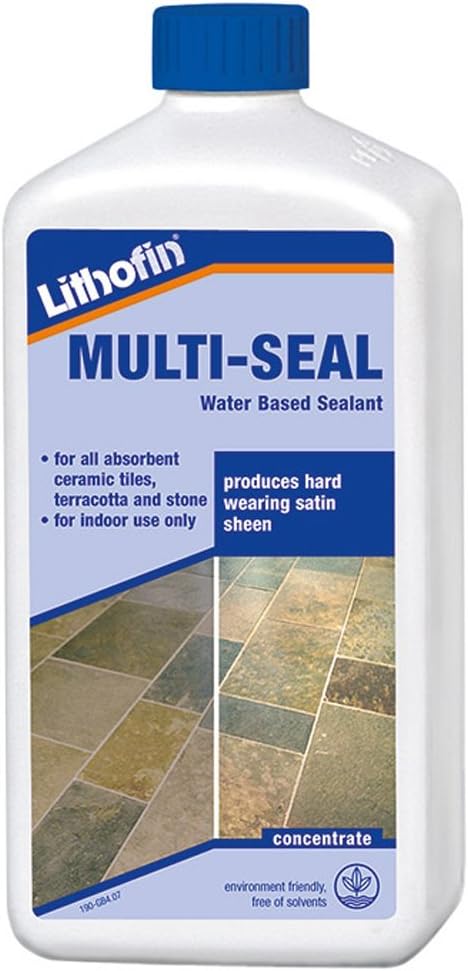
The two types of treatment served distinct purposes. The impregnating sealer prepared the stone prior to the finish sealing; the topical acrylic coating provided the final surface and was designed to function as a wear layer.
This floor experiences high traffic, with significant soil tracked in from the family and their many pets. We recommended the surface sealer to help protect the limestone under these conditions. sealing does not render the stone immune to scratches or damage from acidic spills and cleaners.
The Final Outcome and Maintenance Recommendations
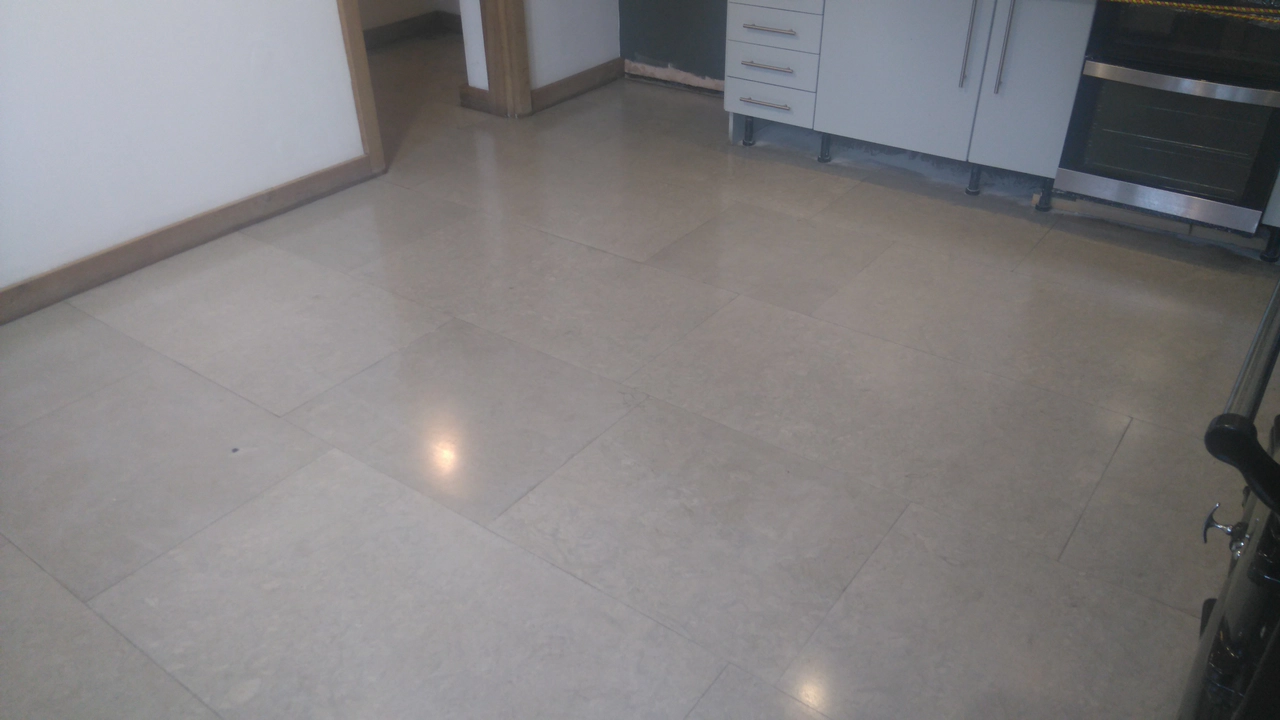
The restoration process ultimately spanned three days, rather than the initially estimated two. The additional grinding and honing stage was essential between stripping the old coating and applying the new protective layer.
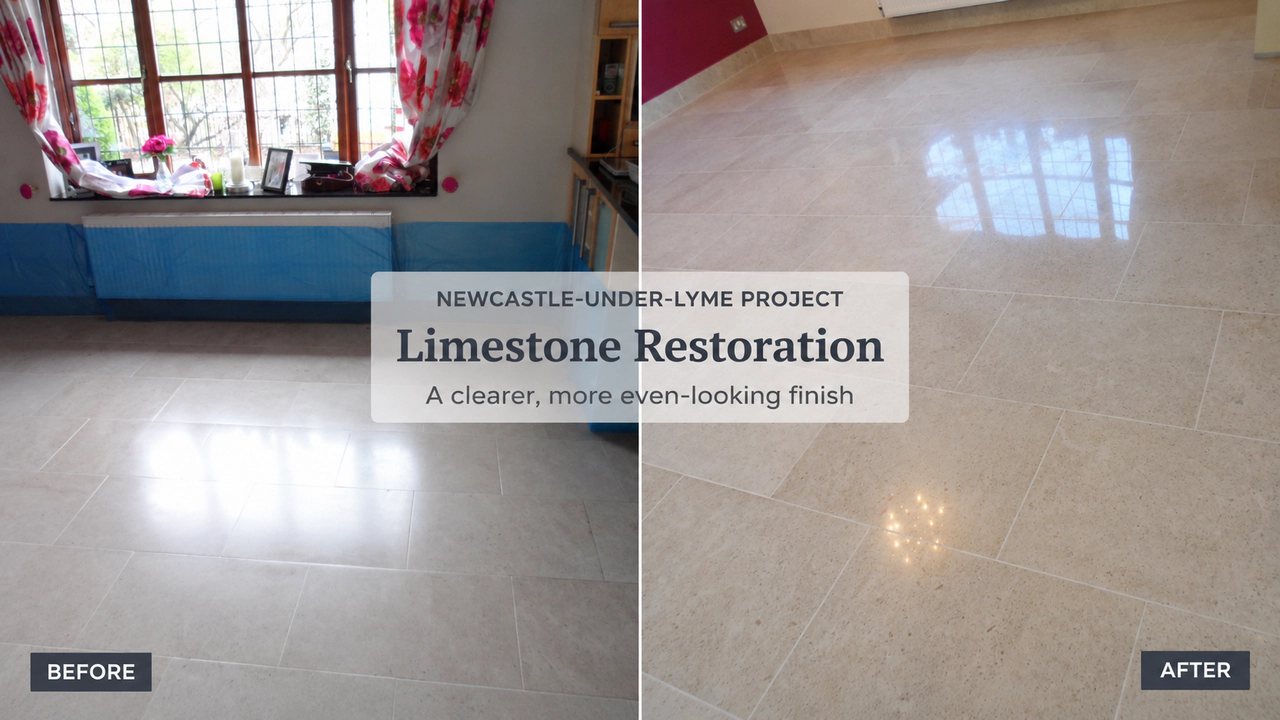
The result was a stunning, smooth, and easy-to-clean floor, with the honed finish perfectly matching the areas that had not required restoration. Our client was thoroughly pleased with the outcome.
Given the amount of soil tracked into the rooms, we advised the following maintenance practices:
- Dry sweeping at least once a day to eliminate loose dirt and grit.
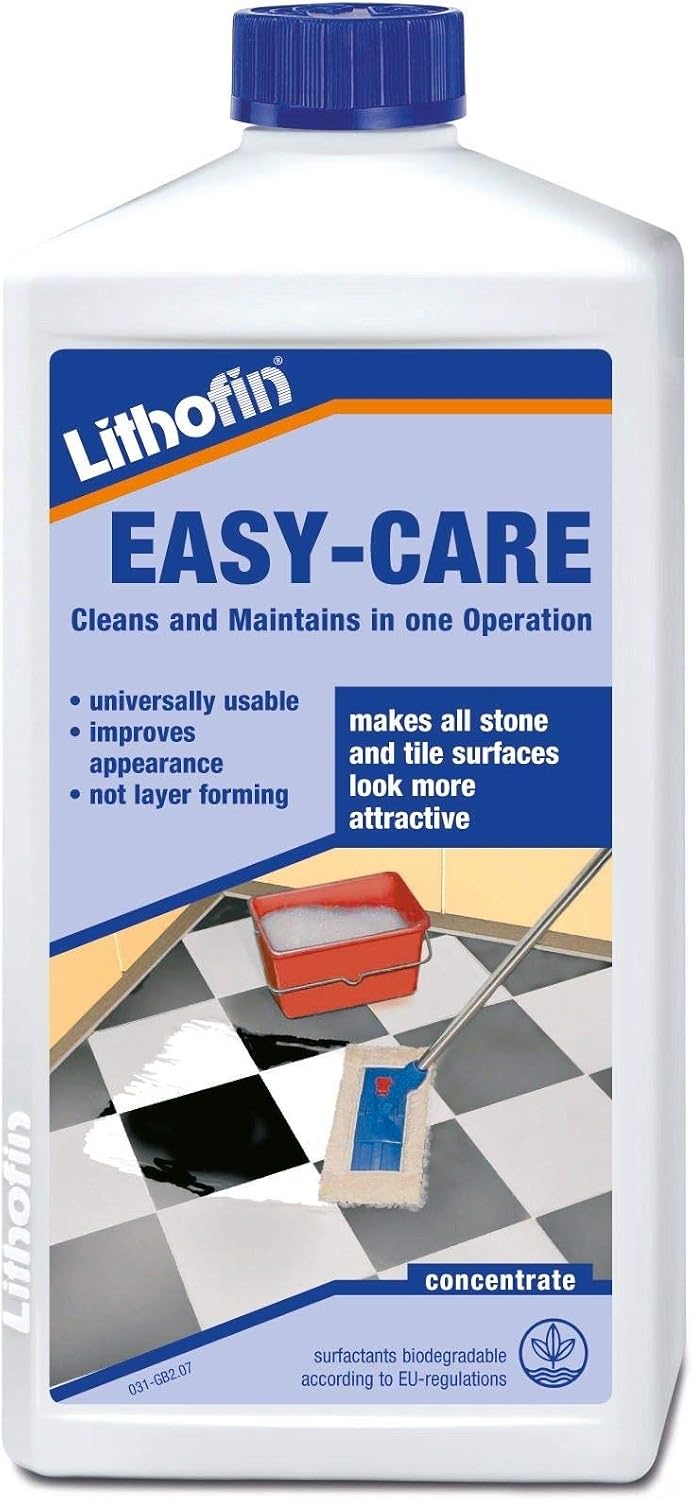
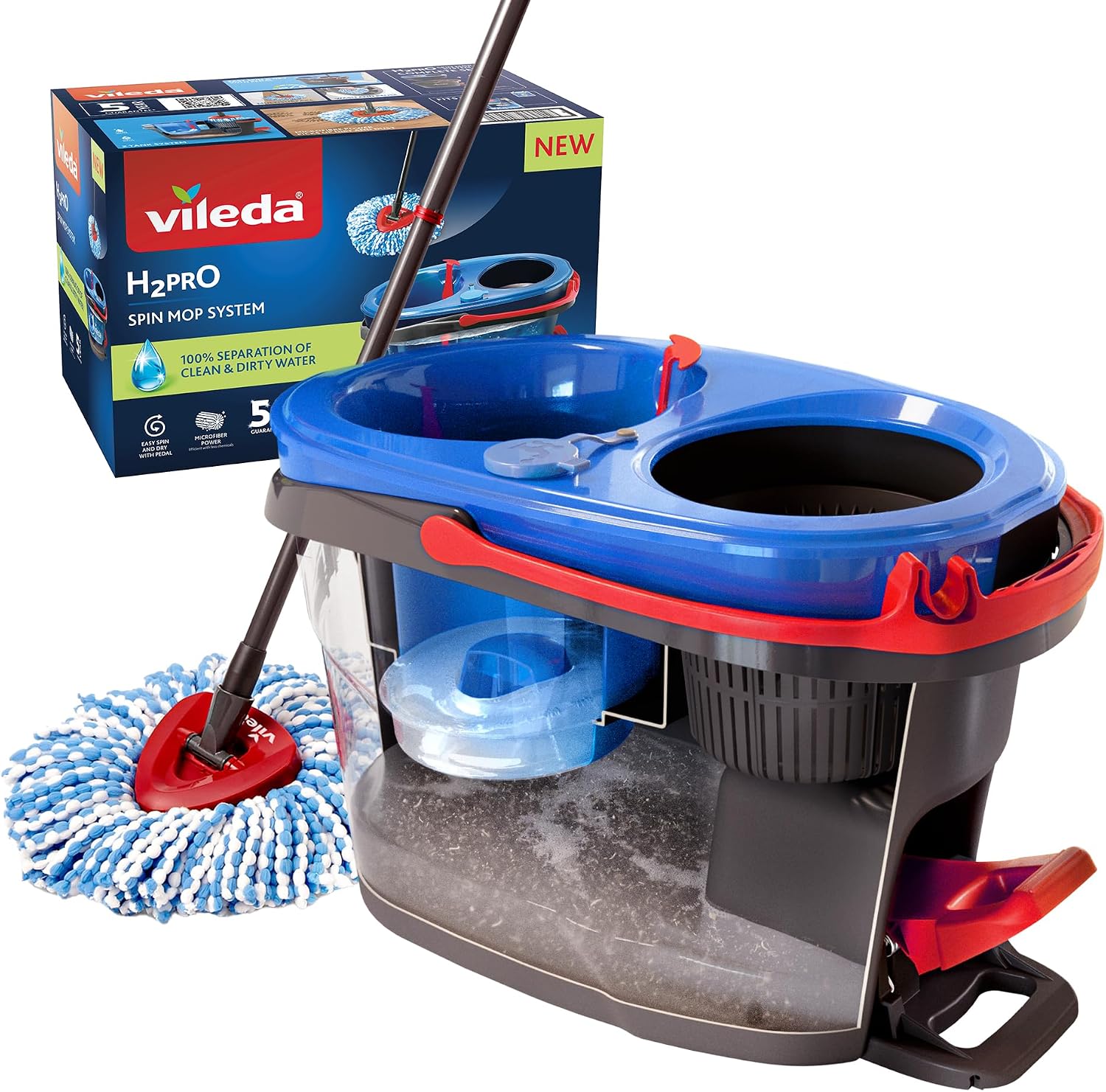
- Daily damp mopping with a recommended limestone cleaner to help preserve the surface finish.
- Retouching areas showing wear with a compatible sealer as necessary, rather than allowing the finish to degrade unchecked.
For regular limestone care, utilise a suitable pH-neutral cleaner that is compatible with the finish. Avoid acidic cleaners, such as vinegar and descalers, as they can etch limestone, and a sealer does not prevent that damage.
Pro Tip: We recommend these products for everyday limestone cleaning and interim maintenance sealing for the satin topical finish.
Disclosure: As an Amazon Associate, Abbey Floor Care earns from qualifying purchases at no extra cost to you.
This project highlighted the significance of the condition beneath an old coating. Stripping eliminated the dirty sealer, while grinding and honing rectified the rough, stained stone underneath. Only then was the floor prepared for its new protective finish.

David Allen — Abbey Floor Care
David Allen of Abbey Floor Care boasts over 30 years of hands-on experience in floor restoration. His expertise encompasses limestone cleaning, honing, and sealing, with a focus on the stone’s condition and the maintenance requirements of domestic floors.
The article Limestone Restoration In Atherstone: Old Sealer Trapped Dirt first appeared on https://abbeyfloorcare.co.uk