Key Takeaways
- Limestone often looks patchy because residues and moisture soak into its pores, not because you are “cleaning wrong.
- A proper alkaline deep clean safely removes hidden build-up, so the floor dries evenly and re-soils less quickly.
- If the surface is chalky or etched, light honing (gentle resurfacing) is usually enough to restore an even, elegant finish.
- The right impregnating sealer helps with staining and day-to-day cleaning, but it will not prevent acid etching.
- The most reliable results come from an assessment-led plan and a simple maintenance routine, not stronger products.
If you have limestone flooring in a Buckinghamshire home, it can feel like you are doing everything “right, yet the floor still looks tired. You mop, you spot-clean, you even try a stronger product, and somehow the stone ends up looking patchy, grey, or permanently marked.
The good news is this is usually not “just how limestone is” It is more often a mix of absorbed residues, tiny scratches from grit, and (in older floors) a weakened top layer that behaves like blotting paper. Once you treat the cause, limestone becomes far easier to live with.
Why Limestone Floors in Buckinghamshire Can Feel Impossible to Keep Clean
What you tend to notice in real homes
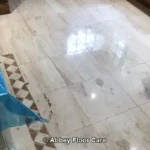
In many lived-in Buckinghamshire properties, limestone develops grey traffic lanes, darker patches by sinks, and grout lines that never look truly clean. Day to day, that means you can spend time cleaning and still feel like the floor looks “used” the moment it dries.
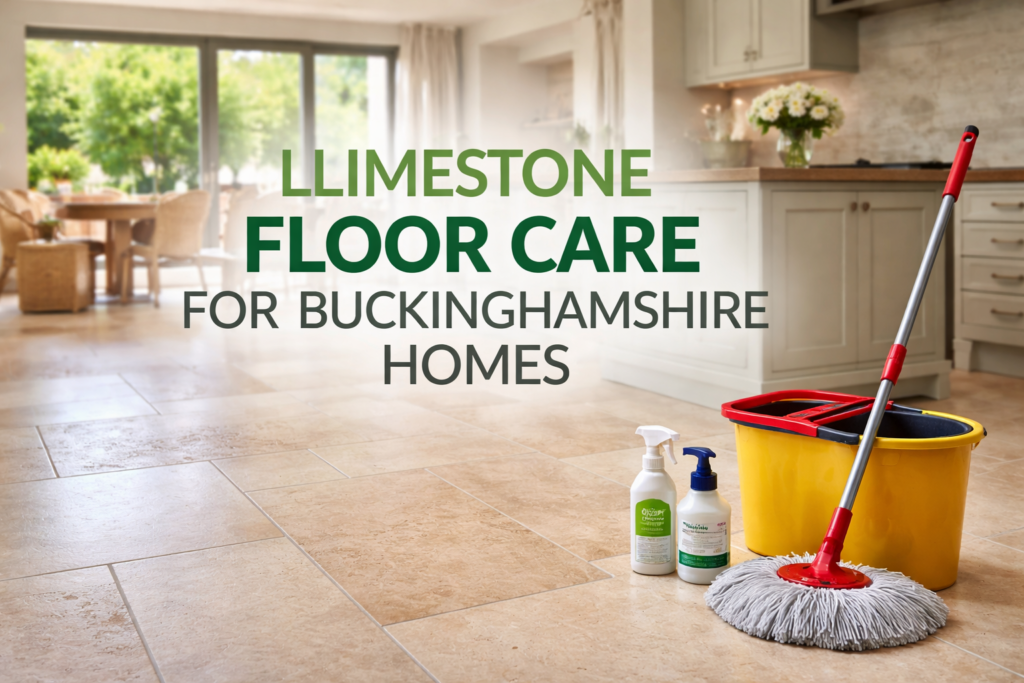
Pro Tip: A Simple, Safe Daily Kit for Limestone Cleaning

Fila Pro Floor Cleaner
|

LTP MPG Sealer H20
|

Vileda H2PrO Spin Mop System
|
Over time, mop water and everyday detergents can seep into limestone, leaving residues behind. On older floors, this can contribute to a thin, weakened surface layer that dries patchy, no matter how carefully you clean. In plain terms, the stone is not just “dirty”; it is holding onto what you have been putting on it.
Why does limestone react differently to everyday life
Limestone is naturally absorbent and relatively soft. That combination matters day to day because grit from outside can create thousands of tiny scratches, and spills can sink into pits and fossil marks before you even notice. It is also acid-sensitive, which means many bathroom and kitchen products can lightly dissolve the surface, leaving dull, chalky marks that regular cleaning will not hide.
Common DIY Mistakes That Make Limestone Worse
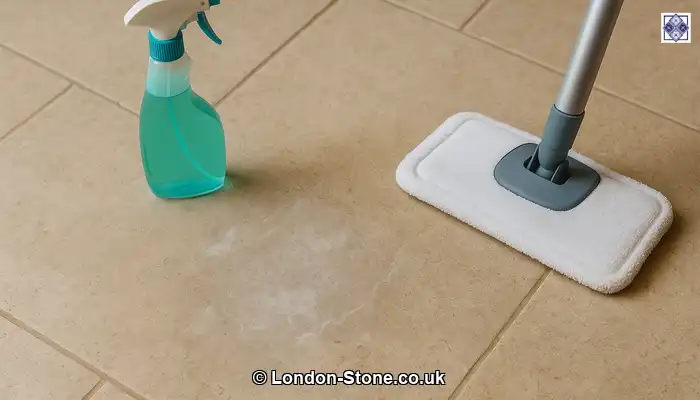
Acidic sprays, harsh degreasers, and steam mops
If a product fizzes on limescale, it can also attack limestone. Even a “quick spray” can etch the surface, making it look flat. Strong degreasers can strip away tired protection, leaving residues in the pores that make the floor re-soil faster.
Steam mops are another common culprit. They push hot, moist air and dissolved residues into both stone and grout. The floor may look better for a day, then become dry, blotchy, and start catching dirt more easily. That is why some Buckinghamshire homeowners feel stuck in a cycle of “deep cleaning” that slowly worsens the finish.
What can go wrong with non-specialist “polishing”
Limestone is not a vinyl floor, and it does not respond well to quick fixes. Non-specialists sometimes use abrasive pads that leave swirl marks, or they apply coatings that create an uneven, plastic-like shine. The day-to-day problem is simple: those coatings can trap dirt, show scratches quickly, and, in some cases, trap moisture, which can lead to whitening, cloudiness, or flaking that then requires specialist removal.
What a Proper Limestone Assessment Looks Like in Buckinghamshire
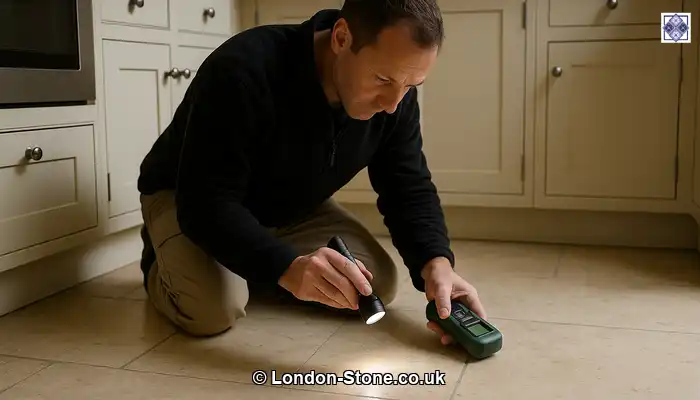
What we check before recommending any work
A limestone assessment is not just a glance and a quote. We look at the type of limestone, the current finish, its absorbency, whether old coatings or sealers are present, and how the grout is behaving. We also watch for signs of dampness, movement, or a weakened top layer (often caused by decades of mop water and detergents).
For you, this matters because it stops the “one-size-fits-all” approach. The correct method depends on what the stone can safely tolerate, not what someone hopes will work.
Clear options: deep clean, light honing, or a preservation-first approach
Some Buckinghamshire limestone floors respond beautifully to a controlled deep clean and a fresh impregnating sealer. Others need light honing, which is a gentle resurfacing with diamond abrasives to remove the damaged top layer and restore an even feel. Where stone is thin, fragile, or historically sensitive, the safest option can be preservation: improving appearance without pushing the floor beyond its limits.
You should always be given clear options, realistic outcomes, and a maintenance plan. That is what turns a “nice result” into something that lasts.
Safe Deep Cleaning: Resetting Limestone Without Etching It
A Controlled Alkaline “Purge” to Lift Residues

Professional deep cleaning uses specialist alkaline cleaners (not acidic) to loosen grease, old detergents, ground-in grime, and failing sealers. The goal is not to flood the floor; it is to lift contamination out of the pores, so the limestone can dry evenly and stop looking patchy.
In day-to-day terms, this is the step that often makes the floor feel “calm” again: fewer dark patches, less smearing, and a more even look after mopping.
Rinsing, Extraction, and Drying (The Part That Makes Results Last)
Once residues are loosened, they must be removed completely. That means thorough rinsing and wet-vac extraction, often in repeated cycles, until the recovered water runs clear. If residues are left behind, limestone can re-soil quickly and go patchy again, sometimes within weeks.
Drying is just as important. Sealing over a damp limestone floor is a fast route to blotchy results. Moisture checks and sensible drying time protect you from that disappointment.
Light Honing: The Step That Fixes Chalkiness, Scratches, and Etching
When the top layer has been weakened
If limestone feels chalky, looks cloudy, or shows persistent marks that do not respond to cleaning, the surface itself has often been altered. Honing is a controlled, step-by-step abrasion using diamond pads to remove the weakened layer and refine the finish until it looks even again.
For you, the practical benefit is enormous: a sound surface accepts sealer more evenly and prevents “grabbing” dirt. That makes everyday cleaning far easier, and the floor stays presentable for longer.
Choosing a finish that suits honest living

Most Buckinghamshire homes do best with a honed or soft satin finish. It looks refined, works with natural light, and does not require the constant upkeep that a high-gloss finish can. We match the finish to your lifestyle, so the floor looks elegant without becoming a weekly battle.
Sealing and Protection: Helping Limestone Stay Cleaner for Longer
Impregnating Sealers and Colour Enhancers
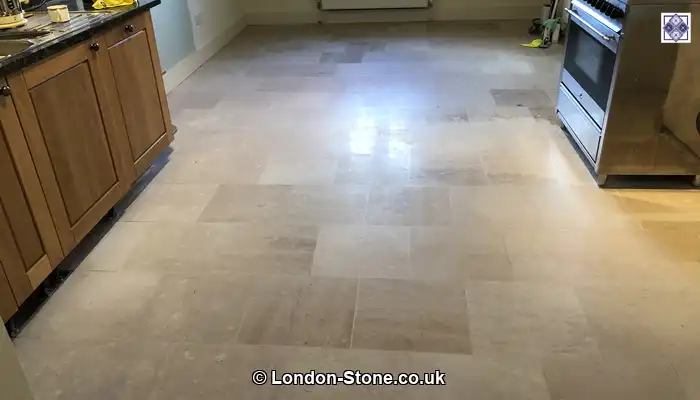
Impregnating sealers soak into the stone to slow absorption. They do not form a thick film, so the limestone keeps a natural look. This matters day to day because spills are easier to wipe up, and routine mopping is less likely to leave stubborn “shadowing” patches.
On some floors, a colour-enhancing impregnator is used to deepen tones and bring out fossil detail gently. Any change is explained in advance, because the best protection in the world is not helpful if you dislike the finished look.
When a sacrificial coating can make sense
In high-use areas or where limestone is particularly porous or weakened, an additional protective coating can sometimes serve as a sacrificial wear layer. The key point is honesty: coatings can need maintenance and may show scratches. They are only recommended when conditions, cleaning habits, and breathability risks have been adequately considered.
An Everyday Care Plan for Busy Buckinghamshire Households
A simple routine that protects the finish
Once restored and sealed, limestone should not need “strong cleaning. Regular vacuuming or sweeping (to remove grit), clean entrance mats, and a damp microfibre mop with a pH-neutral stone cleaner is usually enough.
This matters because limestone damage is often slow and cumulative. A kinder routine prevents the steady build-up of scratches and residues that make the floor look older than it is.
When to refresh protection and when to call a specialist
In busy kitchens, a maintenance visit every 12–24 months is often sensible, with resealing in high-wear zones as needed. Lower-use areas can go longer. A simple water-droplet test can help you spot when protection is fading, so you can act before the floor becomes difficult again.
Two Real-World Buckinghamshire Examples
Example: A dull, patchy kitchen-diner brought back to a calm satin finish
A pale limestone kitchen-diner had turned grey in traffic lanes and blotchy around the sink. A controlled alkaline deep clean removed residues, then light honing restored an even surface. With an impregnating sealer and a simple new cleaning routine, the room looked brighter and stayed easier to maintain.
Example: A slurry-weakened hallway stabilised without overworking the stone
An older hallway showed classic slurry weakness: chalky tiles, small pits, and patchy old coatings. Complete grinding was unsafe, so the solution was gentler: careful deep cleaning, selective honing where needed, localised filling, and breathable sealing. The result was a stable, attractive floor that suited the property's age and could be maintained with confidence.
Why Buckinghamshire Homeowners Trust Us With Limestone
30+ years of limestone-specific experience
David Allen has spent more than three decades restoring natural stone floors in homes across the UK, including limestone in busy family kitchens and more delicate, heritage-sensitive installations. That experience matters because limestone rewards careful judgment and punishes guesswork.
Clean, respectful, low-disruption working
Work is planned to minimise disruption, protect nearby surfaces, and keep your home tidy throughout. You can expect clear communication, agreed arrival times, careful protection, and a thorough clean-down, so the process feels controlled rather than chaotic.
Next Steps: Request Your Limestone Assessment in Buckinghamshire
What happens when you get in touch
When you enquire, we will ask a few simple questions about the stone, any past treatments, and the areas that bother you most. We then arrange an on-site assessment, explain the safest options, and answer your questions in plain English. After that, you receive a clear, written plan covering the process, timescales, expected outcome, and aftercare.
Areas we cover and how to book
We provide limestone floor care across Buckinghamshire, supporting kitchens, halls, garden rooms, and open-plan spaces with honed, tumbled, brushed, and premium limestone finishes. If you want a safe, lasting result, the best first step is a thorough assessment and a plan tailored to your floor’s condition.
Frequently Asked Questions
Will professional restoration remove every mark on my limestone?
In most cases, deep cleaning and (where needed) light honing will remove the majority of soil, residues, scratches, and etching. Intense staining or old chemical burns can sometimes leave a faint trace. The key point is that you should be told this during the survey, so expectations are clear before any work begins.
Will sealing stop etching in kitchens and bathrooms?
Sealers help with absorption and staining, but they do not make limestone acid-proof. Acidic products can still etch the surface. Sealing makes day-to-day cleaning easier and reduces how quickly spills soak in, so you have more time to wipe them up safely.
Will my restored limestone be slippery?
Impregnating sealers work within the stone rather than leaving a shiny coating on top, so they do not usually make limestone slippery. The finish is chosen with real living in mind, including children, pets, and everyday footwear.
How long does restoration typically take?
A combined kitchen and hallway often takes 1 to 3 days, depending on size, condition, and the drying time between stages. You will be given a realistic timeframe in writing before anything is booked.
Do I need to empty the room before you arrive?
Loose items and smaller furniture are usually moved out of the way. Larger pieces are discussed during the survey so we can agree on a sensible plan. The aim is to restore as much of the floor as possible with minimal disruption.
Are your products and processes safe for children and pets?
Yes, when used correctly. Products are selected for domestic environments and used in line with manufacturer guidance. Floors are returned to regular use only when clean, dry, and safe, and you will be advised of any short waiting times after sealing.
Final Thoughts
Limestone floors in Buckinghamshire rarely “fail” overnight. They drift from crisp and elegant to dull and difficult as residues build up, protection wears, and the surface becomes slightly roughened. That may not feel very encouraging, but it is often reversible.
With an assessment-led approach, safe alkaline cleaning, and (where needed) light honing and correct sealing, many limestone floors can be restored to a calm, natural finish that is easy to maintain. Paired with a simple routine, the result is not just a prettier floor, but a more relaxed day-to-day experience in your home.
About the Author
David Allen is a natural stone and tile restoration specialist with over 30 years of hands-on experience in homes across the UK. He restores and protects premium surfaces, including limestone, marble, travertine, terrazzo, slate, sandstone, Victorian encaustic tiles, quarry tiles, terracotta, porcelain, and ceramic systems.
His work focuses on assessment-led restoration, controlled deep cleaning, diamond honing and refinishing, stain and etch correction, breathable sealing systems, and heritage-sensitive floor care. David is known for clear, practical guidance that helps homeowners protect their stone without unnecessary risk or confusion.
This pos,t Limestone Floor Care Buckinghamshire – Safe Everyday Gui,de was first seen on https://london-stone.co.uk