Last Updated on January 13, 2026 by David
Travertine Flooring: Travertine is an exquisite, distinctive natural stone that adds charm to any interior; however, its characteristics may differ significantly from what many homeowners expect. The stone features a naturally porous surface, with tiny voids and channels formed during its geological development. This unique structure contributes to the warmth and movement of Travertine, but it also means that it can experience issues that resist standard cleaning methods.
This page serves as a comprehensive guide to Travertine flooring on our platform. It provides an overview of how Travertine performs in real residential settings, outlines common problems that may arise, and clarifies how professional care differs from regular cleaning routines. From this point, you can delve into more specific guides or review actual restoration projects where these challenges have been effectively addressed.
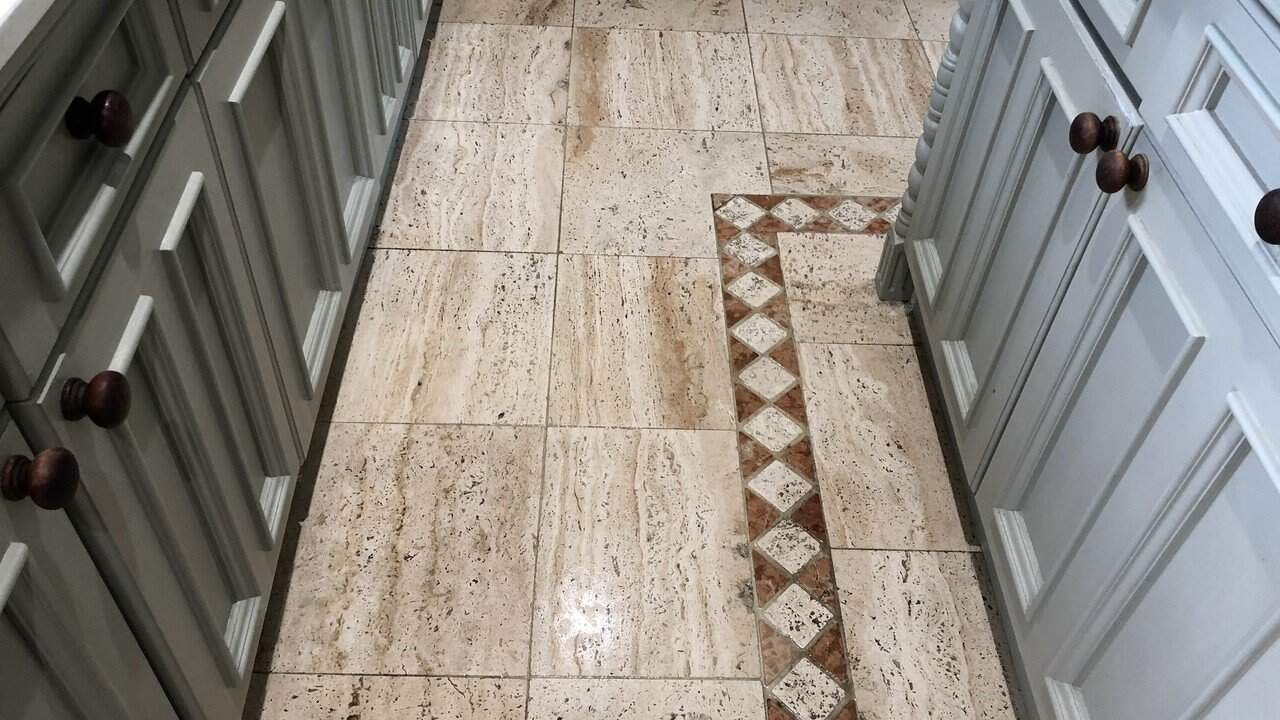
Gain Insights into Travertine Flooring for Your Home
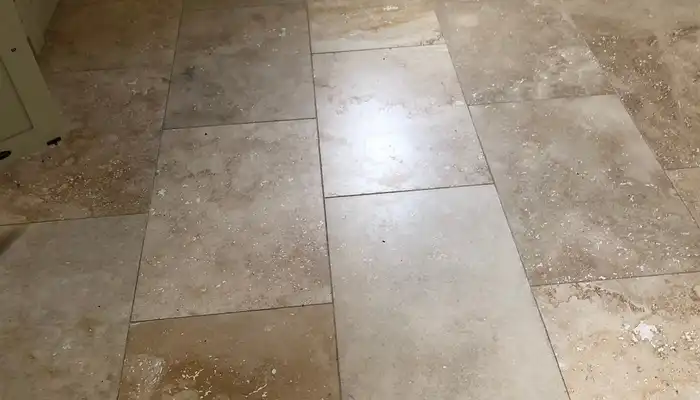
Travertine is classified as a type of limestone. Unlike more compact stones such as marble or porcelain tiles, Travertine possesses inherent pits and fissures that can be left open, partially filled, or filled, depending on the finish selected during installation.
In bustling homes across the UK, this unique structure leads to several implications:
- Soil can become trapped below the surface, rather than merely resting on it
- Liquids may cause uneven darkening of the stone
- Wear often follows the natural grain of the stone, resulting in non-random patterns
Travertine floors rarely exhibit sudden failures. Instead, they gradually change, becoming dull, patchy, or increasingly difficult to maintain.
Identify Common Problems Associated with Travertine Flooring
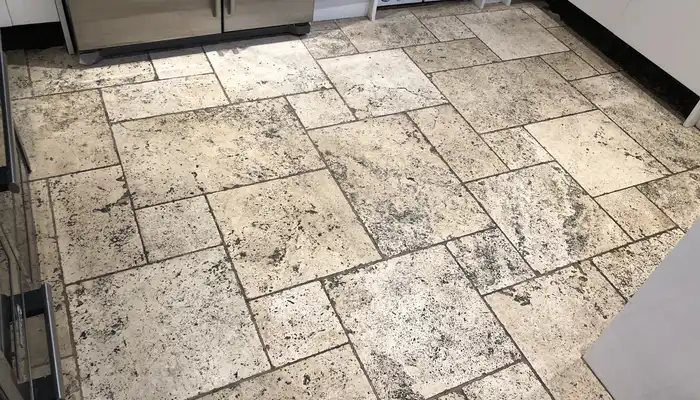
Many issues associated with Travertine can be classified into a few expected patterns. These do not represent flaws in the stone; rather, they are standard reactions to usage, cleaning techniques, and surface treatments.
Typical challenges include:
- Floors appear clean when wet, but dull once dried
- Grout linesare becoming dark or blackened
- Small holes re-emerging after previous filling
- Inconsistent appearance following sealing
- Etch marks resulting from acidic spills
- Uneven wear patterns in high-traffic areas such as kitchens and walkways
Each of these symptoms has a distinct cause, requiring specific solutions. Many homeowners mistakenly treat all these issues as mere “dirty floors,” which only leads to further complications.
Why Understanding the Difference Between Cleaning and Restoration is Crucial
A frequent source of confusion regarding Travertine lies in the distinction between cleaning and restoration.
- Cleaning involves the removal of surface dirt and residues
- Restoration addresses underlying wear, surface damage, and structural issues within the stone
When Travertine becomes dull or blotchy, repeated cleaning often makes the problem worse rather than better. This occurs because the underlying issues may involve worn fillers, etched stone, or residues trapped beneath the surface.
Recognising where cleaning concludes and restoration commences is essential for the long-term protection of Travertine. If you are unsure of the category your floor belongs to, start with our guide to restoring a Travertine floor yourself, which outlines what is achievable, what typically isn't, and when it is advantageous to seek expert assistance.
Essential Steps for Travertine Repair and Filling
Travertine often features factory-applied fillers that wear down with use. Over time, this can expose voids beneath the original surface, leading to small holes and rough patches.
Effective repair entails the following critical steps:
- Choosing fillers that match the stone’s colour and finish
- Reconstructing the surface without creating additional voids
- Refining the repair to ensure it blends seamlessly with the adjacent tile
Quick fixes and hard epoxy fillers can lead to new problems down the line, especially during cleaning or refinishing processes. If you are addressing small, cosmetic holes, consult our step-by-step guide to Travertine tile repair. For larger areas of filler loss or extensive pitting, professional restoration typically yields a more durable, long-term outcome.
Master the Art of Sealing Travertine for Optimal Protection
Sealing plays a vital role in maintaining Travertine, yet it remains one of the most frequently misunderstood aspects of stone care.
Different sealers exhibit varying characteristics:
- Some protect without altering appearance
- Others may change the sheen or deepen the colour
- Improper products can lead to streaks or patchy finishes
The sealing process should always reflect the stone's condition. Applying a sealer to a worn or uneven surface often exacerbates existing problems rather than resolving them.
If your floor has been sealed and is now showing streaks or patchiness, improper stripping can cause permanent damage. For a comprehensive, safe guide, refer to the safest way to strip old sealers off Travertine. If you are selecting a sealer for long-term protection, our guide to the best Travertine sealers details various products and their applications, helping you make informed choices.
How to Effectively Navigate Our Travertine Resource Hub
This page is tailored to help you navigate our extensive Travertine knowledge base, ensuring you are not overwhelmed by excessive detail.
From this point, you can:
- Access in-depth guides that elucidate specific problems associated with Travertine and their causes
- Gain insights into professional cleaning, restoration, and repair techniques
- Review real-life Travertine case studies that showcase before-and-after results achieved in UK homes
Each guide focuses on a single topic, allowing you to understand what is relevant to your floor without any uncertainty.
When Should You Seek Professional Advice on Travertine Care?
Travertine is a forgiving stone when properly maintained — yet it can be surprisingly easy to damage if not properly cared for. If your floor no longer responds to standard cleaning methods, or if previous treatments have not yielded the desired results, it often indicates that the issue lies deeper within the surface.
Obtaining a professional assessment can help clarify:
- Whether ongoing cleaning is still suitable
- Whether restoration is necessary
- What realistic outcomes can be expected for your floor
Recognising this early can often save you time, money, and frustration.
Discover Comprehensive Travertine Guidance and Case Studies
Start Your Journey Here (Guides)
- Expert Tips on Cleaning Travertine Floor Tiles (Everyday Maintenance)
- How to Restore Dirty Tumbled Travertine to Its Former Glory
- Can I Undertake the Restoration of My Travertine Floor Myself? (What’s Realistic)
- Vein Cut Travertine Restoration (Understanding Why It Wears in Lines)
Tackle Specific Travertine Problems
- Why Does Travertine Grout Turn Black? (And How to Prevent It)
- Safest Methods for Stripping Old Sealers from Travertine
- Comprehensive Guide to Travertine Tile Repair (Properly Filling Holes)
Explore Real Travertine Restoration Projects
- Travertine Restoration Project in New Malden (KT3)
- Honed Travertine Restoration in Chippenham (SN15)
- Travertine Floor Cleaning, Filling, and Sealing in Edinburgh
- Deep Cleaning Tumbled Travertine in Hemel Hempstead (HP3)
- Tumbled Travertine Restoration in Rhyl (LL18)
- Travertine Repair and Sealing Services in Chinnor (Oxfordshire)
Understanding the Unique Nature of Travertine Floors
Travertine ages in a distinct manner compared to many contemporary flooring materials. With appropriate care, it develops character rather than signs of deterioration. The key lies in recognising why it behaves as it does and selecting solutions that complement the stone rather than challenge it.
This hub exists to offer that understanding — presented clearly, calmly, and grounded in real-world experience.
The article Travertine Flooring – Care, Cleaning, Repair and Restoration Explained first appeared on https://www.abbeyfloorcare.co.uk