Last Updated on 20 November 2026 by David
Using a steam mop on a terrazzo floor is generally not advisable. Unless both the floor and protective treatment manufacturers specifically endorse steam cleaning for your flooring system, opt for controlled damp mopping using a suitable, low-residue cleaner.
This caution is not an assertion that a single use will damage terrazzo. The challenge lies in understanding how concentrated heat and moisture may affect the existing finish, porous areas, joints, and repairs of the floor. A gentler cleaning routine mitigates these uncertainties while still ensuring effective everyday cleaning.
Understanding the Limitations of the “Sealed Floor” Concept for Terrazzo
Most traditional domestic terrazzo in the UK is comprised of marble chips embedded in a Portland cement binder. It is not completely non-absorbent; the absorption of liquids varies based on the original mix, surface condition, and level of existing protection. Worn binder, pinholes, cracks, and joints can allow water ingress.
A steam mop applies hot moisture to the surface. The amount that remains depends on the equipment, settings, pad condition, and usage. Just because a device is labelled as suitable for “sealed hard floors” does not guarantee its compatibility with your specific terrazzo and its treatment.
Some terrazzo floors use a resin binder instead of cement. If your terrazzo is resin-bound, such as epoxy terrazzo, seek cleaning instructions tailored to that system rather than assuming that guidance for cement-and-marble floors applies.
Does Sealing Your Terrazzo Floor Ensure Safe Steam Cleaning?
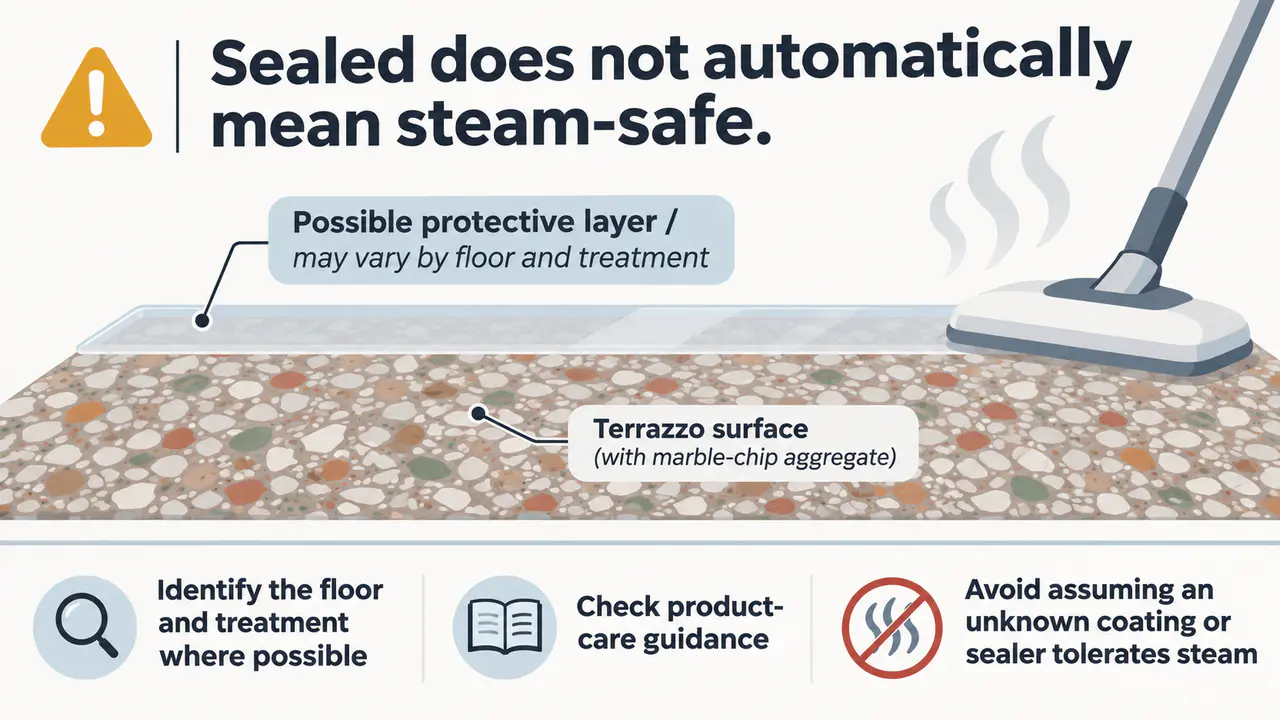
Not necessarily. The term “sealed terrazzo” encompasses various protective treatments, and none should be assumed to make an unknown floor safe for steam cleaning.
- Impregnating sealers may minimise liquid uptake without forming a significant surface film. They do not seal cracks against water or prevent scratches and acid etching.
- Topical, film-forming sealers sit atop the surface and may alter the sheen. Their resistance to heat, moisture, and cleaning products varies with each system.
- Older waxes, polishes, and unidentified treatments complicate compatibility assessments. An uneven appearance may indicate these layers rather than damage to the terrazzo itself.
Review both the floor-care guidelines and the maintenance recommendations for the protective treatment. If the treatment is unknown, a test in a hidden area cannot determine long-term compatibility with ongoing steam cleaning. Damp cleaning remains the more prudent option.
Best Practices for Routine Cleaning of Terrazzo Floors
- Begin by removing loose debris.
Utilise a soft dust mop or a vacuum equipped with a hard-floor attachment. Grit can scratch the cement binder, expose marble chips, and damage surface coatings. - Select a suitable cleaner.
Choose a low-residue, typically pH-neutral stone cleaner that confirms compatibility with your terrazzo and its finish. Be mindful of dilution, as excessive detergent may leave a dull or sticky residue. - Employ a well-wrung mop.
Clean using controlled moisture instead of saturating the floor. Pay special attention to areas around cracks, joints, and any damaged repairs, and promptly remove any standing water. - Lift dirt rather than redistributing it.
Rinse or replace dirty pads and change the water as necessary. Follow the cleaner’s rinsing instructions; if any residue remains, remove it with clean water and a well-wrung mop. - Allow the floor to dry before normal use.
Prevent foot traffic on wet areas to minimise slip hazards. Address spills promptly and use entrance mats to reduce incoming grit.
Avoid using vinegar, acidic bathroom cleaners and descalers on cement-and-marble terrazzo, as acids can damage both the binder and the marble chips. Refrain from using bleach, harsh cleaners, or products that leave residues. Do not add cleaning chemicals to a steam mop unless expressly permitted in its instructions; the appliance’s approval does not guarantee compatibility with your floor.
What Should You Do If Your Floor Remains Dull or Dirty After Regular Mopping?
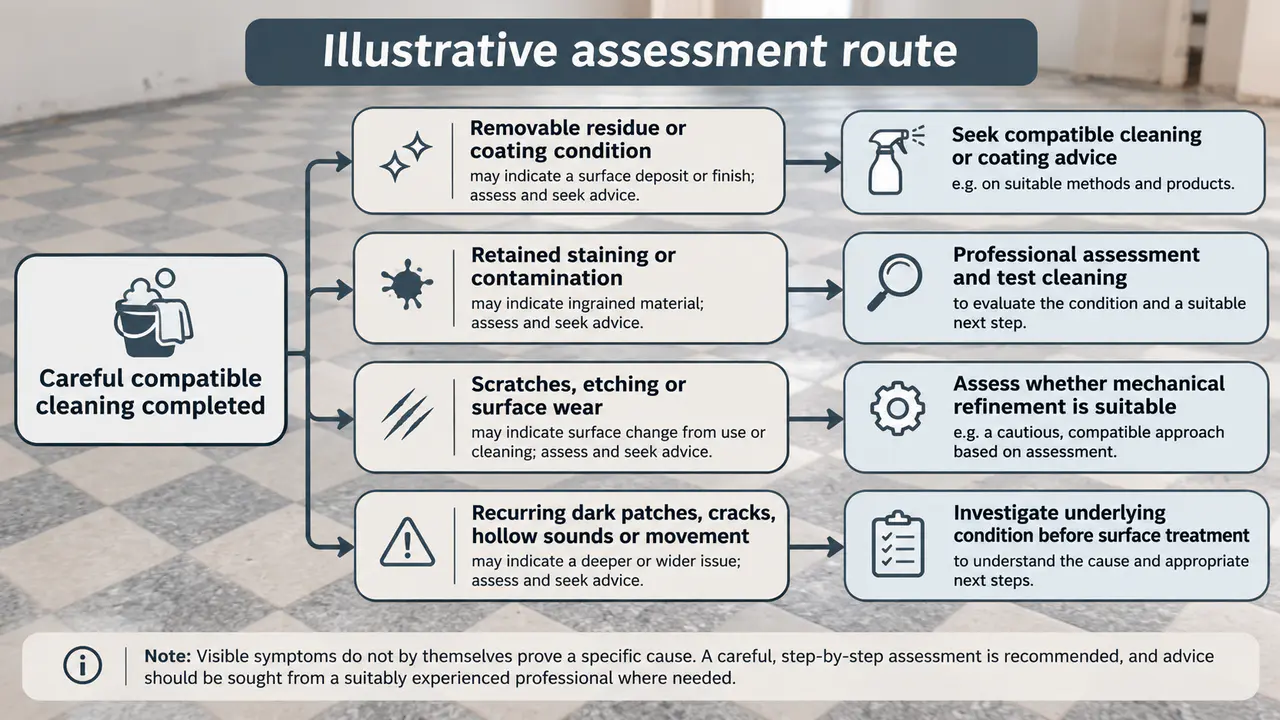
Increasing heat is not a reliable solution for persistent dullness. The next steps depend on what is observed after thorough cleaning.
| Observation | Possible Cause | Recommended Action |
|---|---|---|
| Sticky patches or mop streaks | Detergent residue or an accumulated surface treatment | Review dilution and rinsing; identify any coating before attempting removal. |
| Dark traffic lanes | Retained soil, absorbed staining, coating residues, or wear | Conduct a small, compatible test clean before deciding on further treatment. |
| Dull marks, scratches, or rough areas | Etching, physical wear, or surface deterioration | Have the surface evaluated. Cleaning cannot restore lost material. |
| White deposits or recurring dark patches | Cleaning residues, salt deposits, moisture-related effects, or other issues | Identify the cause and assess relevant floor and subfloor conditions before applying any coating or sealing. |
Professional deep cleaning may utilise a compatible alkaline cleaner for specific contamination. Alkalinity is not inherently damaging; factors such as compatibility, dilution, contact time, and thorough extraction or rinsing are critical. This controlled process differs from repeatedly using an unsuitable concentrated household cleaner.
If the issue is physical wear or etching, appropriate honing or polishing might provide a solution. Assess the floor’s stability and available terrazzo thickness before considering grinding or honing, as these methods permanently remove material. Persistent dullness on its own is not a valid reason to grind a floor.
What Steps to Take If a Steam Mop Has Already Been Used?
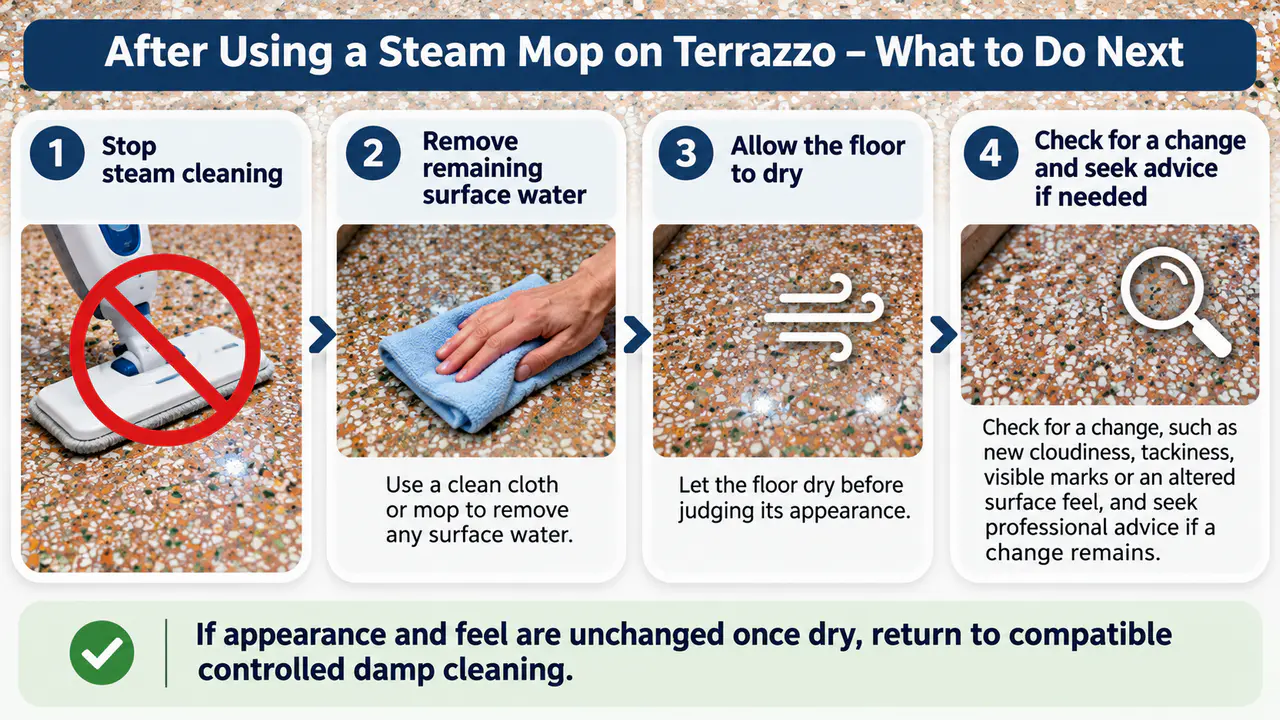
Do not jump to conclusions about potential damage. Cease steam cleaning, let the surface cool, remove any residual water using a clean cloth or mop, and allow it to dry before assessing its appearance.
If the floor appears unchanged, revert to a compatible damp cleaning routine. Should you observe new cloudiness, tackiness, patchiness, or a peeling coating, do not attempt to mask it with polish, stripper, or sealer. Identify the existing treatment before deciding on corrective measures.
Loose tiles, shifting repairs, widening cracks, or a sandy surface require evaluation rather than aggressive cleaning. These signs do not establish a cause and should not be automatically attributed to the steam mop.
Making an Informed Decision About Cleaning Terrazzo
For the majority of homeowners, there is minimal justification for incorporating steam into routine terrazzo maintenance. Focus on removing debris, employing a correctly diluted compatible cleaner, and managing moisture during mopping. If this approach no longer yields satisfactory results, ascertain whether the issue arises from contamination, a coating, or actual wear before opting for a more intensive treatment.
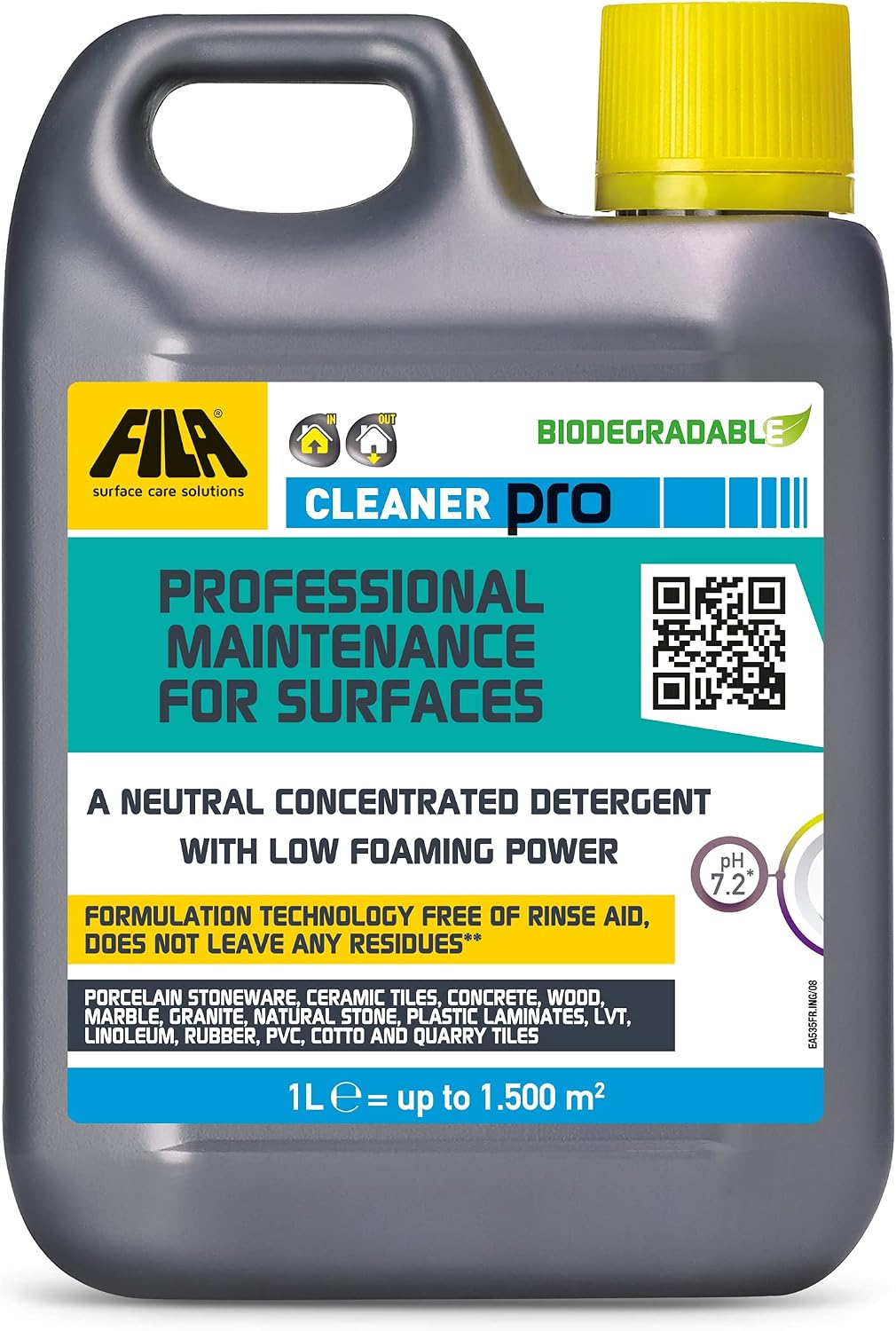
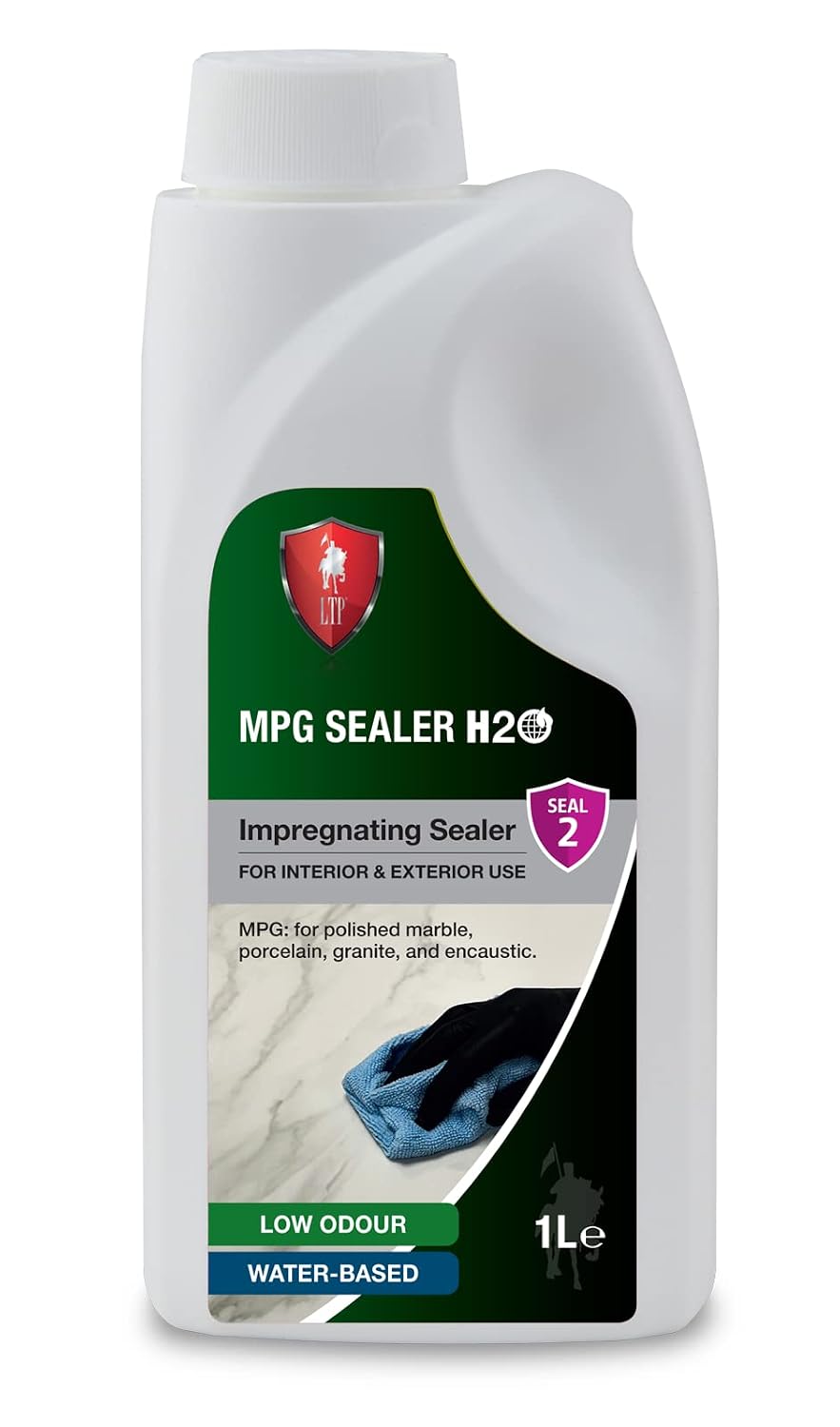
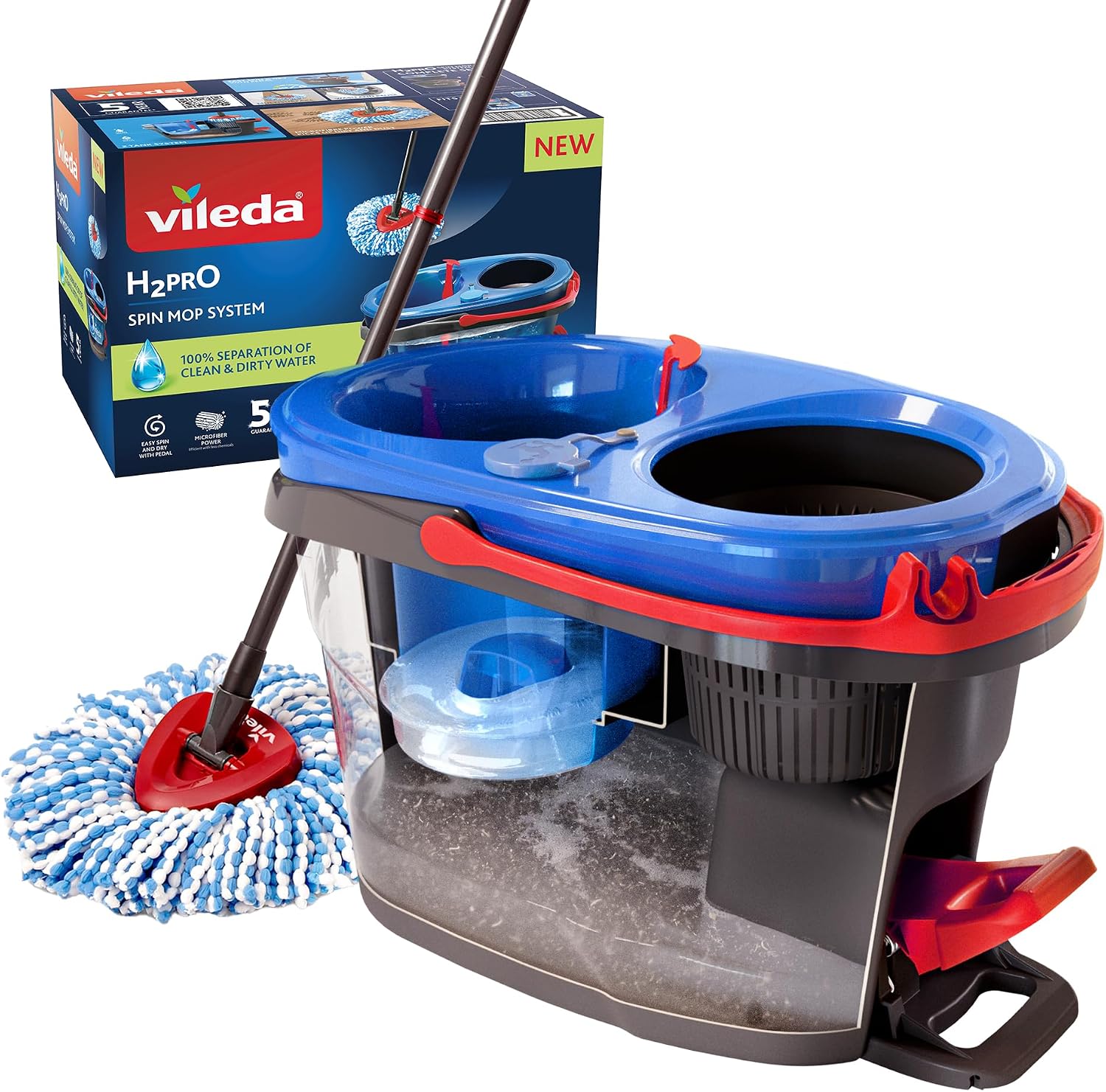
Pro Tip: Here are safe products you can utilise for daily terrazzo maintenance and sealing when necessary.
Disclosure: As an Amazon Associate, Abbey Floor Care earns from qualifying purchases at no extra cost to you.

David Allen — Abbey Floor Care
David Allen from Abbey Floor Care boasts over 30 years of practical experience in floor restoration. His expertise encompasses cleaning, restoring, and protecting terrazzo, with a focus on the cement binder, existing finishes, and appropriate maintenance techniques.
The Article Steam Mop On Terrazzo Can Reach Hidden Weak Spots first appeared on https://abbeyfloorcare.co.uk