Last Updated on November 19, 2026 by David
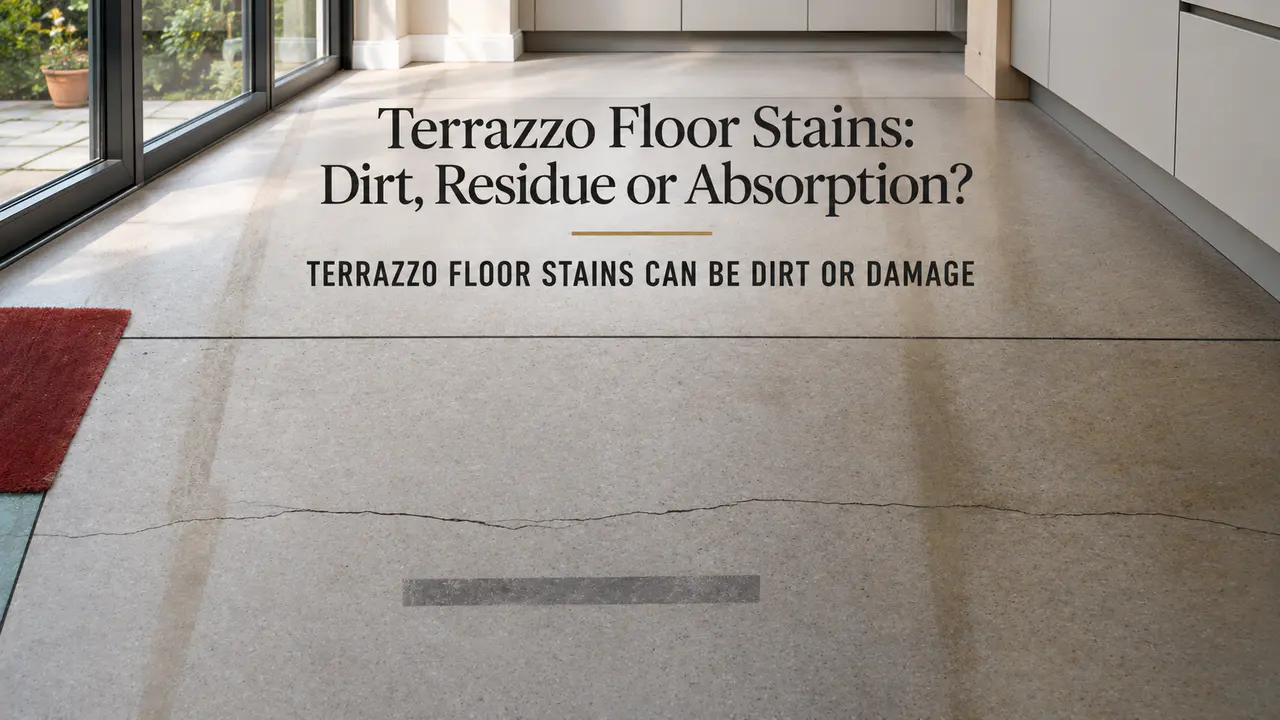
Start with a controlled cleaning test to assess the stain after the floor has dried. If the mark lightens, it likely indicates removable contamination. If it remains unchanged, this does not necessarily confirm an absorbed stain; factors like a deteriorated binder, an old coating, etching, or moisture-related darkening can produce similar effects.
The primary goal is to determine what is altering the floor’s appearance before opting for a stronger cleaner, a stain treatment, or resurfacing. Excessive scrubbing with increasingly potent products can harm terrazzo without eliminating the original mark.
Understanding Why Terrazzo May Appear Stained When It’s Not
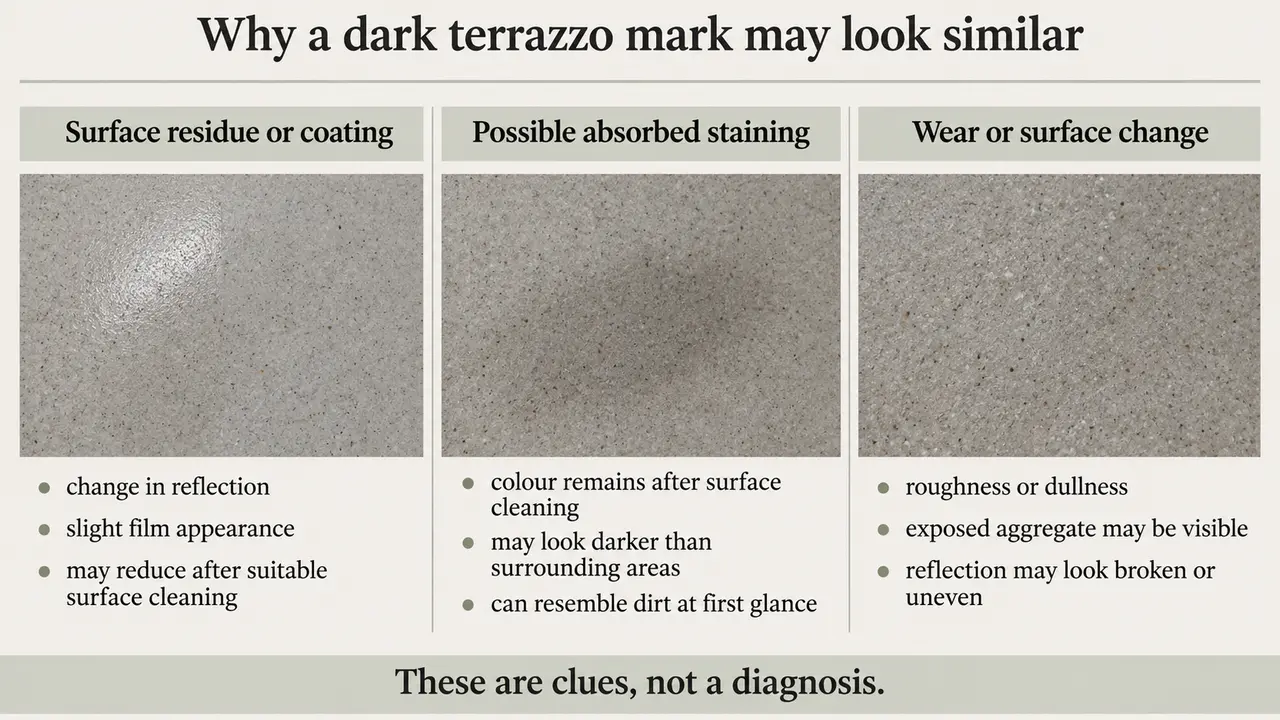
Most traditional terrazzo flooring consists of marble chips embedded in a cement binder. This binder can trap soil and liquids, particularly if its surface is porous or worn. residues from detergents, waxes, and other coatings can accumulate dirt above the terrazzo itself.
This means that a dark patch could be superficial, within the pores, or merely an area exhibiting a different texture or finish. Multiple conditions can coexist: cleaning may eliminate a greasy film while leaving absorbed discolouration or wear underneath.
The following guidance is specifically for cement-based terrazzo. If your floor has a resin binder, such as epoxy, identify the system and seek appropriate advice before selecting cleaning or restoration treatments.
Assessing the Mark Before Treatment
Examine the affected area in good lighting, comparing it with the rest of the floor. Focus on colour, reflection, and texture rather than colour alone. Areas beneath furniture can provide useful comparisons, although their finish and exposure may differ from the main walking areas.
| Observation | Potential Cause | Recommended Next Step |
|---|---|---|
| Dark tracks through doorways or along walking routes | Tracked-in soil, a dirty coating, absorbed contamination, or surface wear | Test-clean a small section and compare both colour and texture once dry. |
| Cloudiness, mop marks, or a greasy film | Detergent residue, polish, or another surface treatment | Review the maintenance history and determine if a compatible cleaning and rinsing test improves the appearance. |
| A localised mark resembling a spill | Surface contamination, absorbed staining, or chemical damage | Consider the nature of the spill and assess if the patch is duller or rougher. |
| A dull mark visible primarily in reflected light | Etching, abrasion, or an altered coating rather than dirt alone | Compare its reflection with the surrounding floor; avoid further abrasive treatment. |
| Darkening that changes as the floor dries or reappears | Moisture-related colour change, retained contamination, or another recurring source | Observe the pattern and evaluate moisture exposure before proceeding with stain treatment or sealing. |
| A patch along a repair, joint, or outline of an old covering | Different repair material, adhesive residue, or adhesive staining | Identify the material present before attempting removal. |
These observations serve as clues, not definitive diagnoses. A spill outline does not confirm penetration, and a dark traffic lane does not prove that the cement binder has deteriorated.
Conducting a Safe Home Cleaning Test
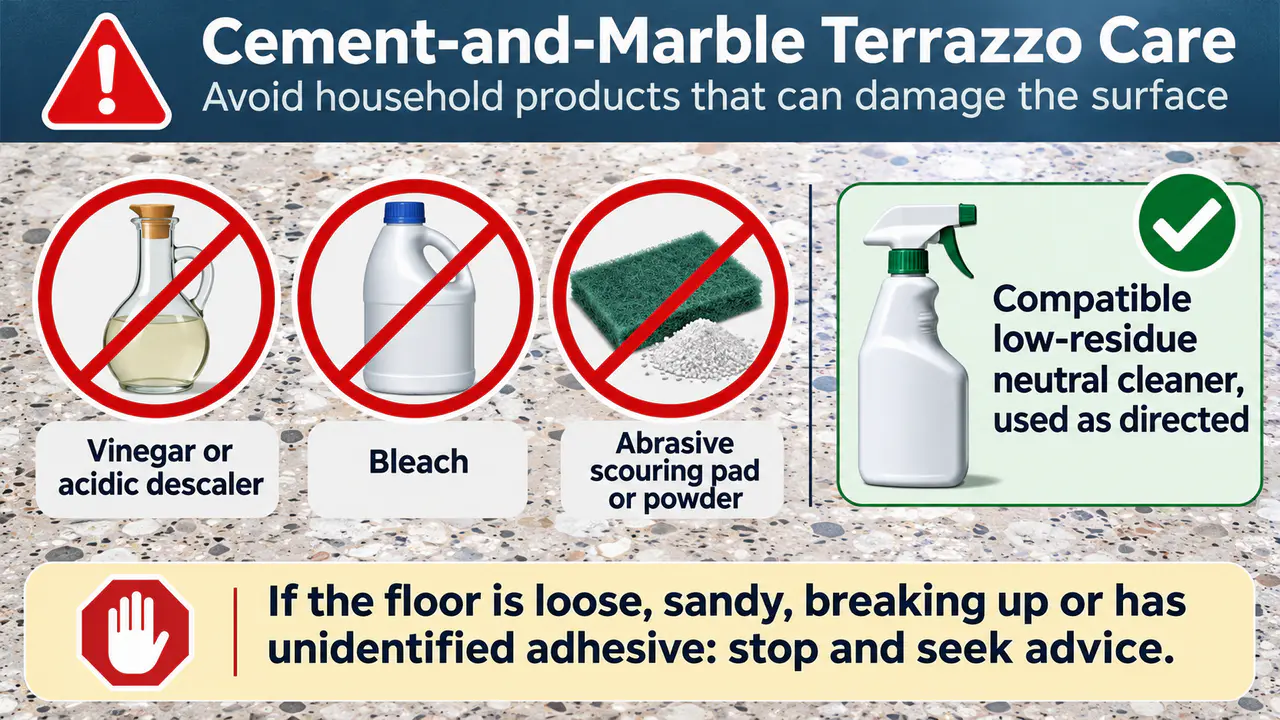
Begin with the least aggressive suitable method. If the floor is loose, sandy, visibly deteriorating, or covered with unidentified adhesive, cease any scrubbing and seek professional guidance instead.
- Remove loose grit. Use a soft brush or an appropriate vacuum attachment to prevent grit from scratching the surface.
- Select a small, inconspicuous test area. Include part of the mark and some adjacent terrazzo where feasible. Ensure that the cleaner is compatible with both the terrazzo and any existing sealer or coating.
- Utilise a low-residue, pH-neutral stone cleaner. Adhere to the manufacturer’s instructions regarding dilution and contact time. More concentrated solutions do not necessarily yield better results.
- Gently agitate the cleaner. Use a soft, non-abrasive cleaning tool. Prevent the cleaning solution from drying on the floor and avoid flooding joints, cracks, or adjacent finishes.
- Extract the dirty solution. Remove it using clean cloths or suitable extraction methods rather than spreading it with dirty mop water. Rinse as directed, ensuring you collect the rinse water.
- Allow the area to dry before making a judgement. Wet terrazzo often appears darker, and dampness can temporarily mask differences in sheen. Keep foot traffic away from the wet area to minimise slipping hazards.
Do not use vinegar, acidic descalers, bleach, or abrasive scouring products as diagnostic tests. Acids can damage both the cement binder and marble chips, resulting in an etched patch that cleaning cannot reverse.
Interpreting the Results of Your Test
- The mark largely disappears: Removable dirt or residue was likely the main issue. A controlled clean of the surrounding area may suffice.
- It improves but does not disappear: Surface soil may be obscuring another underlying condition, such as staining, wear, or a remaining coating.
- It shows no change: Stop repeating the same treatment. The contamination may require a different approach, or the mark may also be due to absorbed staining or physical changes to the surface.
- The surface becomes rough, sandy, or loses material: Cease cleaning and have the condition assessed by a professional.
A neutral cleaner test has its limitations. It will not effectively remove every type of oil, adhesive, or old polish. An unchanged patch indicates that further investigation is necessary—not necessarily that the floor requires grinding.
Determining When a Deeper Clean is Necessary
Greasy residues and certain accumulated maintenance films may require a compatible alkaline cleaner or a specialised stripping treatment. While alkaline cleaning is not inherently detrimental to sound cement-and-marble terrazzo, careful selection of the product, dilution, contact time, and thorough removal are essential. Existing sealers may have different chemical tolerances compared to the terrazzo beneath.
When the coating or contamination is unknown, a specialist test area is safer than experimenting across the entire floor. Avoid scraping, sanding, or grinding unidentified old flooring adhesives, as some historic adhesives and coverings may contain asbestos and require assessment prior to any disturbance.
What to Do If the Mark is an Absorbed Stain
An absorbed stain resides within the porous areas of the material after surface contamination has been eliminated. Oils, food spills, and some older adhesives can result in persistent discolouration, but its depth and response to treatment cannot be determined solely based on appearance.
Choose a targeted stain treatment based on the likely contaminant, the binder, any existing protection, and the surface condition. A professional may recommend using a poultice for certain stains, but this is not a one-size-fits-all solution. Unsuitable chemistry can alter the surrounding colour or finish, and complete removal may not be feasible.
Avoid assuming that sanding or grinding will eliminate a deep stain. Mechanical treatment permanently removes terrazzo, whereas discolouration may extend beyond the amount that can be safely removed.
Identifying Damage and Moisture-Related Changes Before Sealing
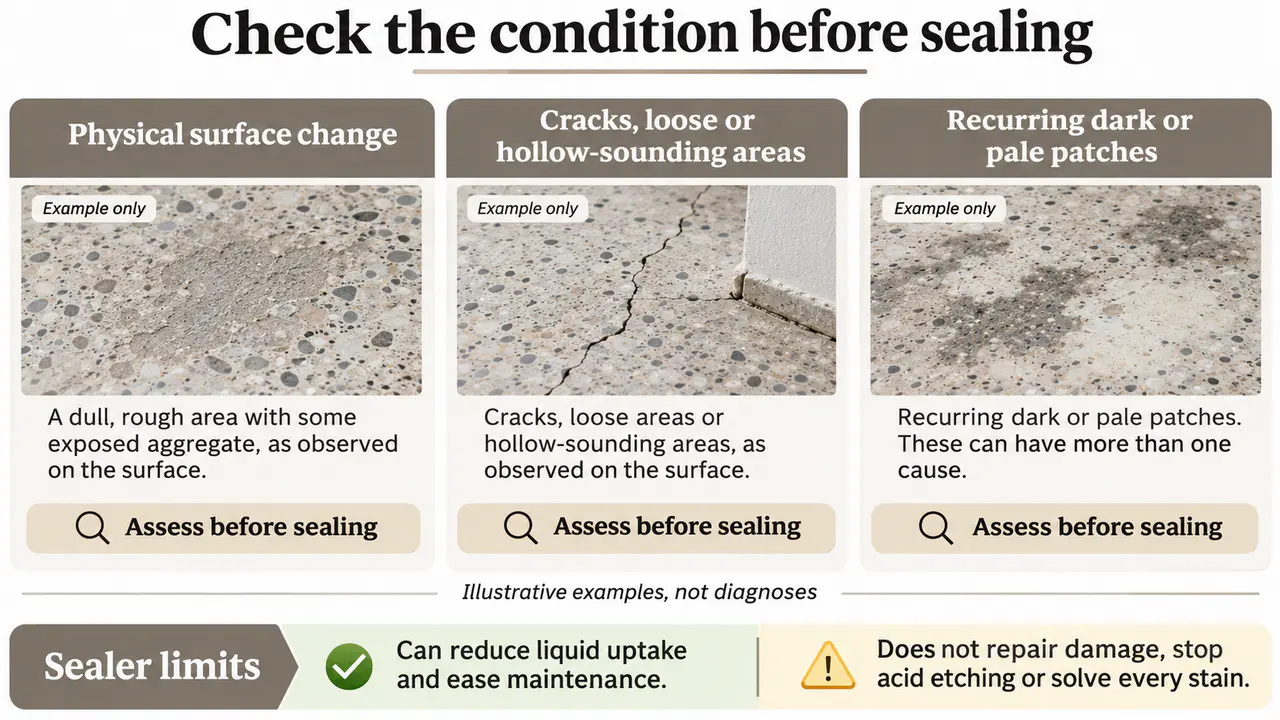
Etching and wear are not dirt. A dull or rough spill mark may indicate acid damage; exposed chips and recessed binder may suggest material loss. Appropriate honing or polishing can rectify some surface defects, but only after evaluating stability, remaining terrazzo thickness, and the necessary depth of removal. Cleaning cannot replace missing binder.
Persistent dark patches or white deposits require further assessment. White material may be cleaning residue or salt deposits; appearance alone does not clarify its source. Recurring moisture-related changes should be evaluated alongside floor exposure, moisture movement, and the conditions of the bedding or subfloor prior to treatment or sealing.
Seek professional evaluation where marks recur, extend into cracks, lie beneath an unidentified coating, or accompany loose material, movement, or hollow-sounding areas. Avoid heavy mechanical work until unstable areas have been assessed.
Can Sealing Prevent the Stain from Returning?
A suitable sealer can minimise liquid absorption and facilitate easier cleaning, but it will not erase an existing stain or prevent all future stains.
- An impregnating sealer may decrease absorption without creating a substantial surface film. It is essential to check compatibility, appearance, vapour transmission, and floor moisture conditions.
- A topical, film-forming sealer creates a coating that may alter sheen and develop scratches or discolouration. Its appropriateness depends on the floor type, moisture movement, salts, adhesion, and the maintenance system in place.
Neither method renders terrazzo acid-proof or scratch-proof. Do not apply a sealer over an unexplained mark simply to conceal it; establish the cause and evaluate the floor’s condition first.
Making Informed Decisions About Your Terrazzo Floor
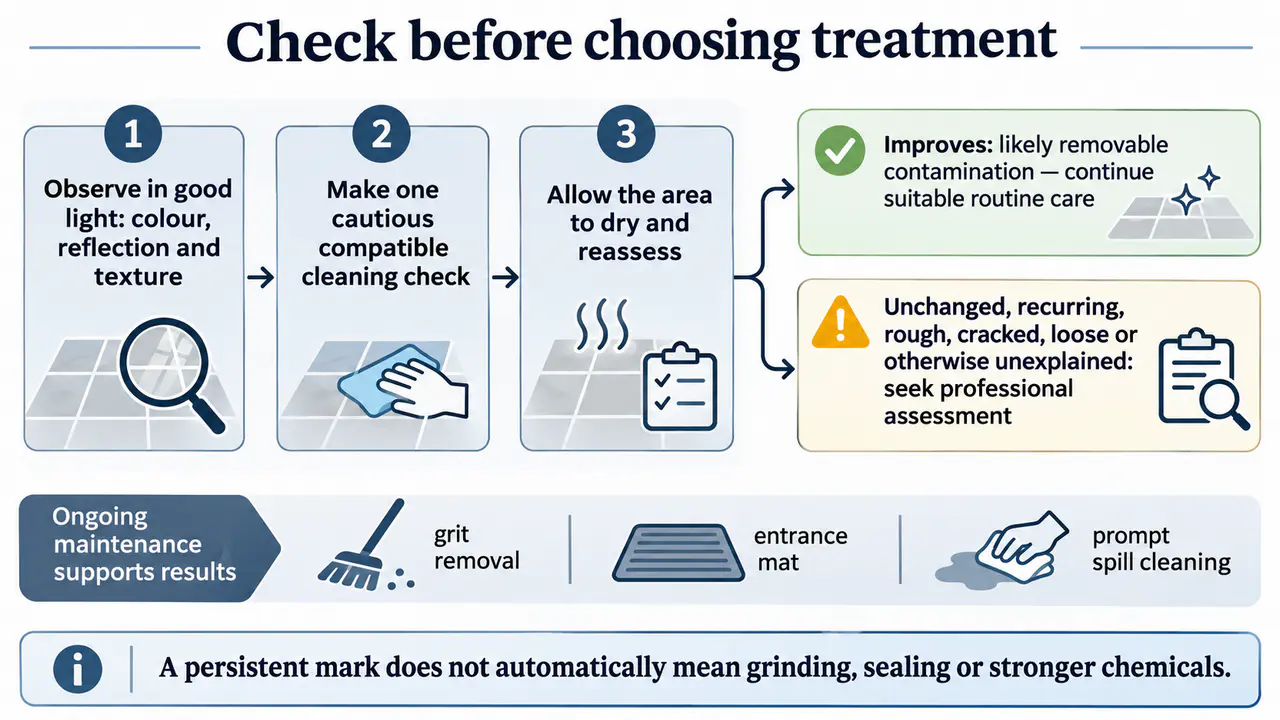
Clean once, evaluate after drying, and then determine the next course of action based on the findings. Improvement suggests removable contamination. A persistent mark necessitates identification—not automatically stronger chemicals or resurfacing.
Pro Tip: Products suitable for the pH-neutral cleaning test and ongoing terrazzo maintenance.
Disclosure: As an Amazon Associate, Abbey Floor Care earns from qualifying purchases at no extra cost to you.
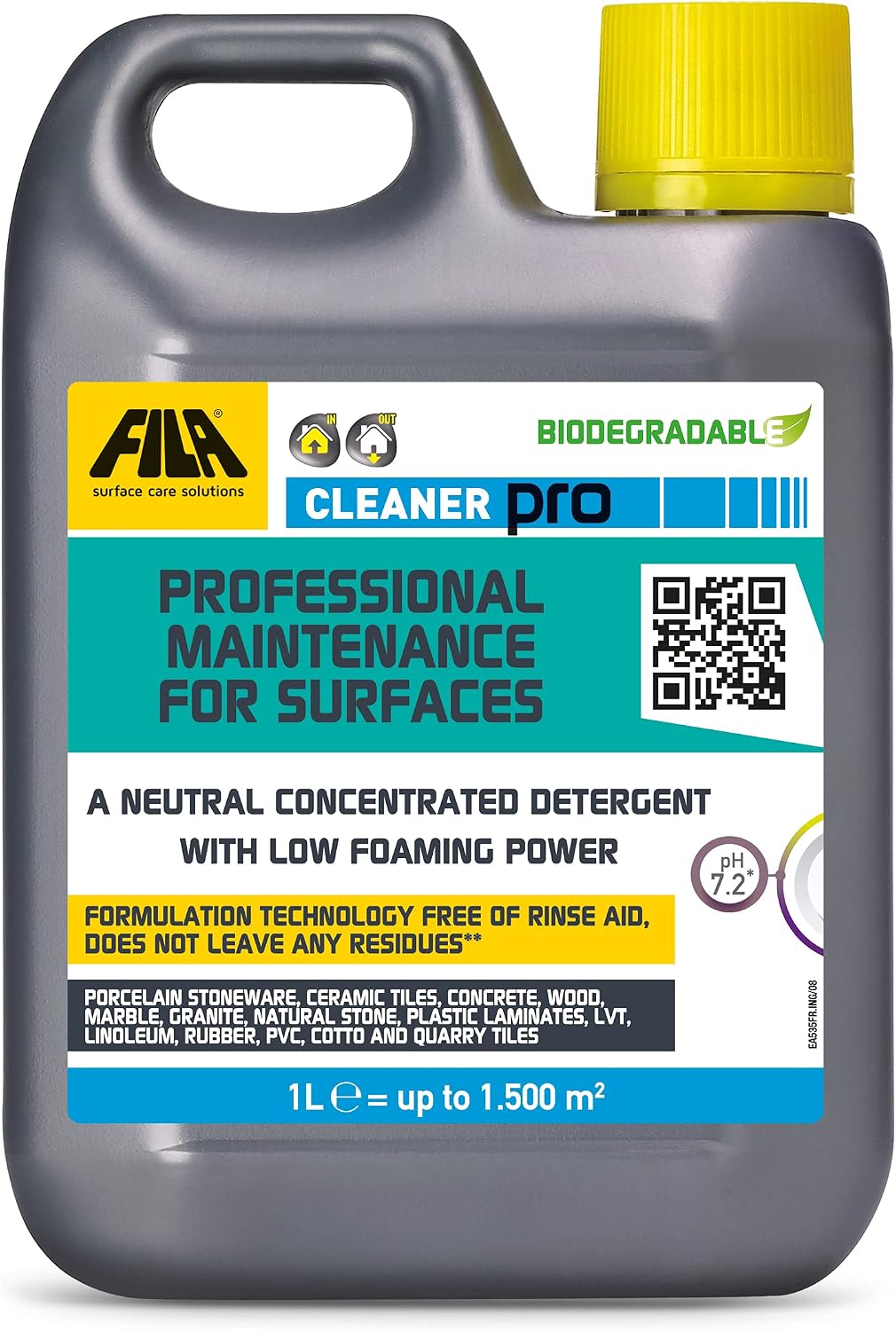
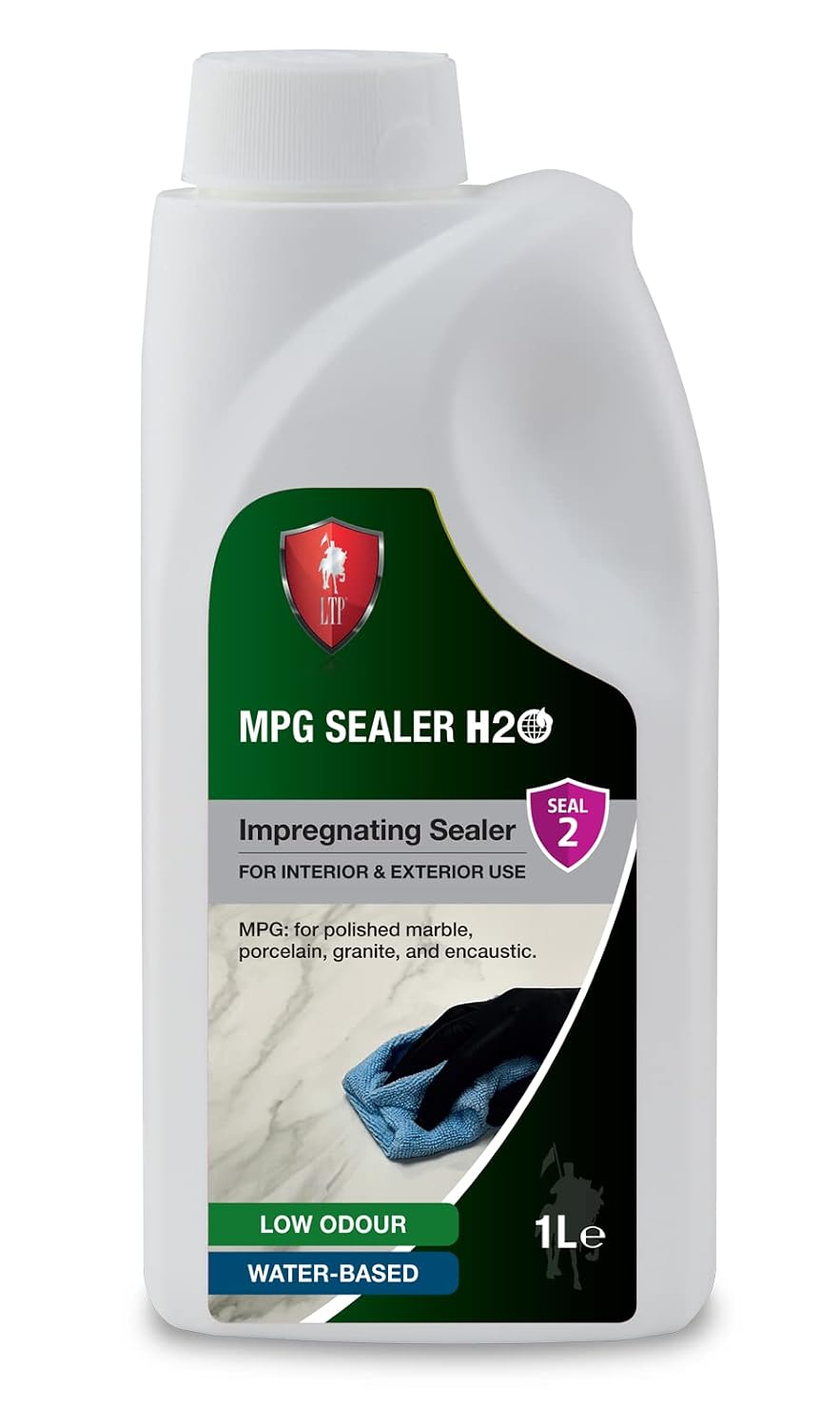

For ongoing maintenance, regularly remove grit, use entrance mats, promptly clean up spills, and accurately measure a compatible low-residue cleaner. These practices help to mitigate both staining risks and the residue build-up that can make a well-maintained terrazzo floor appear dirty.

David Allen — Abbey Floor Care
David Allen of Abbey Floor Care has over 30 years of practical experience in floor restoration. His expertise in terrazzo cleaning and restoration includes assessing surface contamination, absorbed staining, and wear before determining the right treatment.
The Article Terrazzo Floor Stains Can Be Dirt Or Damage first found on https://abbeyfloorcare.co.uk