
Last Updated on 1 October 2026 by David
How to Choose the Right Ceramic Tile Cleaner for Your Routine
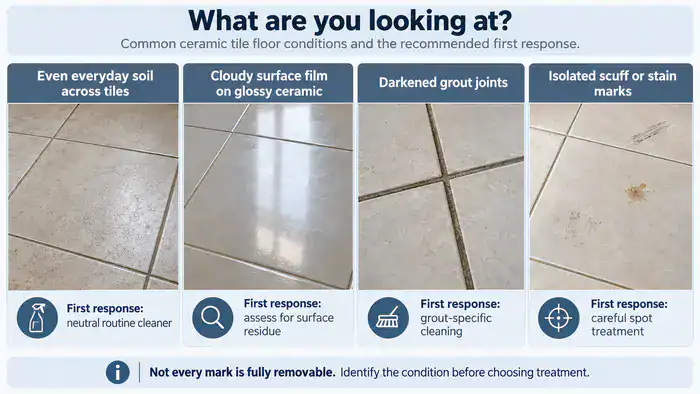
If your ceramic tiles appear unclean after regular mopping, examine the tile surface and grout lines under consistent lighting before choosing a cleaner. General surface dirt often covers the entire area evenly, while a cloudy film, dark grout, or isolated stains usually indicate a need for a different cleaning approach.
Typical floor dirt often results in light footprints, kitchen dust, and traffic patterns on the glazed surface. A pH-neutral cleaner with gentle surfactants is ideal for this scenario, as it facilitates regular cleaning without strong odours or additional surface residue. Employing a microfibre cloth alongside a thoroughly rinsed mop can also help determine if simple residue removal improves the appearance.
Cloudy residue differs significantly from ordinary dirt. A pale cement film may appear on the tile surface following installation, and polymer-based installation residue can create a stubborn matte or milky film, especially when viewed from a low angle. Many modern UK kitchens and bathrooms incorporate large-format rectified porcelain alongside ceramic tiles, meaning incomplete post-installation cleaning can impact both broad areas and narrow grout joints.
When the tile surface looks clean, the condition of the grout often provides the most telling indicator for purchasing decisions. Dark or uneven grout lines suggest discoloured grout, where absorbed soil and repeated mopping have altered the appearance around the tile rather than the factory finish. Selecting a cleaner based solely on the tile surface may result in a similarly unchanged floor, as the visible issue persists in the grout.
Mineral deposits typically manifest as white marks, rings, or rough edges around taps, shower screens, and wet-room thresholds. Hard water contributes to calcium buildup and limescale. These issues should be treated separately from grease on kitchen tiles, particularly in areas surrounding cookers or splashbacks.
Textured and anti-slip finishes present additional challenges since their grooves can trap crumbs, dirt, and cleaning residues after a quick mop. A product that works effectively on smooth glazed surfaces may not reach these recesses, and excessive scrubbing can increase the risk of abrasion. Readers comparing options can refer to this guide on deep cleaning ceramic tile floors to understand how surface texture impacts the cleaning assessment.
What Causes a Promising Cleaner to Fail on Your Floor?
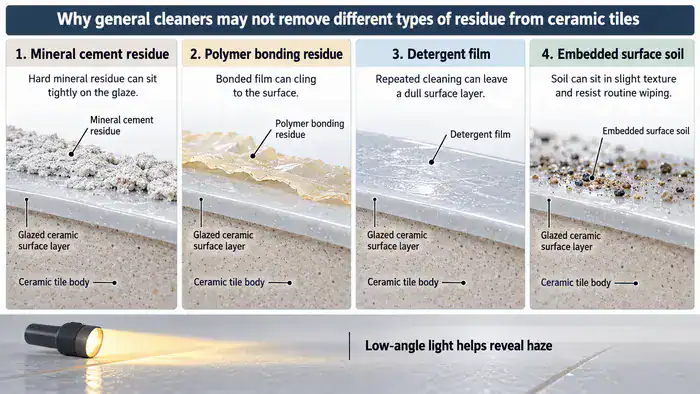
If your ceramic tile remains hazy after cleaning, the residue may not be what it initially seems. Observing the tile from a low angle can clarify why the same cleaner may not perform effectively across all areas. Cement residue results in a mineral film on the tile surface, whereas polymer bonding leaves an organic material that adheres residue tightly to the glaze.
The effectiveness of a cleaner depends on the type of residue and the condition of the surface, rather than merely its label. An alkaline initial stage aids in breaking down polymers and removing coatings, while a subsequent acidic phase addresses any remaining cement and mineral films; relying solely on acid will not adequately dissolve the polymer component. This two-stage process differentiates between chemical stripping and mineral dissolution, preventing the use of one product for incompatible tasks.
A cleaner cannot eliminate a residue it is not designed to tackle.
Repeated use of detergent can create a cycle of residue build-up, making the floor appear dirty again after mopping. Concentrated detergents leave behind a film, which attracts new dirt, and insufficient rinsing can result in redeposition across grout joints and textured grooves. A wet vacuum or slurry extractor gives professionals better control over contamination by removing dissolved residues rather than simply redistributing them.
When evaluating a heavy-duty or intensive cleaner, consider its dilution rate, dwell time, compatibility, and expected coverage. A specialised diagnosis of dull ceramic tile floors can differentiate between remaining film and issues related to the finish before applying another cleaner that may add further residue.
What Damage Can Occur from Using the Wrong Cleaner?
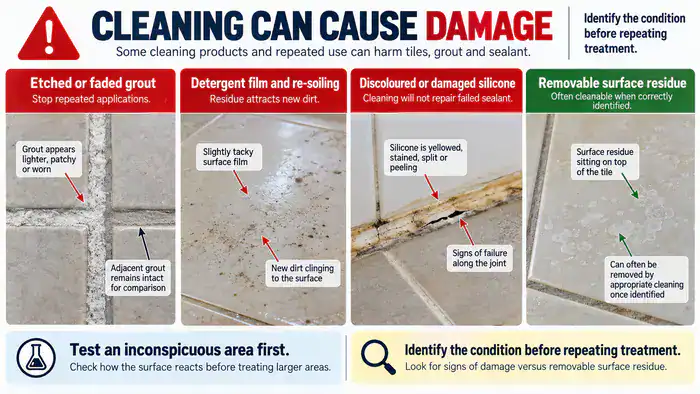
Utilising the wrong cleaner can leave a ceramic tile floor looking worse than before. Compare the affected grout with an unblemished joint before concluding that the tile itself has deteriorated. A film that seems removable suggests residue, while a lasting colour change may indicate grout staining or chemical degradation.
Limescale originates from calcium carbonate found in hard water. A suitable descaler can effectively address mineral deposits, but repeated exposure to acidic products can weaken cementitious grout and dull sensitive finishes. In cases where mineral films persist after compatible cleaning or extend across multiple grout joints, a professional evaluation becomes necessary.
Mould spores lead to biological contamination in damp grout and silicone, manifesting as black or green spots around shower cubicles, wet rooms, and bathroom tiles. A spray cleaner may enhance the surface appearance, but recurring mould indicates a damp environment, inadequate ventilation, or compromised joints, rather than a requirement for a more potent household chemical. It is crucial to differentiate between temporary surface contamination and grout or silicone deterioration before opting for a deep clean.
Glazed ceramic typically features a factory-fired, non-porous surface, which should not be abraded with gritty powders, harsh pads, or makeshift sandpaper. Loose dust, small particles, and fine scratches all escalate the risk of abrasion on glazed finishes. Vacuuming, sweeping, and gentle mopping are effective methods for preserving the permanent surface. Persistent grout discolouration, where grout appears faded or stained, may necessitate specialist cleaning, recolouring, or repair rather than yet another cleaning solution. Recurring contamination or visibly weakened joints also warrant professional intervention.
How to Identify the Right Cleaner for Visible Soil Types
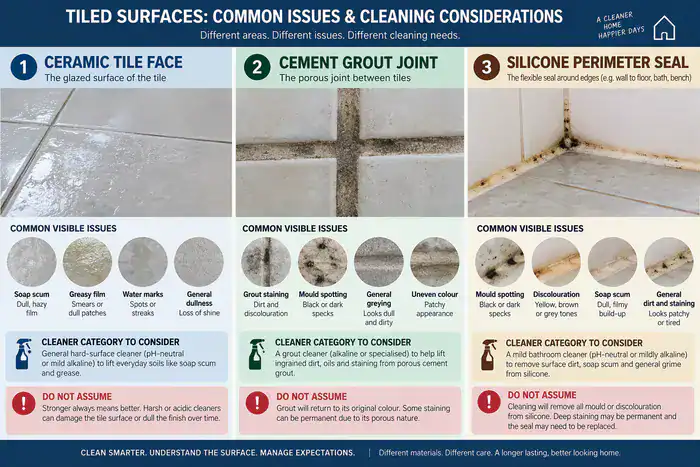
Soap scum, stained grout, and mould-affected joints require different cleaning approaches. Examine closely whether the residue resides on the ceramic tile surface, within the grout, or along the silicone bead. Clearly identifying the location helps prevent misclassifying every stain as ordinary dirt.
Pro Tip: We recommend these products for regular ceramic tile maintenance cleaning.
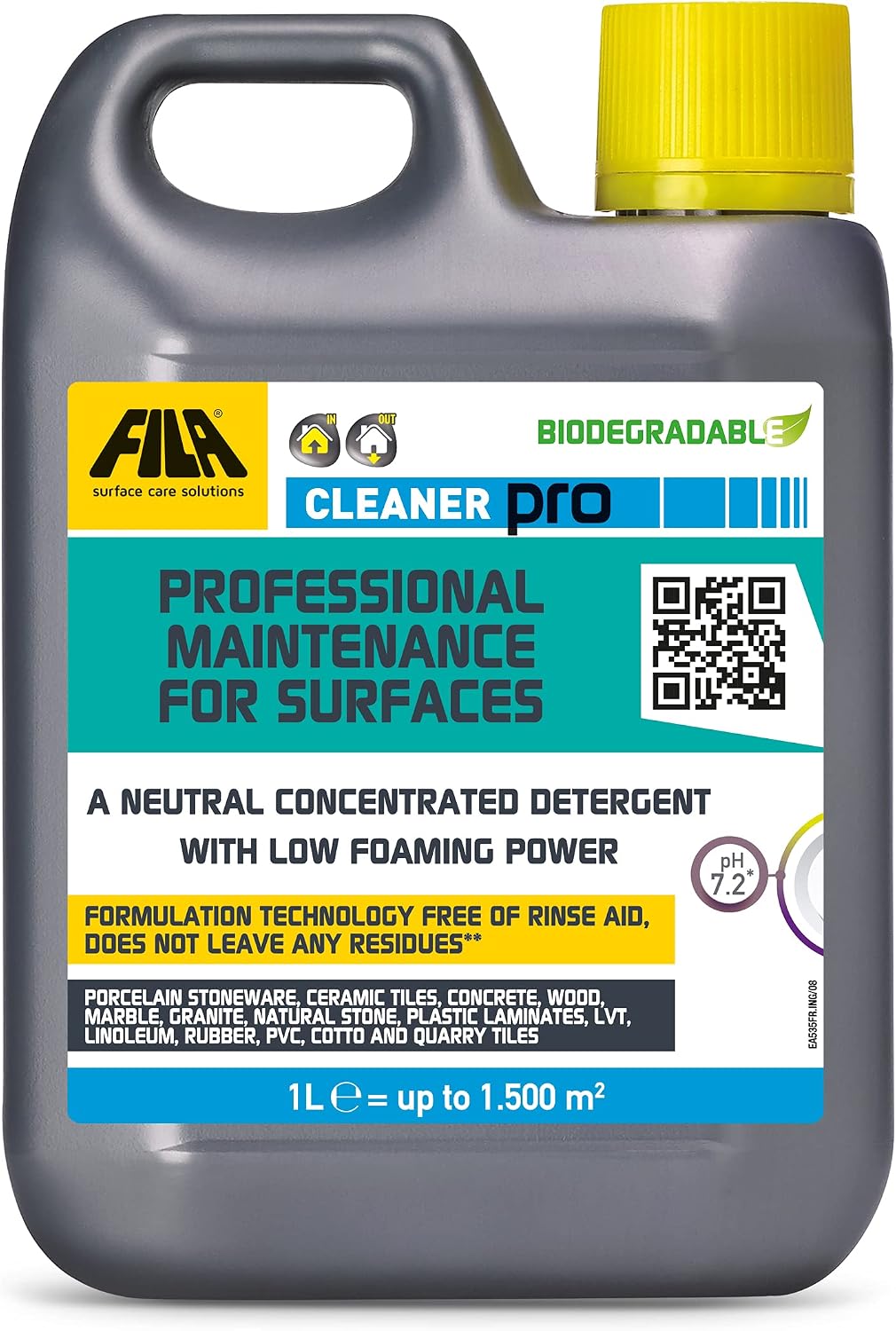
Fila Pro Floor Cleaner
|
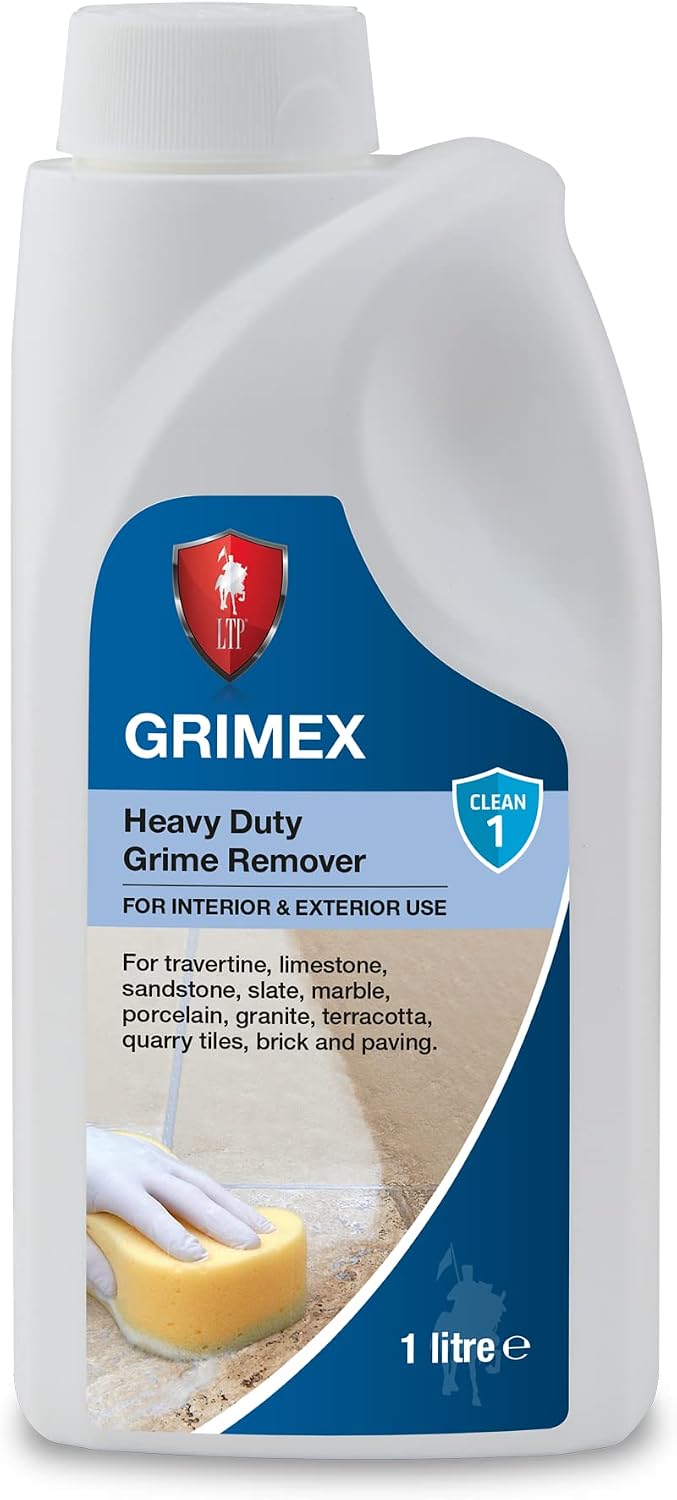
LTP Grimex
|
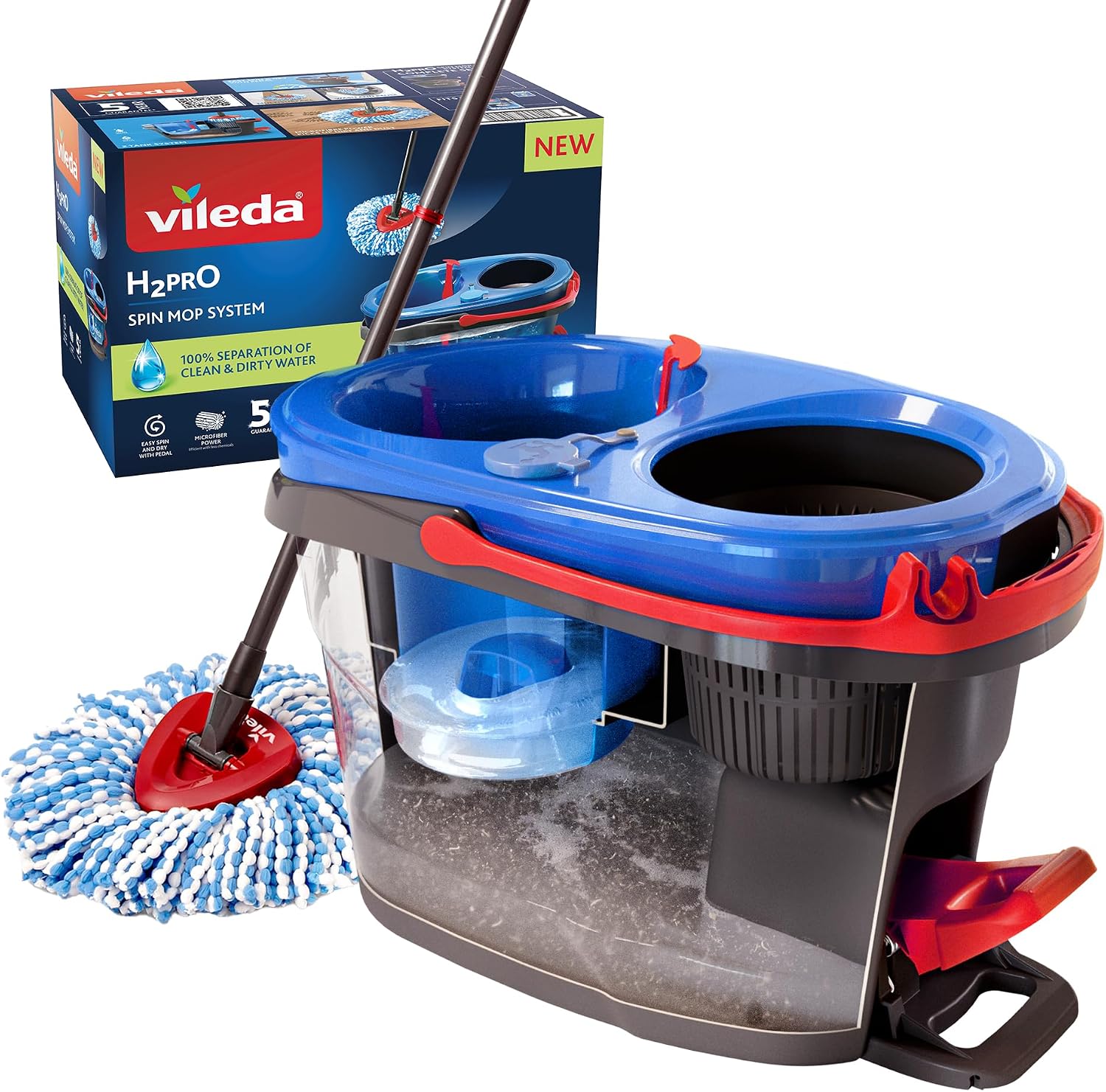
Vileda H2PrO Spin Mop System
|
- Routine surface soil: Opt for a pH-neutral product like Fila Pro Floor Cleaner to maintain daily cleanliness without leaving behind cleaner residue.
- Soap scum & body oils: Choose an alkaline cleaner/degreaser such as LTP Grimex to emulsify fatty acid deposits and bathing residues without risking damage to cementitious grout.
- Heavy grease & ingrained dirt: Use LTP Grimex at a stronger dilution rate to tackle deep-seated floor grime, old detergent films, and traffic marks.
Readers seeking a heavy-duty or industrial-strength solution should compare the type of soil, finish, and grout condition prior to purchasing. This comparison of heavy-duty ceramic tile cleaners helps differentiate between intensive cleaning needs and contamination that requires professional evaluation.
How to Evaluate Cleaner Value Beyond Just the Price Tag
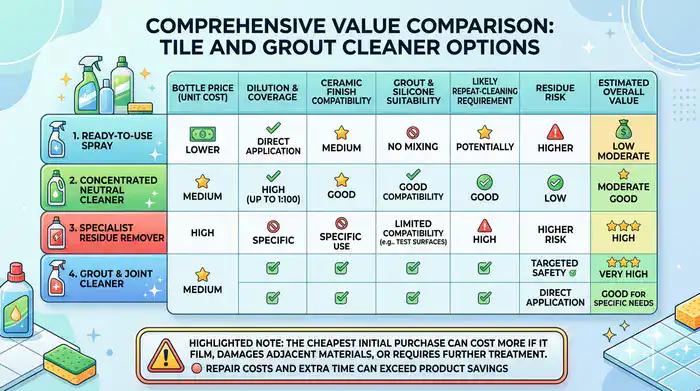
A low price on a bottle does not automatically equate to good value. Assess the entire floor and grout collectively to determine if the cleaner is suitable for the installation or likely to necessitate rework. Compatibility with glossy, matte, or textured finishes is crucial, as is the condition of grout joints and surrounding silicone.
Product value also hinges on coverage rate, dilution, labour, and the possibility of needing repeated applications. A ready-to-use spray may be adequate for daily upkeep, whereas a concentrated degreaser could offer better value for controlled deep cleaning. Neither option compensates for an incorrect assessment. A ceramic tile floor cleaning service can provide a thorough evaluation when the floor requires more than standard maintenance.
Proper ongoing maintenance prevents grit accumulation before wet mopping, minimises detergent film, and simplifies care for ceramic tile floors. Avoid bleach and highly acidic supermarket products, as these can damage grout colour and protective systems. The ceramic and porcelain floor-care hub offers broader guidance on cleaner selection, maintenance strategies, and related floor-care choices.
A correctly cleaned floor can appear significantly better than one covered in residue, and well-maintained grout can enhance the installation’s appearance beyond its original state. Professional cleaning also facilitates easier maintenance. proper pH-neutral cleaning and timely grit removal are the most critical factors in extending the floor’s longevity.

David Allen — Abbey Floor Care
David Allen brings over 30 years of expertise with Abbey Floor Care, assisting UK homeowners in selecting ceramic tile cleaning products and understanding professional cleaning needs. His focus lies in distinguishing surface dirt, grout contamination, installation residue, and joint deterioration, enabling readers to choose the right cleaning or renovation path.
The Article Dirty Ceramic Tile Floors Need The Best Ceramic Tile Cleaner was first published on https://abbeyfloorcare.co.uk