Last Updated on June 26, 2026 by David
Persistent Dullness of Slate Tiles Despite Years of Cleaning in New Malden
Identifying the Homeowner’s Dilemma
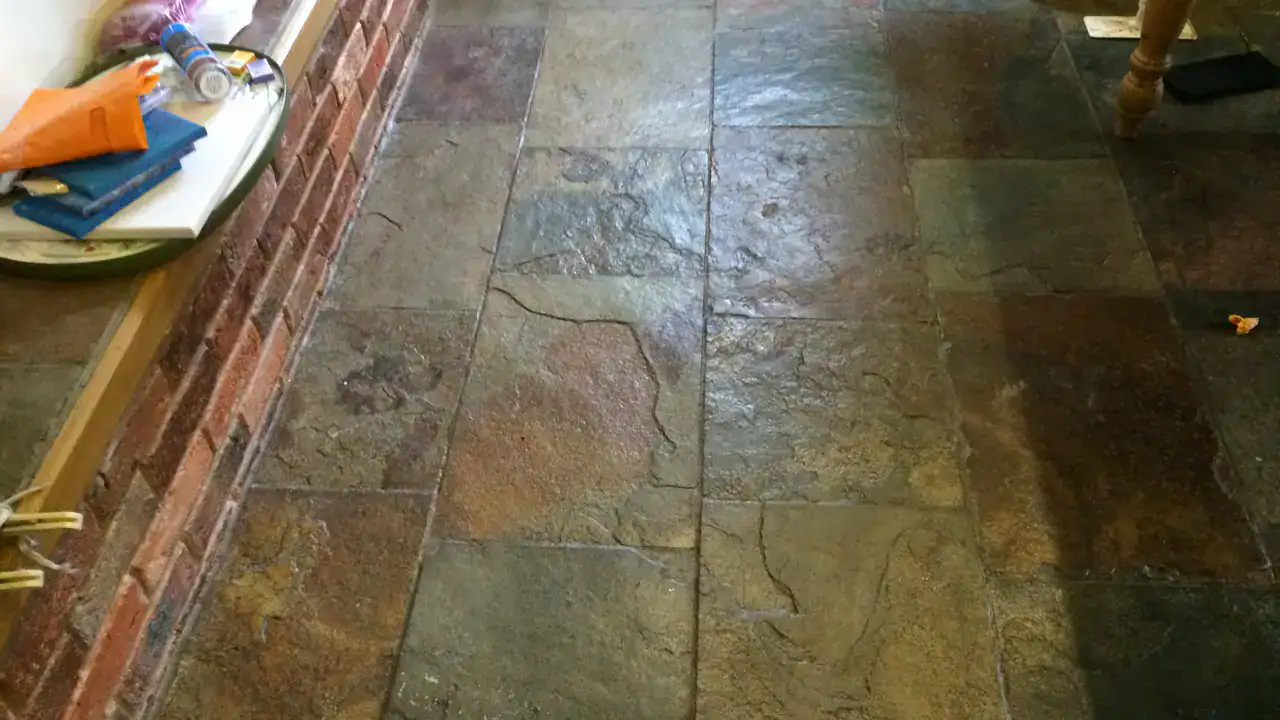
If your slate floor remains dull and grey after consistent mopping, the problem transcends mere surface dirt. The homeowner in this New Malden project had endeavoured for years to maintain the floor's appearance, yet each cleaning resulted in the same disappointing outcome: once the surface dried, the tiles appeared flat, lifeless, and worn.
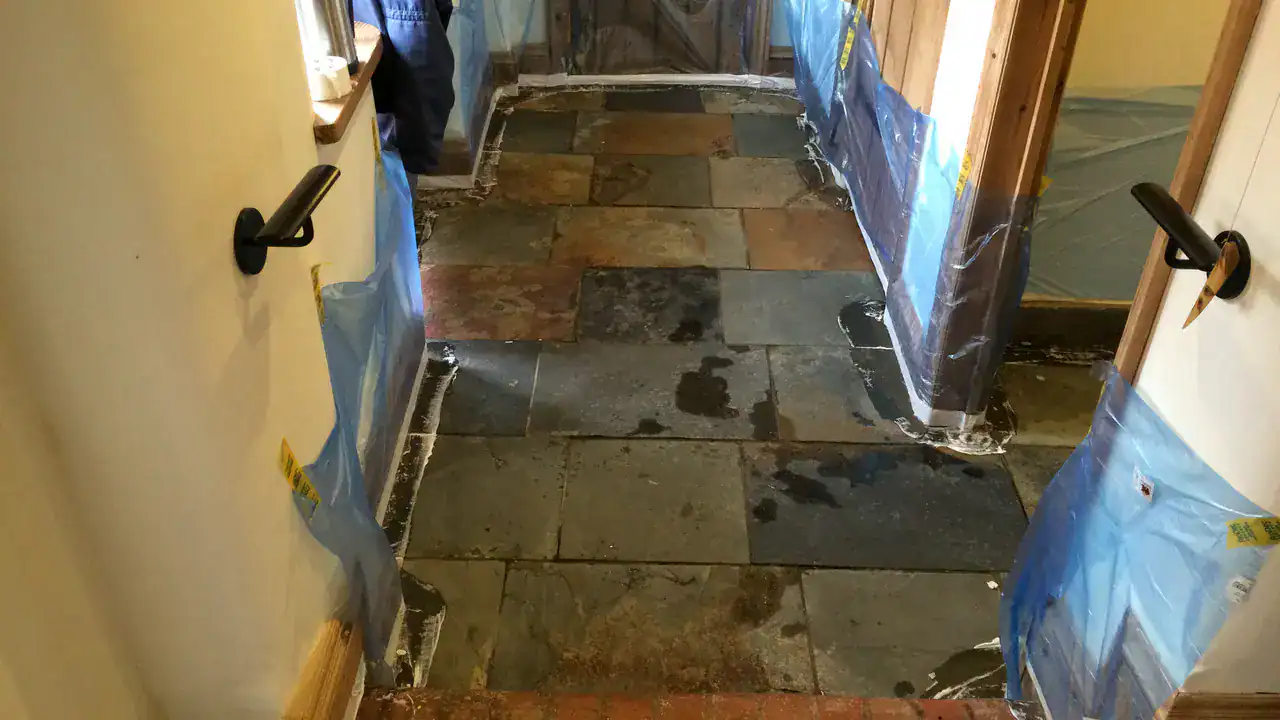
The Kund Multicolour floor initially showcased vibrant purples, greens, coppers, and greys across its naturally split surface. This was not merely one stain or a singular localised spill. Instead, it represented a widespread loss of vibrancy, with darker residue accumulating in lower areas and a grey film settling across the higher ridges.
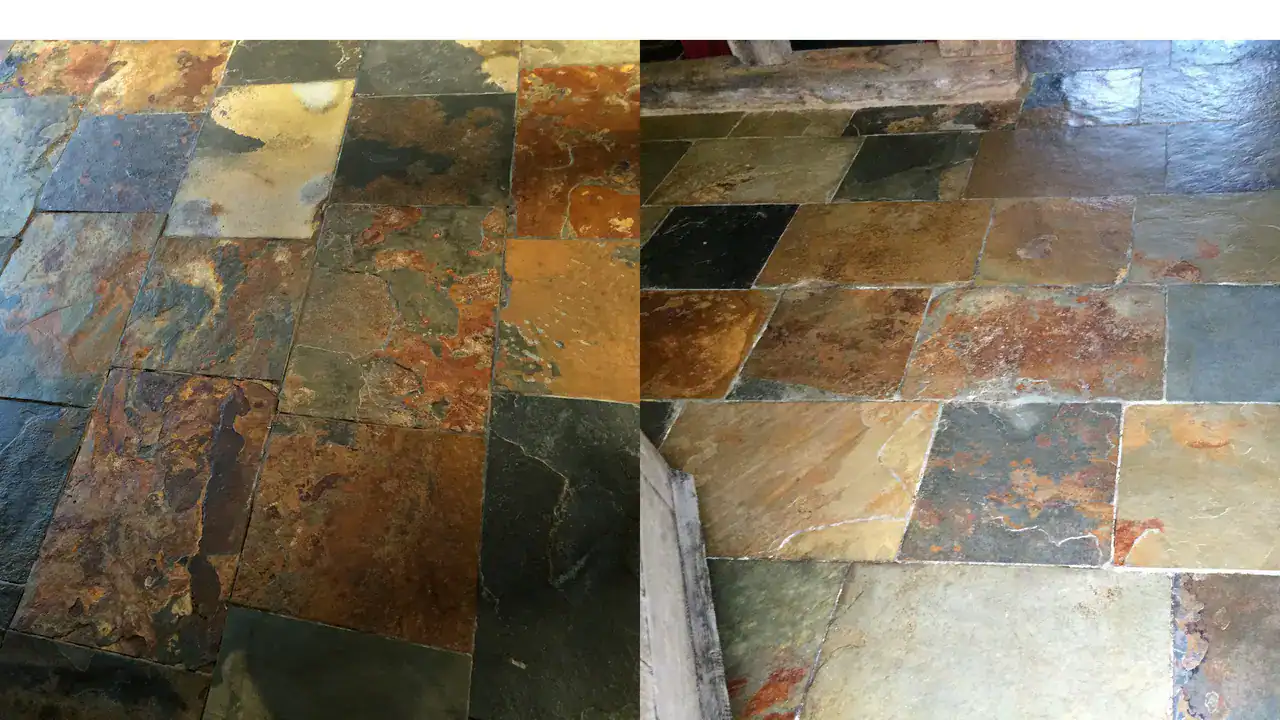
The textured riven surface made the dullness more noticeable, as each tile featured ridges, troughs, and natural cleavage marks that interacted with light differently. Areas that should have appeared rich and diverse instead looked worn, particularly along high-traffic paths where footfall, grit, and damp mopping significantly impacted the surface.
The floor also conveyed an impression of old product residue resting on the stone rather than presenting clean, vibrant slate. Patchy regions were evident around tile edges, along grout lines, and within deeper textures that normal mopping failed to reach, leading the homeowner to use clean water without witnessing any lasting improvement.
Exploring the New Malden Property Context
New Malden, located in the KT3 postcode district, features a diverse range of suburban housing, including Victorian and Edwardian terraces, semi-detached homes from the 1930s, detached properties in spacious plots, period conversions, and contemporary flats. Slate floors are commonly found in entrance halls, kitchen-diners, utility rooms, garden-facing rooms, and modern extensions of older homes where space has been reconfigured for family living. In these extended properties, slate often extends through kitchens, breakfast areas, and back-door routes to gardens, serving as a continuous working floor rather than a lightly used decorative element. In period conversions and older terraces, slate can also appear in compact hallways, basement rooms, or refurbished ground-floor living spaces where durability and a natural aesthetic align with the property style.
These New Malden residences frequently subject slate to heavy daily use, particularly when rear extensions link kitchens directly to patios, gardens, and side passages. Grit and moisture accumulate at the most frequented entry points. Older subfloors, family traffic, and mixed-use kitchen-dining configurations can leave slate looking dull and patchy well before the floor becomes structurally compromised.
The slate in this home functioned as a practical family floor, not merely as an ornamental surface. Daily movement through the kitchen and ground-floor routes heightened the homeowner's awareness of the dullness, especially in areas where cleaning should have made the most noticeable difference.
Assessing the Condition of Grout and Texture
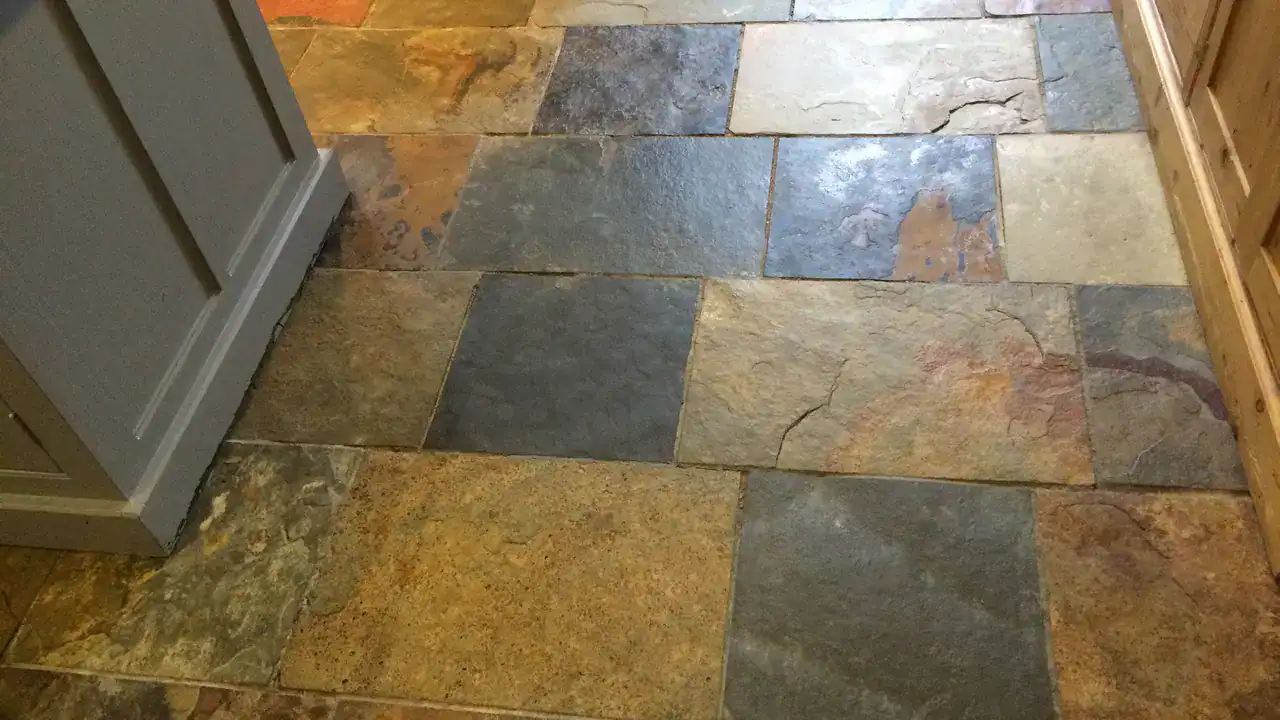
The grout lines contributed to the overall problem, with several joints appearing dark, weakened, or entirely absent. Failed grout allowed water to seep along tile edges, soil to accumulate beneath the joint face, and some areas had begun to dislodge instead of remaining robust enough to protect the slate edges.
These compromised joints made the entire floor seem older than it was. Dark lines disrupted the stone's colour, and missing sections created small pockets where mop water, grit, and residue could settle after each cleaning attempt.
The mechanically split surface exaggerated the contrast between the cleanable high points and the darker recessed areas. While this natural texture enhances the character of Kund Multicolour slate, it also creates nooks and crannies where old wax, soil, and application residue can remain visible long after the surface has been wiped.
Manifestations of Deterioration Before Restoration
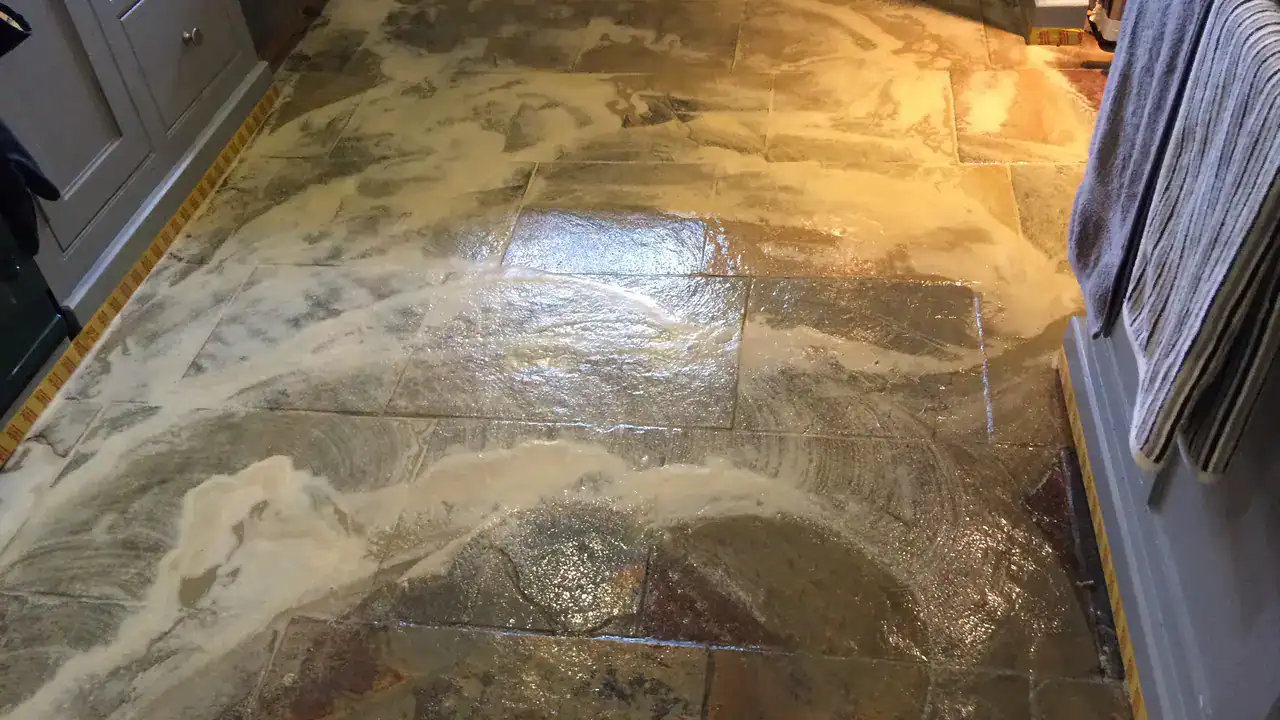
The previous wax finish had once imparted a traditional mid-lustre appearance to the floor. by the time of this project, that heritage look had faded due to inconsistent maintenance, resulting in uneven wax application, renewal marks, and a surface that failed to appear clear after cleaning.
The homeowner recognised a stark contrast between the wet and dry appearance. While damp, certain slate areas temporarily appeared deeper in tone, but once dry, the patchy grey film re-emerged, indicating inconsistent responsiveness across the entire surface.
The affected areas appeared particularly uneven where edge build-up met the textured finish. These regions gave the impression of dirtiness, even after thorough cleaning. A broader examination of why some slate appears faded while others maintain vibrancy aids in distinguishing between genuine colour loss and residue or sealer failure. The New Malden floor exhibited both a fatigued surface and old treatment layers, necessitating this project to be categorised as restoration rather than mere cleaning.
Documenting the Transformation: Before and After Restoration
The initial condition revealed a sound slate floor that had become visually fatigued through years of use and repeated cleaning attempts. The surface was not irreparable, but the grey cast, dark joints, and uneven tones obscured the homeowner's ability to discern the floor's true colours from its pre-restoration state.
The evidence of restoration was crucial, as multicolour slate can undergo dramatic changes once the dull layer is eliminated and the surface is properly protected. The floor would appear significantly enhanced through the appropriate cleaning and sealing process. In many instances, a restored slate floor can look more appealing than when it was first installed, as the natural mineral colours are finally activated correctly.
This project serves as a specific case study from New Malden rather than a general method article. Similar work on patchy slate colour rectified in Barnes illustrates the importance of evaluating the floor's condition before selecting the finish. this page documents what transpired with this particular Kund Multicolour installation. The visible objective was to achieve a richer, cleaner, and more stable surface that no longer reverted to grey after each cleaning.
Understanding Why the Slate Floor Appeared Tired Despite Regular Cleaning
Old wax trapped within the textured surface of the slate can cause it to appear tired soon after cleaning. While the mop removed loose dirt from the surface, the dissolution of wax had already left sticky residue in recessed areas, reactivating the grey film rather than clearing it with each wash.
The floor looked dirty again because old wax remained active within the surface.
Moisture retained within the texture heightened the risk of premature sealing, chalky residues, and trapped water. Slate, being a fine-grained metamorphic rock, cleaves along natural planes; its layered structure restricts mechanical polishing and confines restoration to cleaning and sealing. It is also sensitive to aggressive cleaning agents. A straightforward water test later indicated whether the protective layer caused droplets to bead up or allowed them to absorb and darken porous areas subject to heavy traffic.
Safely Removing Old Wax Without Damaging Soft Cleft Slate or Compromised Grout
Applying an inappropriate treatment strength on soft cleft slate can weaken grout or damage the edges of the stone. While it was essential to remove the wax and old sealer, it was equally important to preserve the natural cleavage, textured finish, and integrity of the weakened joints.
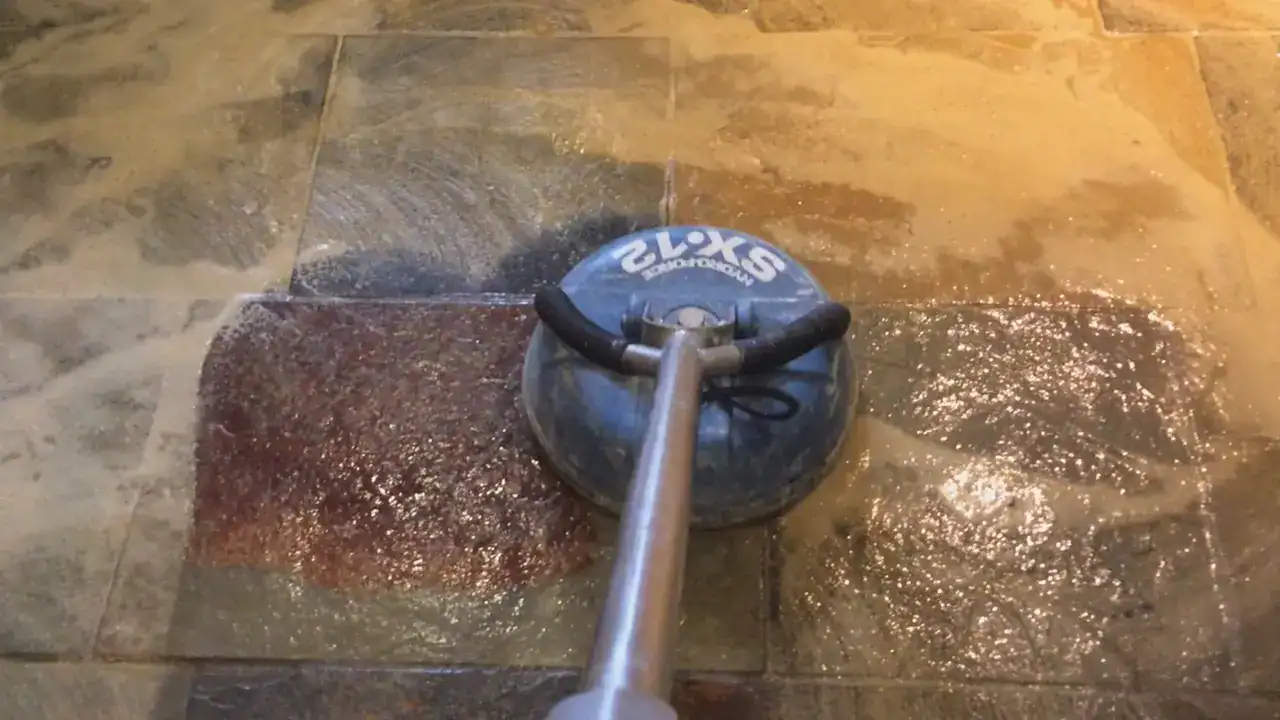
Controlled stripping employed solvent action, chemical penetration, and coating removal to gently soften the old wax without relying on excessive force. Once softened, the dirty solution required slurry extraction through a wet vacuum, ensuring that residue removal occurred before it could redeposit and dry back into the riven surface.
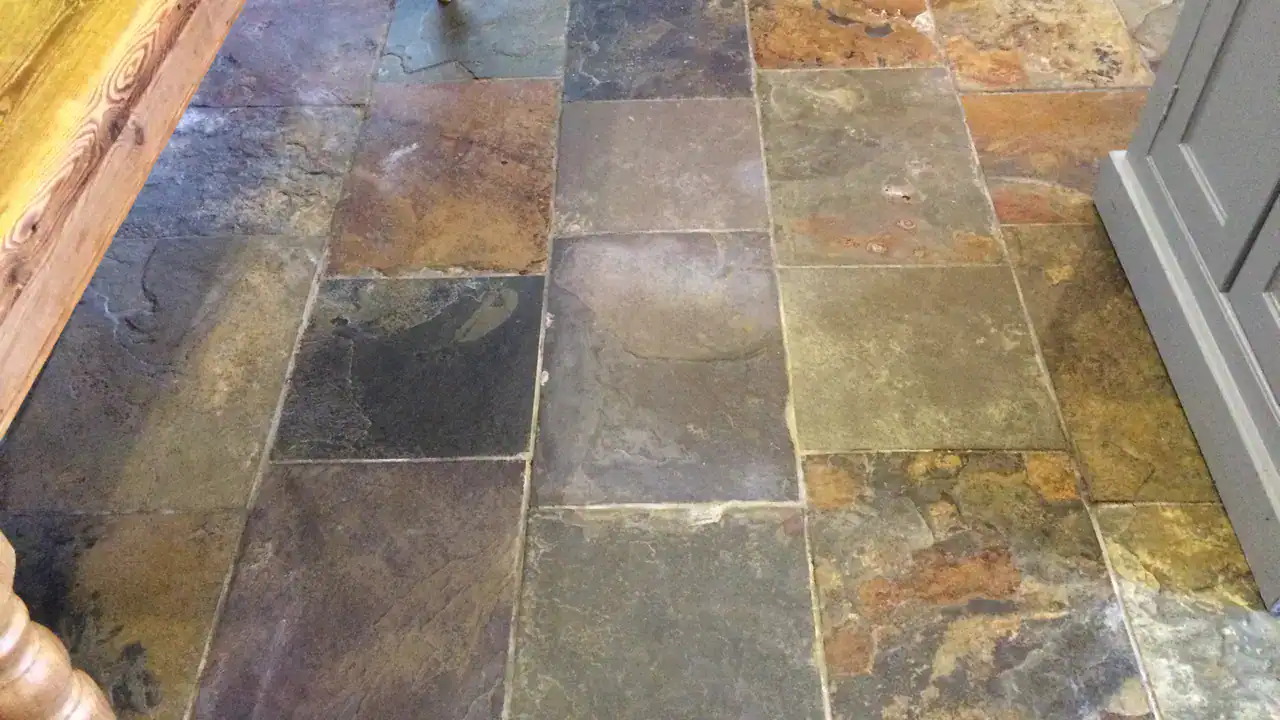
Pressurised rinse and capture utilised a hot pressure rinse, high-pressure nozzles, and enclosed spinning heads to dislodge stubborn dirt from deep cavities while recovering the dirty solution. The repair and cleaning sequence adhered to principles outlined in professional slate floor restoration techniques, where the primary focus was to remove contamination effectively while safeguarding the floor's original texture. Incomplete work would have resulted in wax remaining in the lower points. This controlled approach yielded a cleaner surface, ready for sealing.
The Floor Became Easier to Clean as the Surface Finally Responded Effectively
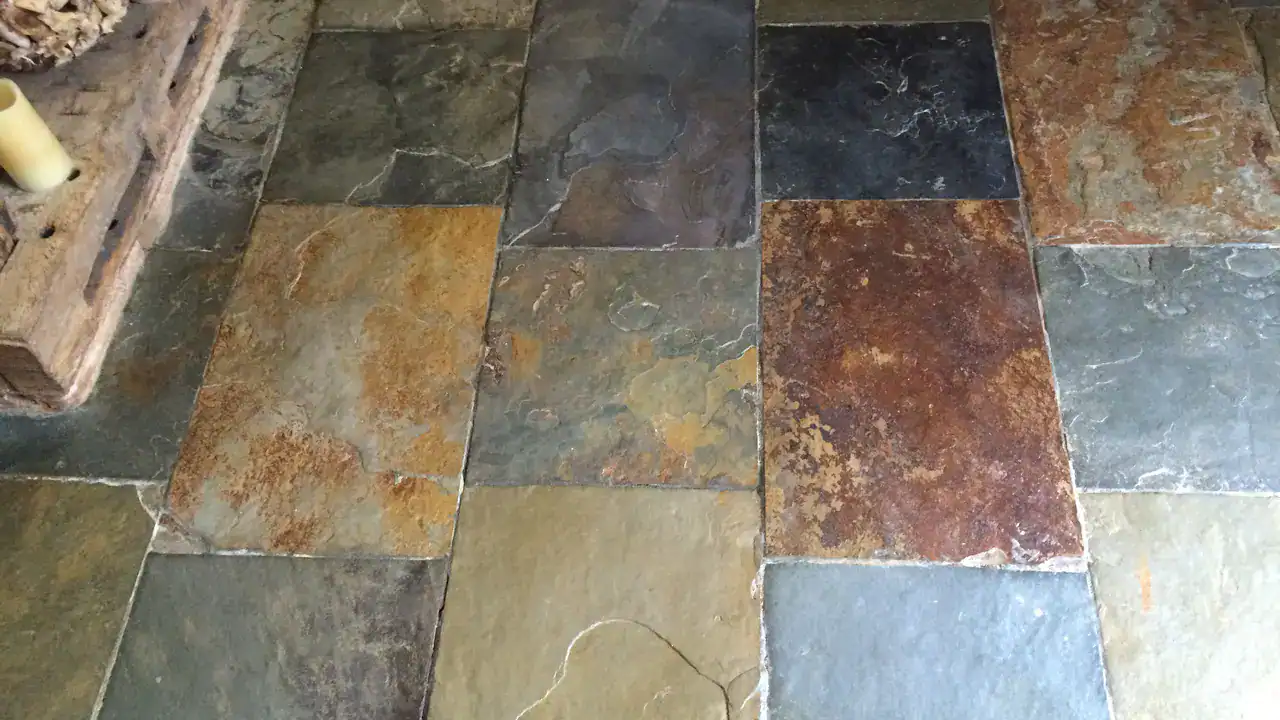
If your slate floor responds effectively to mopping after restoration, the difference is evident during regular use, not just through photographs. The New Malden floor no longer reverted to the same cold grey appearance, and the restored colours appeared more consistent across high-traffic areas.
The colour-enhancing sealer provided mineral activation, deepening pigments and penetrating protection without obscuring the natural texture. A finely honed slate floor features a smooth, consistent surface that diffuses light evenly, while an impregnating sealer maintains the natural riven texture. In contrast, a topical sealer adds a subtle surface sheen.
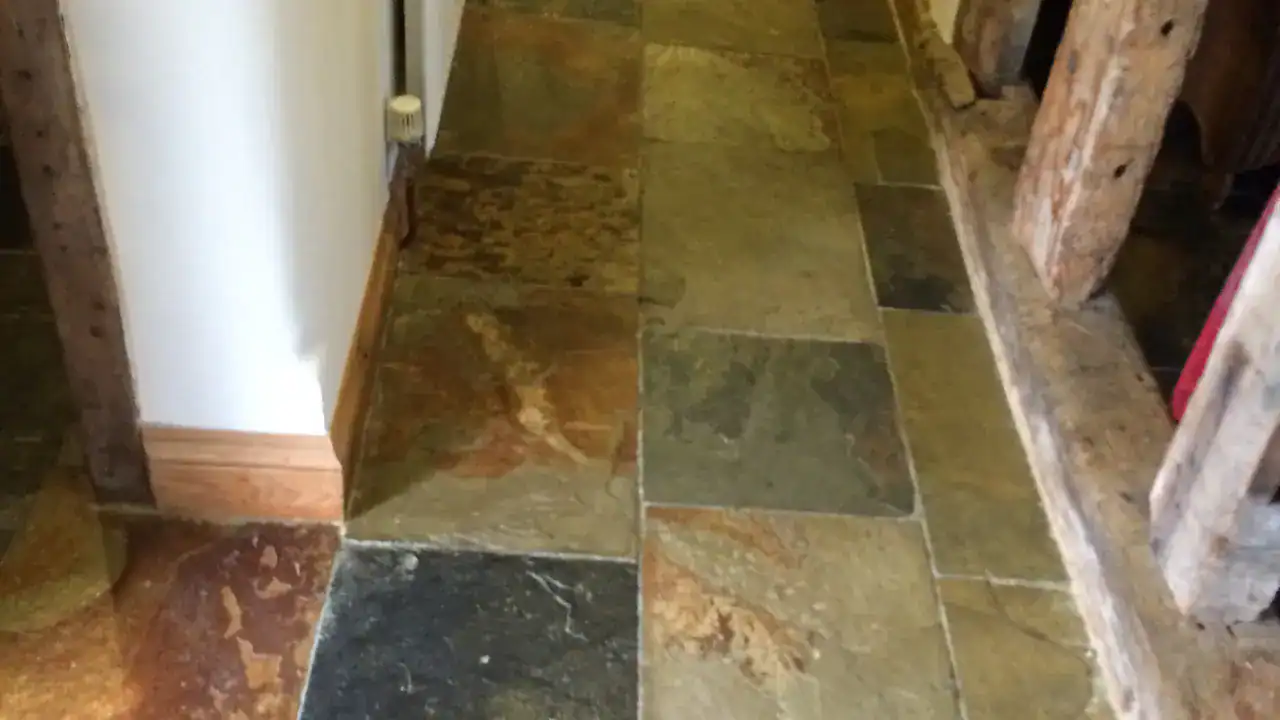
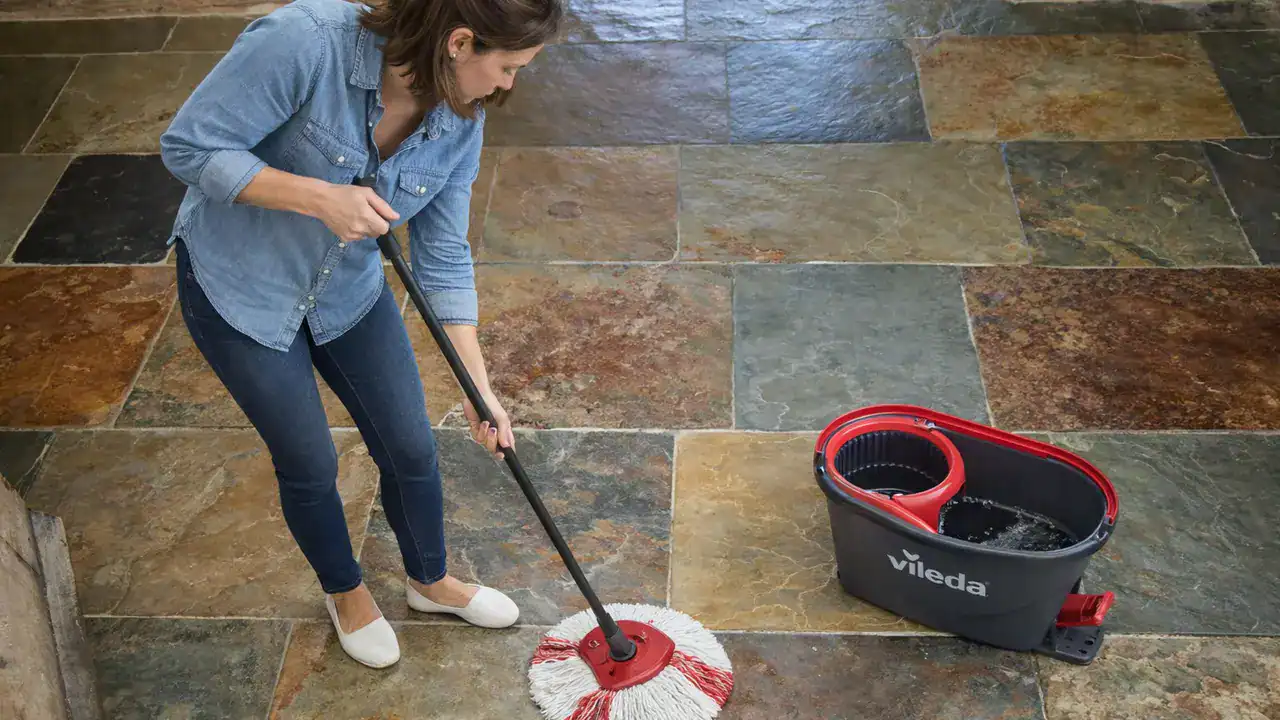
The handover emphasised maintaining the stability of the restored surface. A professionally restored and correctly sealed floor is considerably easier to clean and maintain than a worn or improperly treated floor. A well-wrung mop prevents standing water in the surface wax. Proper ongoing maintenance, including removing grit before damp mopping, using pH-neutral cleaning solutions, and resealing at appropriate intervals, extends the floor’s lifespan. Slate floors that appear dull after cleaning require finish-safe products rather than harsh cleaners that strip away the protective layer.
Accessing Additional Assistance with Slate Floor Cleaning and Restoration in New Malden
Similar slate floors in New Malden and Kingston frequently require comprehensive guidance before determining the most suitable cleaning or restoration approach. Abbey Floor Care's extensive expertise in stone ensures proper differentiation of wax residue, failed grout, moisture-related discolouration, and surface wear prior to selecting any finish.
The broader behaviour of UK slate floors is detailed in slate floors in UK homes, exploring how Welsh origin, Burlington Slate, Black Oil Slate Efflorescence (BOSE), and Slate Tiled Shower Cubicles can exhibit different behaviours compared to a dry domestic kitchen floor. The New Malden case study remains valuable because it demonstrates a genuine maintenance recovery: old wax removal, grout repair, colour restoration, and simplified everyday cleaning for the homeowner.
Related project examples, such as slate cleaning and sealing that preserved colour and slate cleaning that salvaged a sound floor, underscore the significance of case evidence. Each floor requires individual assessment, but the overarching goal remains the same: restore appearance, enhance protection, and make the surface easier to maintain.
Products Utilised in This Restoration Guide
No third-party product links were included in the original HTML. Product names mentioned within the project narrative have been retained as plain text only, without adding new outbound recommendations or reconstructed supplier links.

David Allen — Abbey Floor Care
David Allen has specialised in restoring natural stone floors throughout the UK for over 30 years with Abbey Floor Care. This New Malden case study highlights how dull Kund Multicolour slate, old wax accumulation, failed grout, and uneven colour were rectified through controlled cleaning, local repairs, and appropriate sealing.
The article Slate Restoration for a Floor That Mopping Could Not Fix first appeared on https://www.abbeyfloorcare.co.uk