
Last Updated on May 30, 2026 by David
Victorian tile restoration in Bishopbriggs focuses on period floors suffering from loose grout, movement, dark stains, failed coatings, worn edges, and outdated surface treatments. Many original encaustic and geometric floors in local hallways, vestibules, porches, and entrance areas require a thorough condition assessment before any restoration work can commence.
The service is provided by Abbey Floor Care, with local delivery coordinated through qualified specialists who possess a deep understanding of historic clay floors in Bishopbriggs properties. When your Victorian tile floor exhibits signs of loose grout, movement, dark stains, or failing coatings, obtaining a professional assessment is essential. These visible symptoms often indicate years of wear, previous modifications, hidden contamination, or aging repairs that cannot be accurately interpreted solely from their appearance. When loose grout appears between the tiles, the primary concern is whether the affected area remains stable during normal use. Homeowners frequently observe gritty particles appearing after sweeping, widening joints, or slight movements when pressure is applied to individual tiles. Movement can affect just one tile, a small cluster, or a larger section stretching across an entrance hall. A hollow sound, a clicking sensation, or joints that repeatedly break down may indicate that the support beneath the surface is no longer functioning consistently. The assessment meticulously documents every unstable area before any treatment is contemplated. Two areas may appear nearly identical from above but can significantly differ in severity, which is crucial to understand. The survey determines where movement is localised and where it spans a broader section of the floor. If your floor appears dark even after cleaning, this could be due to contamination rather than ordinary dirt. Many Victorian properties in Bishopbriggs have floors that have been concealed beneath carpets, vinyl, linoleum, or other coverings for decades, leaving behind residues. Common findings during assessments include black smears, yellow-brown adhesive marks, paint spots, and sticky patches. Some contamination resides on the surface, while others penetrate the clay body, resulting in uneven colour and texture. The assessment carefully maps these areas. A dark patch near a doorway may have an entirely different cause than one located in the centre of the hallway, even if both initially appear similar. If your floor displays glossy patches alongside dull areas, remnants of older coatings may still be present. Homeowners often report that floors appear acceptable when wet but revert to a cloudy, uneven, or tired look once dried. Assessments frequently uncover traces of old waxes, previous sealers, and various surface treatments applied over the years. These coatings rarely wear evenly, leading to noticeable visual differences across the same floor. Documenting the condition of coatings is a vital aspect of the survey since different sections may have received various treatments throughout the property’s history. If parts of the decorative layout seem incomplete, the floor may have been modified during prior construction work. Missing sections are often located around thresholds, former partition walls, fireplaces, and areas where utilities have been installed. Original geometric patterns often remain discernible despite these disruptions. Borders, centre panels, and decorative features can frequently be identified, even when some pieces are absent. The survey meticulously records missing sections, mismatched repairs, and interruptions to the original design, creating a clear picture of what remains and what has changed over time. If the pattern appears faded along frequently walked routes, the floor is likely showing signs of decades of foot traffic. Entrance halls and vestibules typically experience concentrated use, particularly in homes where the original tiled floor has remained exposed for generations. Wear seldom develops uniformly. Softer colours may show more fading than darker sections, while heavily trafficked paths may look markedly different from less-used corners of the room. The assessment records the condition of decorative details, borders, and colour variation, providing a realistic view of what remains visible before planning any restoration. If certain areas of the floor remain darker for extended periods after cleaning, this discrepancy is noted during the assessment. Homeowners often report isolated dark patches, perimeter staining, or areas that never seem to dry at the same rate as surrounding tiles. Visible signs such as white powdery deposits, tide marks, and damp-looking edges are also documented when present. These indicators help differentiate between ordinary surface contamination and conditions that may impact future treatment choices. Different sections of the same floor often exhibit varying absorption levels and colour differences. the assessment evaluates the entire installation rather than judging it based on one isolated area. Victorian floors in Bishopbriggs are typically found in entrance halls, porches, vestibules, and transition spaces where outdoor soil, moisture, and daily foot traffic create long-term wear patterns. These areas are also the most likely to reveal evidence of previous coverings, repairs, and modifications. The assessment also considers whether the floor shows signs of over-cleaning. Scratches, uneven wear, rough surfaces, and patchy colour are often visible before any restoration work commences. The floor’s visible character is documented as part of the survey, distinguishing natural age-related wear, colour variation, and historic character from defects such as loose sections, failed joints, contamination, and unstable repairs. The service delivery in Bishopbriggs begins with this condition-led approach because similar symptoms can arise from vastly different causes. A floor that appears dull, unstable, stained, or worn requires precise identification of the visible condition before any restoration pathway can be chosen. Abbey Floor Care utilises the assessment to route projects through its vetted contractor network. Homeowners receive a comprehensive explanation of the floor’s condition, the visible issues identified during inspection, and the options available for further investigation or restoration. Repeatedly treating a Victorian tile floor without a thorough understanding of its condition often inflicts greater harm than the original issue. Abrasive pads can erode surface character, acidic products can compromise clay materials, and excessive moisture can exacerbate already unstable areas. Historic floors frequently require treatments that allow moisture to flow naturally through older construction. Employing non-breathable coatings where moisture needs to escape can lead to peeling finishes, recurring deposits, and premature coating failures. Accurate assessment prevents avoidable restoration damage. Victorian encaustic and geometric tiles are clay-fired at high temperatures. Their fired surface is chemically stable but physically vulnerable to abrasion and incompatible with acidic cleaning agents. Professional assessments identify which treatments are suitable for the floor before any cleaning, repairs, or protection systems are selected. Specialist restoration equipment is selected based on the specific condition of the floor rather than a rigid process. A stable floor affected by contamination requires different tools compared to a floor displaying movement, failed joints, moisture marks, or missing sections. Professional systems may include controlled agitation equipment, extraction machinery, residue-removal products, drying apparatus, and breathable protective treatments. Materials used for repairs are chosen to complement older floor construction rather than conflict with it. Compatible bedding materials, salt-management treatments, and breathable protective systems may be incorporated as needed. It is often the case that the appropriate materials are just as critical as the workmanship itself. The goal remains the same: aligning equipment, materials, and techniques with the specific condition established during the Bishopbriggs assessment. Victorian tile restoration can recover colour, stability, and decorative clarity, but it cannot eliminate every sign of age. Setting realistic expectations is crucial for a successful project. What improves includes the visibility of the original pattern, the appearance of the joints, the removal of contamination, and the stability of loose sections. A restored Victorian tile floor reveals the original fired matte surface with more consistent colour and pattern, while a topically sealed surface, where appropriate, can introduce a slight protective sheen without altering its period character. What remains may encompass historic wear, softened edges, minor chips, and age-related variations that developed over decades of use. Local repairs and stabilisation can enhance performance and appearance, but genuine evidence of the floor’s history often remains visible. Further guidance becomes especially valuable once restoration work concludes and long-term care decisions must be made. Understanding how historic clay floors behave empowers homeowners to make informed maintenance choices in the years to come. Older floors often react differently to moisture, cleaning products, and protective treatments compared to modern installations. Detailed information on cleaning limitations, moisture behaviour, maintenance routines, and long-term care can be found in the Victorian tile cleaning and care hub. Homeowners in Bishopbriggs should arrange a professional assessment when grout continues to fail, tiles exhibit movement, contamination recurs, or coatings show signs of deterioration. Timely assessments provide a clearer understanding of the floor’s condition, preventing more extensive damage down the line, as illustrated in this Victorian tile restoration case study.
Comprehensive Assessments for Victorian Tile Restoration in Bishopbriggs Before Commencing Work
Identifying Loose Grout and Movement Underfoot
Understanding Dark Contamination and Surface Residue
Detecting Failed Coatings and Patchy Appearance
Identifying Missing Sections and Pattern Disruptions
Assessing Worn Decorative Surfaces
Identifying Moisture Marks and Uneven Drying
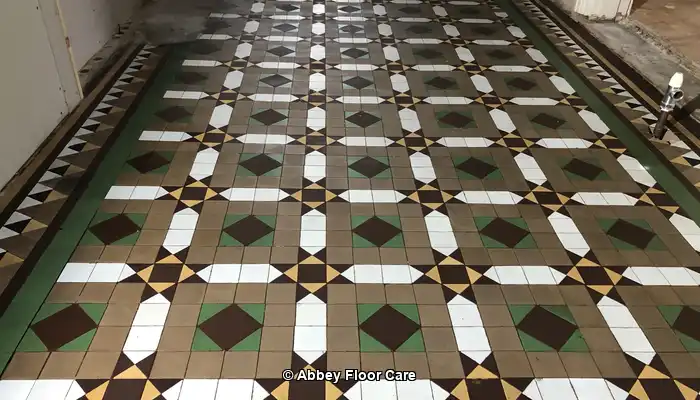
How Victorian Tile Restoration in Bishopbriggs Prevents Damage from Inappropriate Treatments
Advanced Equipment and Materials for Specialist Victorian Tile Restoration in Bishopbriggs
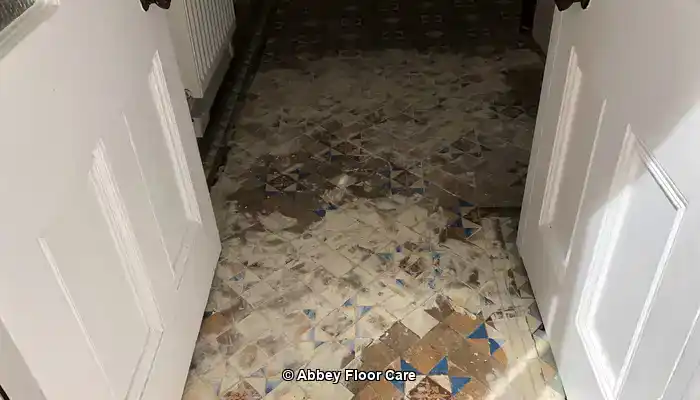
Realistic Outcomes of Victorian Tile Restoration for Floors in Bishopbriggs
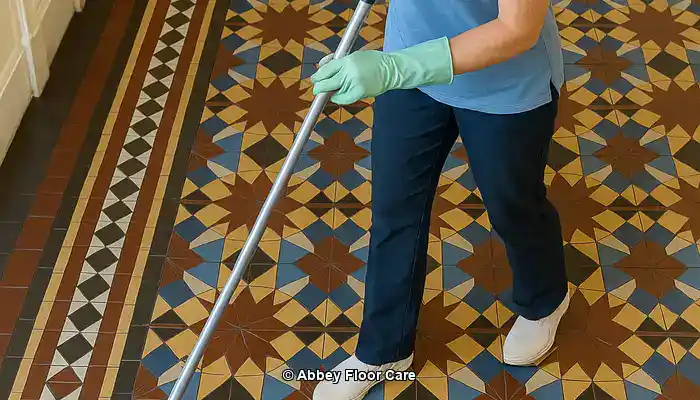
Essential Victorian Tile Restoration Advice and Guidance for Homeowners in Bishopbriggs
Recommended Maintenance Products for Victorian Tiles
Here are our suggested products for maintaining Victorian tiles:
Cleaning products: LTP Wax Wash, LTP Grimex.
Equipment: Vileda H2PrO Spin Mop System.

David Allen — Abbey Floor Care
David Allen brings over 30 years of practical experience in restoring Victorian tile floors across the UK through Abbey Floor Care, with numerous projects completed in Bishopbriggs, Glasgow, and the surrounding region. His insights reflect hands-on knowledge of local building stock, period floor conditions, and the restoration choices that yield enduring results.
The Article Victorian Tile Restoration Problems In Bishopbriggs Homes first found on https://www.abbeyfloorcare.co.uk



The restoration of Victorian tile floors is such a fascinating topic, particularly considering how intricate and historically significant these tiles can be. It’s intriguing to think about the stories that these floors could tell if they could speak. Many households in Bishopbriggs likely have floors that reflect not only the architectural style of their era but also the craftsmanship that has endured over the years.
Restoring Victorian tiles is such a fascinating journey into the past! Each tile holds stories and secrets from a time when craftsmanship was paramount. The attention to details, like the original encaustic patterns, really speaks to the artistry of that era.